
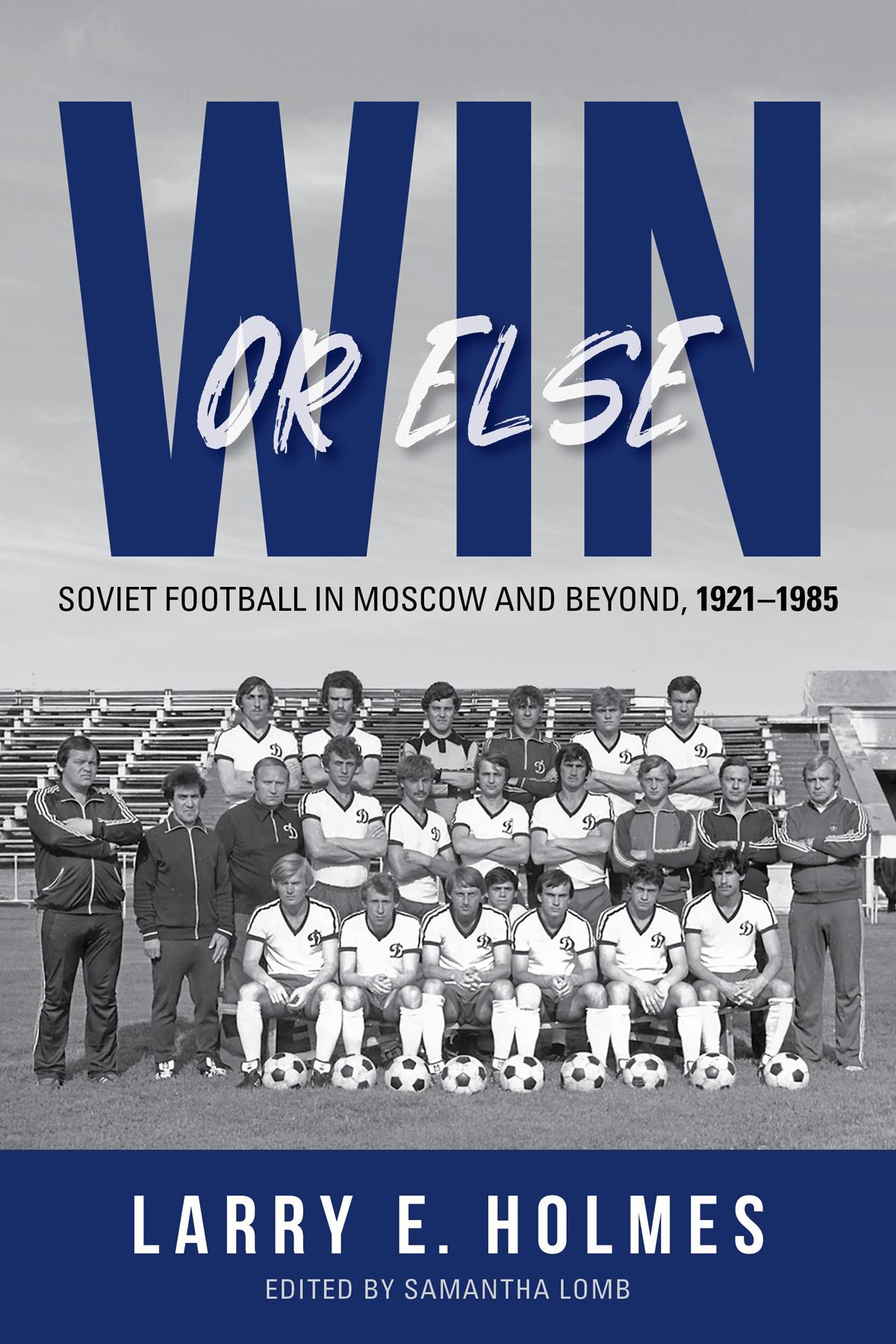
In Win or Else, Larry E. Holmes shows us how Soviet football culture regularly disregarded official ideological and political imperatives and skirted the boundaries between socialism and capitalism.
In the early 1920s, the Soviet press denounced football as a bourgeois sport that was injurious to both mind and body. Within that same decade, however, it blew up, becoming the most popular spectator sport in the USSR and growing into a fiercely competitive business with complex regional and national bureaucracies, a strong international presence, and a conviction that victory on the field was also a victory of Soviet supremacy. Writing as both historian and fan, Holmes focuses his study on the provincial Kirov team Dinamo from 1979 to 1985, when the club played at both its worst and its best. Spurred by a dismal 1979 season, the team's administrators and regional authorities had two options: obey Moscow's edict to reduce expenditures on professional sports or seek out new—and often illicit—funding sources to fill out a team of champions.
Drawing on rich archival materials as well as newspapers and interviews with former players, Win or Else reveals the foundations of Soviet sports culture—and the hazards that teams faced both in victory and in loss.
Payez facilement par carte, Klarna, Apple Pay ou Google Pay. Pas satisfait ? Vous avez toujours une garantie de remboursement de 14 jours. En savoir plus dans nos conditions. Si vous avez des questions, envoyez-nous un e-mail à hello@memmo.org.
Memmo facilite tes études, où que tu sois dans le monde. On rassemble tes manuels de cours et des outils d'étude intelligents au même endroit : résumés, quiz, podcasts et flashcards. Et il y a Ted, ton compagnon d'étude qui répond à toutes tes questions. Plus de 50 000 étudiants étudient déjà ici – conçu pour t'aider à apprendre plus vite et à moins stresser.