
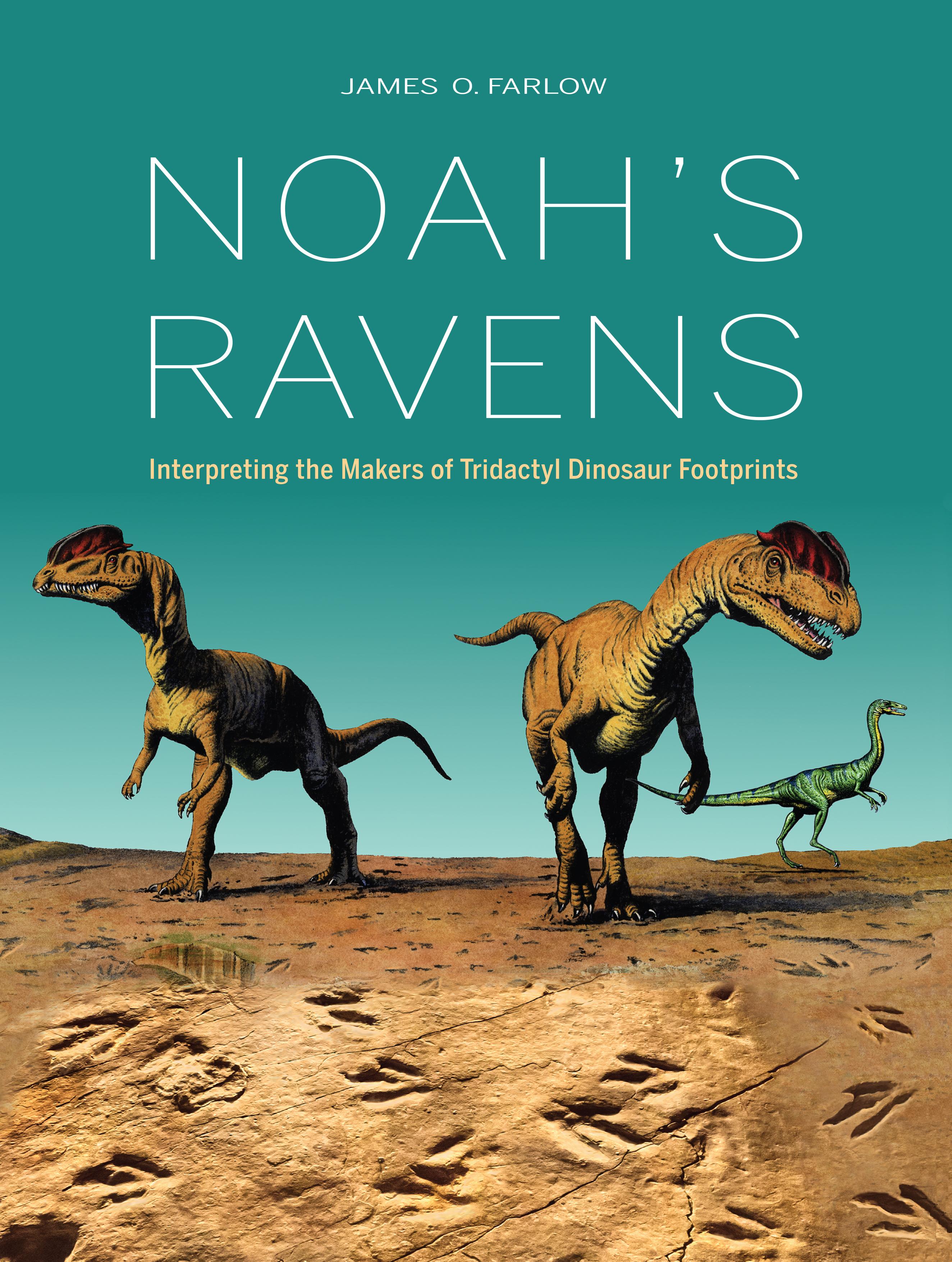
How can the tracks of dinosaurs best be interpreted and used to reconstruct them? In many Mesozoic sedimentary rock formations, fossilized footprints of bipedal, three-toed (tridactyl) dinosaurs are preserved in huge numbers, often with few or no skeletons. Such tracks sometimes provide the only clues to the former presence of dinosaurs, but their interpretation can be challenging: How different in size and shape can footprints be and yet have been made by the same kind of dinosaur? How similar can they be and yet have been made by different kinds of dinosaurs? To what extent can tridactyl dinosaur footprints serve as proxies for the biodiversity of their makers?
Profusely illustrated and meticulously researched, Noah's Ravens quantitatively explores a variety of approaches to interpreting the tracks, carefully examining within-species and across-species variability in foot and footprint shape in nonavian dinosaurs and their close living relatives. The results help decipher one of the world's most important assemblages of fossil dinosaur tracks, found in sedimentary rocks deposited in ancient rift valleys of eastern North America. Those often beautifully preserved tracks were among the first studied by paleontologists, and they were initially interpreted as having been made by big birds—one of which was jokingly identified as Noah's legendary raven.
Payez facilement par carte, Klarna, Apple Pay ou Google Pay. Pas satisfait ? Vous avez toujours une garantie de remboursement de 14 jours. En savoir plus dans nos conditions. Si vous avez des questions, envoyez-nous un e-mail à hello@memmo.org.
Memmo facilite tes études, où que tu sois dans le monde. On rassemble tes manuels de cours et des outils d'étude intelligents au même endroit : résumés, quiz, podcasts et flashcards. Et il y a Ted, ton compagnon d'étude qui répond à toutes tes questions. Plus de 50 000 étudiants étudient déjà ici – conçu pour t'aider à apprendre plus vite et à moins stresser.