
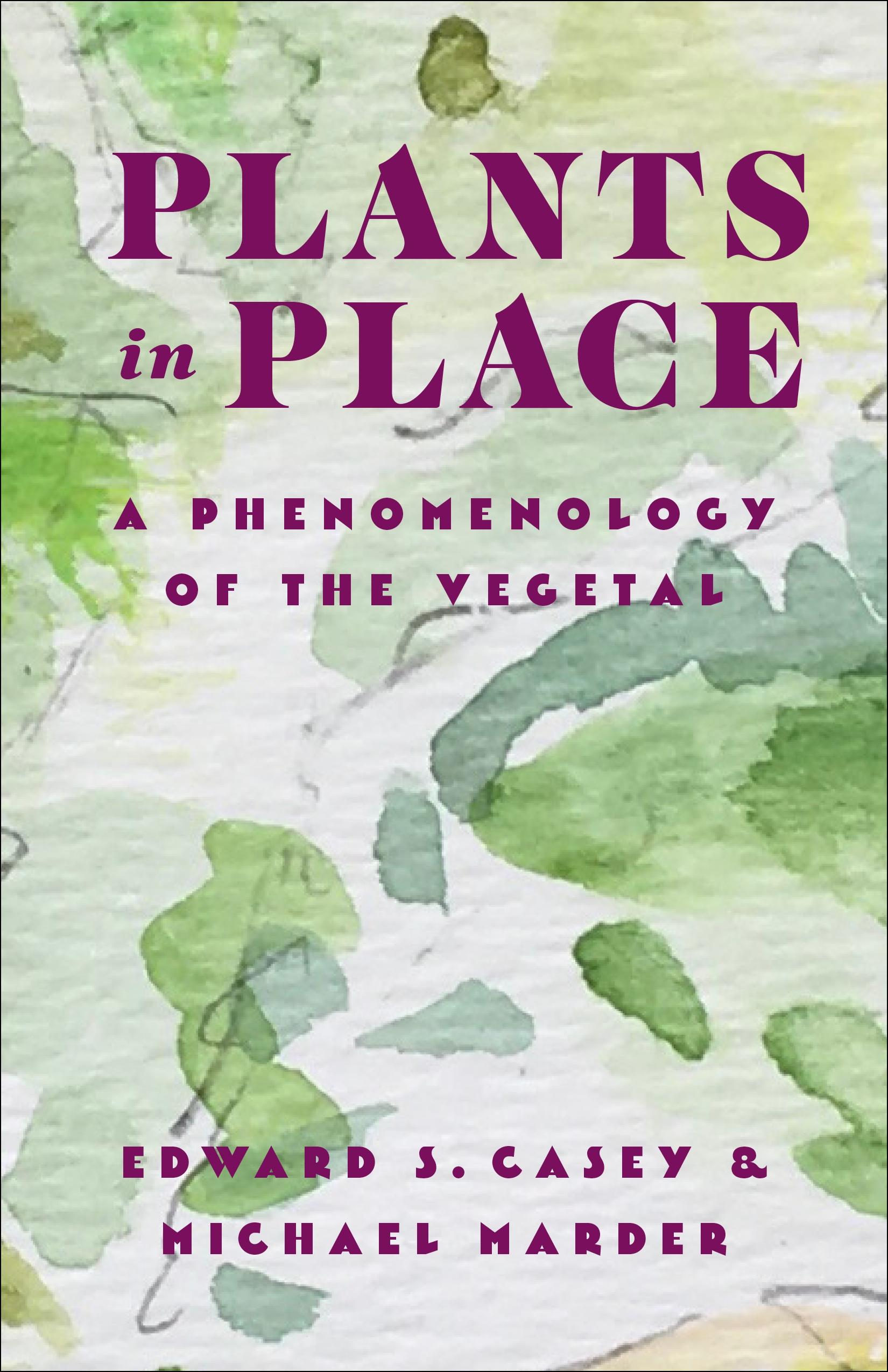
Plants are commonly considered immobile, in contrast to humans and other animals. But vegetal existence involves many place-based forms of change: stems growing upward, roots spreading outward, fronds unfurling in response to sunlight, seeds traveling across wide distances, and other intricate relationships with the surrounding world. How do plants as sessile, growing, decaying, and metamorphosing beings shape the places they inhabit, and how are they shaped by them? How do human places interact with those of plants—in lived experience; in landscape painting; in cultivation and contemplation; in forests, fields, gardens, and cities?
Examining these questions and many more, Plants in Place is a collaborative study of vegetal phenomenology at the intersection of Edward S. Casey’s phenomenology of place and Michael Marder’s plant-thinking. It focuses on both the microlevel of the dynamic constitution of plant edges or a child’s engagement with moss and the macrolevel of habitats that include the sociality of trees. This compelling portrait of plants and their places provides readers with new ways to appreciate the complexity and vitality of vegetal life. Eloquent, descriptively rich, and insightful, the book also shows how the worlds of plants can enhance our understanding and experience of place more broadly.
Payez facilement par carte, Klarna, Apple Pay ou Google Pay. Pas satisfait ? Vous avez toujours une garantie de remboursement de 14 jours. En savoir plus dans nos conditions. Si vous avez des questions, envoyez-nous un e-mail à hello@memmo.org.
Memmo facilite tes études, où que tu sois dans le monde. On rassemble tes manuels de cours et des outils d'étude intelligents au même endroit : résumés, quiz, podcasts et flashcards. Et il y a Ted, ton compagnon d'étude qui répond à toutes tes questions. Plus de 50 000 étudiants étudient déjà ici – conçu pour t'aider à apprendre plus vite et à moins stresser.