
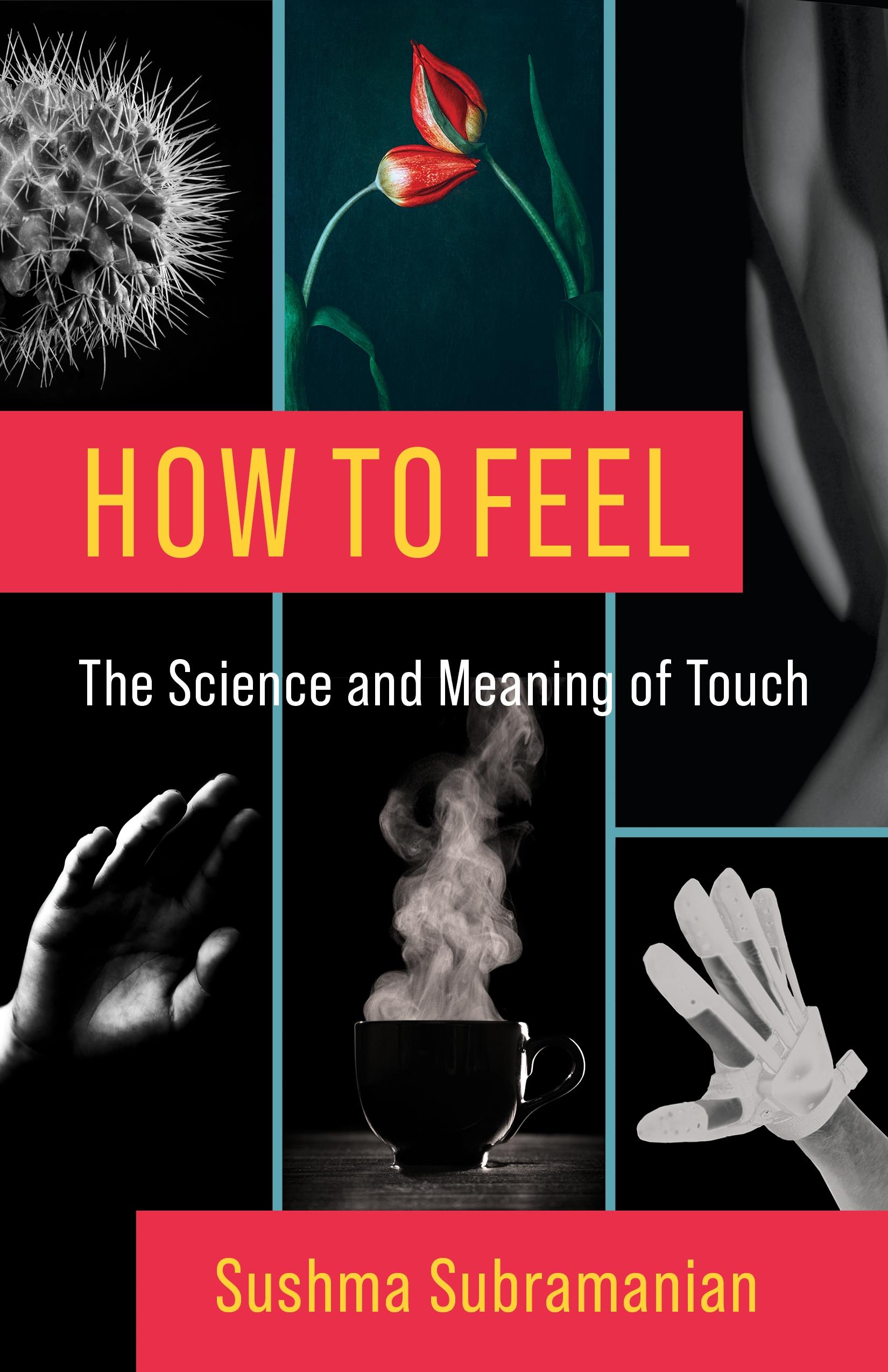
We are out of touch. Many people fear that we are trapped inside our screens, becoming less in tune with our bodies and losing our connection to the physical world. But the sense of touch has been undervalued since long before the days of digital isolation. Because of deeply rooted beliefs that favor the cerebral over the corporeal, touch is maligned as dirty or sentimental, in contrast with supposedly more elevated modes of perceiving the world.
How to Feel explores the scientific, physical, emotional, and cultural aspects of touch, reconnecting us to what is arguably our most important sense. Sushma Subramanian introduces readers to the scientists whose groundbreaking research is underscoring the role of touch in our lives. Through vivid individual stories—a man who lost his sense of touch in his late teens, a woman who experiences touch-emotion synesthesia, her own efforts to become less touch averse—Subramanian explains the science of the somatosensory system and our philosophical beliefs about it. She visits labs that are shaping the textures of objects we use every day, from cereal to synthetic fabrics. The book highlights the growing field of haptics, which is trying to incorporate tactile interactions into devices such as phones that touch us back and prosthetic limbs that can feel. How to Feel offers a new appreciation for a vital but misunderstood sense and how we can use it to live more fully.
Payez facilement par carte, Klarna, Apple Pay ou Google Pay. Pas satisfait ? Vous avez toujours une garantie de remboursement de 14 jours. En savoir plus dans nos conditions. Si vous avez des questions, envoyez-nous un e-mail à hello@memmo.org.
Memmo facilite tes études, où que tu sois dans le monde. On rassemble tes manuels de cours et des outils d'étude intelligents au même endroit : résumés, quiz, podcasts et flashcards. Et il y a Ted, ton compagnon d'étude qui répond à toutes tes questions. Plus de 50 000 étudiants étudient déjà ici – conçu pour t'aider à apprendre plus vite et à moins stresser.