
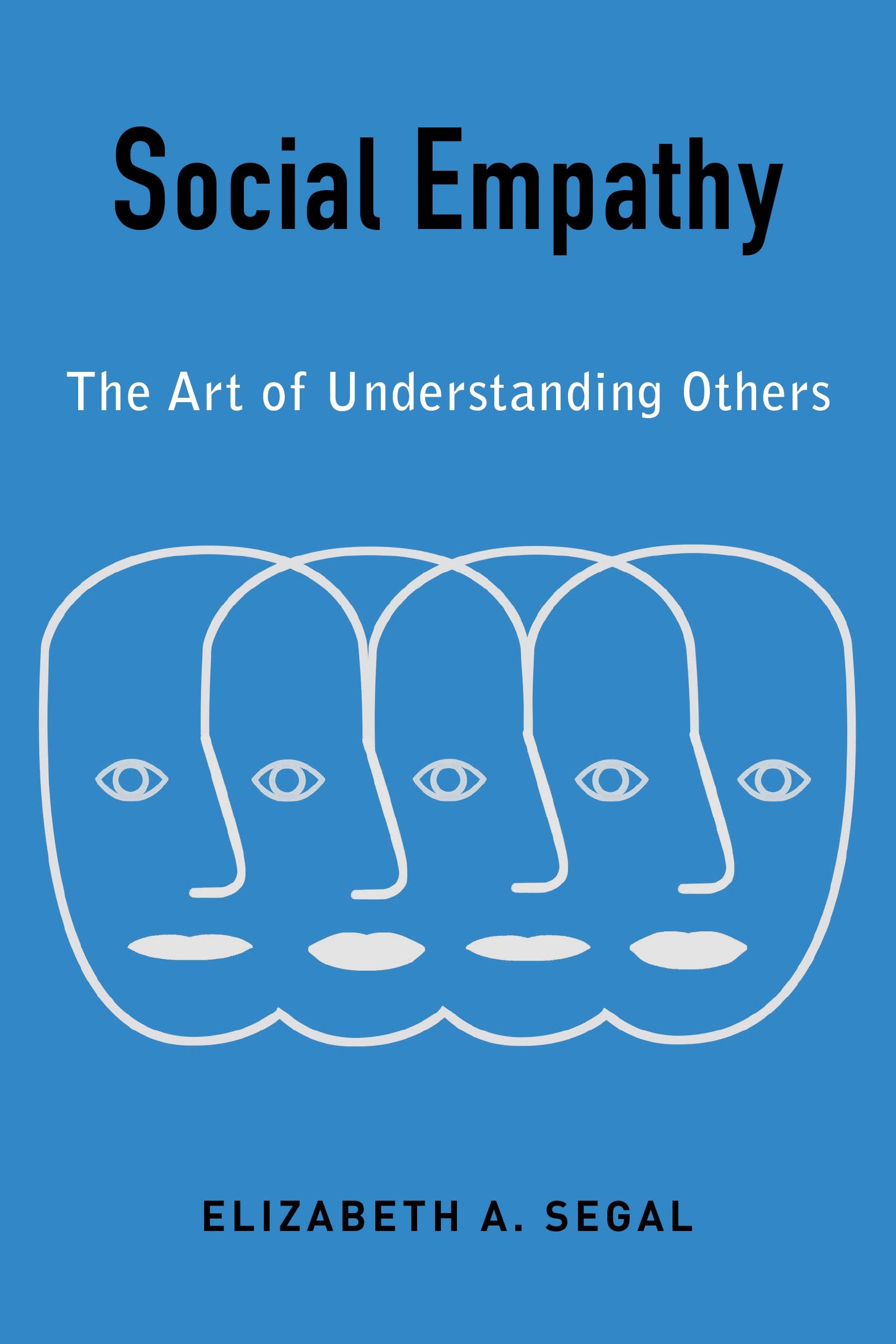
Our ability to understand others and help others understand us is essential to our individual and collective well-being. Yet there are many barriers that keep us from walking in the shoes of others: fear, skepticism, and power structures that separate us from those outside our narrow groups. To progress in a multicultural world and ensure our common good, we need to overcome these obstacles. Our best hope can be found in the skill of empathy.
In Social Empathy, Elizabeth A. Segal explains how we can develop our ability to understand one another and have compassion toward different social groups. When we are socially empathic, we not only imagine what it is like to be another person, but we consider their social, economic, and political circumstances and what shaped them. Segal explains the evolutionary and learned components of interpersonal and social empathy, including neurobiological factors and the role of social structures. Ultimately, empathy is not only a part of interpersonal relations: it is fundamental to interactions between different social groups and can be a way to bridge diverse people and communities. A clear and useful explanation of an often misunderstood concept, Social Empathy brings together sociology, psychology, social work, and cognitive neuroscience to illustrate how to become better advocates for justice.
Payez facilement par carte, Klarna, Apple Pay ou Google Pay. Pas satisfait ? Vous avez toujours une garantie de remboursement de 14 jours. En savoir plus dans nos conditions. Si vous avez des questions, envoyez-nous un e-mail à hello@memmo.org.
Memmo facilite tes études, où que tu sois dans le monde. On rassemble tes manuels de cours et des outils d'étude intelligents au même endroit : résumés, quiz, podcasts et flashcards. Et il y a Ted, ton compagnon d'étude qui répond à toutes tes questions. Plus de 50 000 étudiants étudient déjà ici – conçu pour t'aider à apprendre plus vite et à moins stresser.