
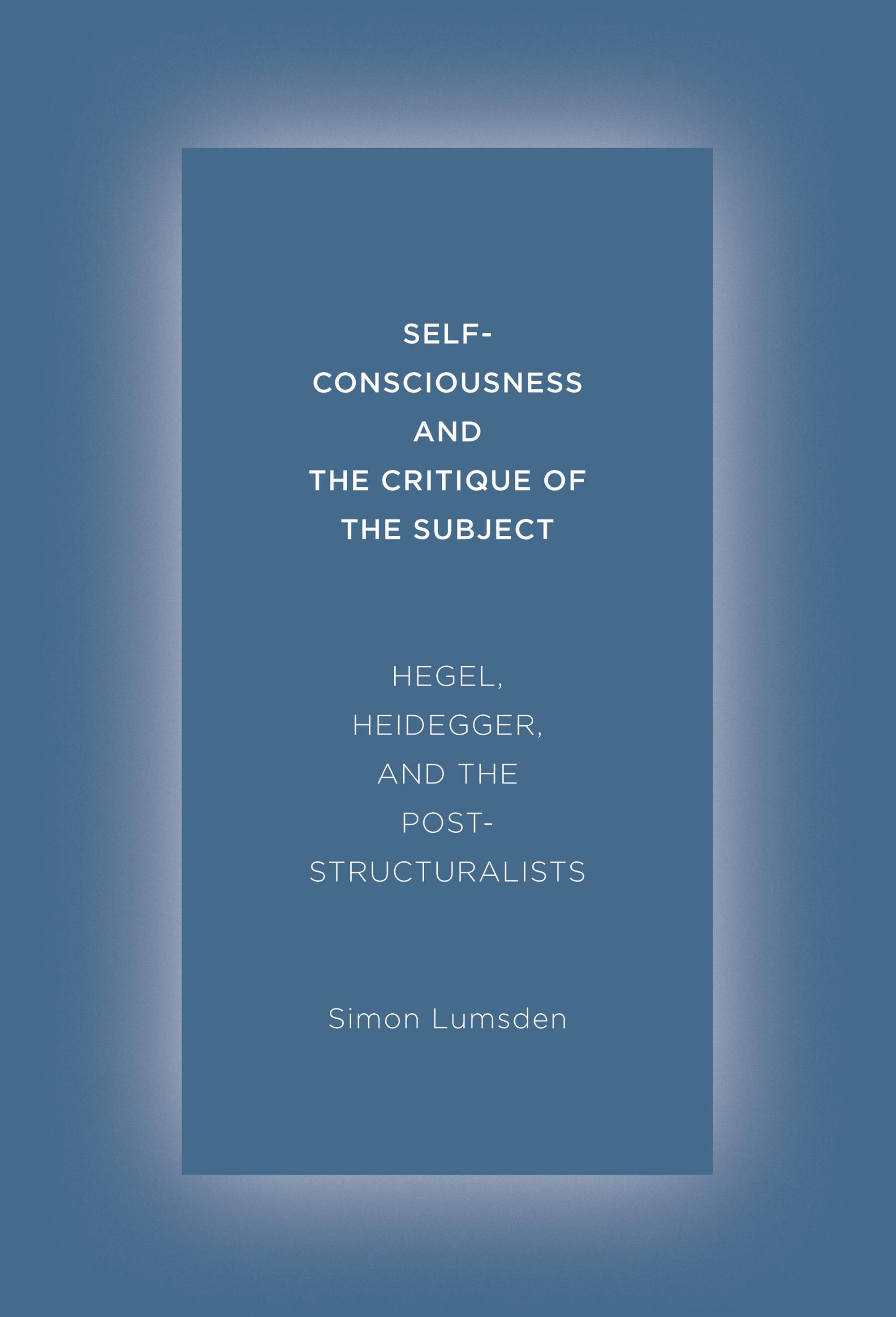
Poststructuralists hold Hegel responsible for giving rise to many of modern philosophy's problematic concepts—the authority of reason, self-consciousness, the knowing subject. Yet, according to Simon Lumsden, this animosity is rooted in a fundamental misunderstanding of Hegel's thought, and resolving this tension can not only heal the rift between poststructuralism and German idealism but also point these traditions in exciting new directions.
Revisiting the philosopher's key texts, Lumsden calls attention to Hegel's reformulation of liberal and Cartesian conceptions of subjectivity, identifying a critical though unrecognized continuity between poststructuralism and German idealism. Poststructuralism forged its identity in opposition to idealist subjectivity; however, Lumsden argues this model is not found in Hegel's texts but in an uncritical acceptance of Heidegger's characterization of Hegel and Fichte as "metaphysicians of subjectivity." Recasting Hegel as both post-Kantian and postmetaphysical, Lumsden sheds new light on this complex philosopher while revealing the surprising affinities between two supposedly antithetical modes of thought.
Payez facilement par carte, Klarna, Apple Pay ou Google Pay. Pas satisfait ? Vous avez toujours une garantie de remboursement de 14 jours. En savoir plus dans nos conditions. Si vous avez des questions, envoyez-nous un e-mail à hello@memmo.org.
Memmo facilite tes études, où que tu sois dans le monde. On rassemble tes manuels de cours et des outils d'étude intelligents au même endroit : résumés, quiz, podcasts et flashcards. Et il y a Ted, ton compagnon d'étude qui répond à toutes tes questions. Plus de 50 000 étudiants étudient déjà ici – conçu pour t'aider à apprendre plus vite et à moins stresser.