
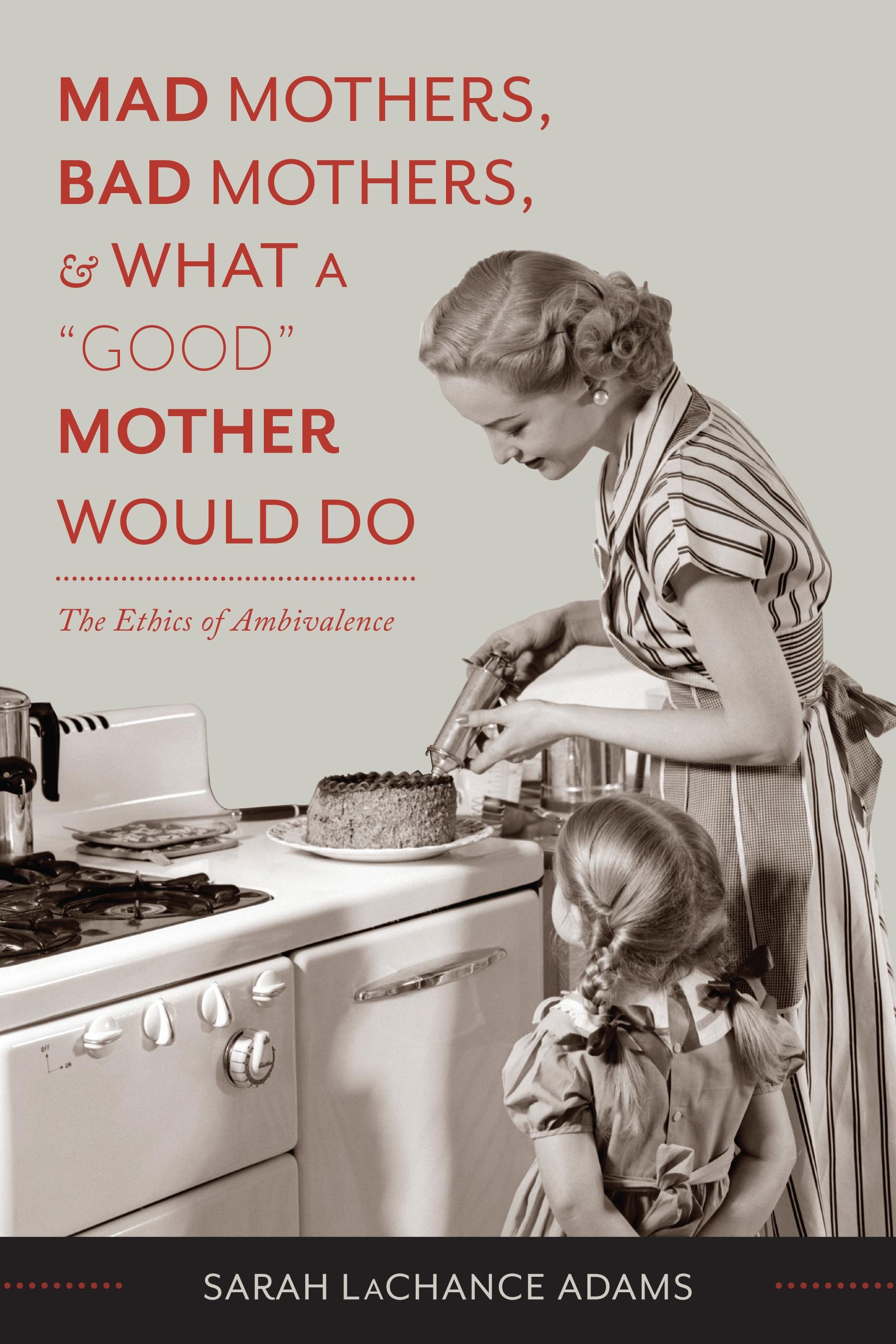
When a mother kills her child, we call her a bad mother, but, as this book shows, even mothers who intend to do their children harm are not easily categorized as "mad" or "bad." Maternal love is a complex emotion rich with contradictory impulses and desires, and motherhood is a conflicted state in which women constantly renegotiate the needs mother and child, the self and the other.
Applying care ethics philosophy and the work of Emmanuel Levinas, Maurice Merleau-Ponty, and Simone de Beauvoir to real-world experiences of motherhood, Sarah LaChance Adams throws the inherent tensions of motherhood into sharp relief, drawing a more nuanced portrait of the mother and child relationship than previously conceived. The maternal example is particularly instructive for ethical theory, highlighting the dynamics of human interdependence while also affirming separate interests. LaChance Adams particularly focuses on maternal ambivalence and its morally productive role in reinforcing the divergence between oneself and others, helping to recognize the particularities of situation, and negotiating the difference between one's own needs and the desires of others. She ultimately argues maternal filicide is a social problem requiring a collective solution that ethical philosophy and philosophies of care can inform.
Payez facilement par carte, Klarna, Apple Pay ou Google Pay. Pas satisfait ? Vous avez toujours une garantie de remboursement de 14 jours. En savoir plus dans nos conditions. Si vous avez des questions, envoyez-nous un e-mail à hello@memmo.org.
Memmo facilite tes études, où que tu sois dans le monde. On rassemble tes manuels de cours et des outils d'étude intelligents au même endroit : résumés, quiz, podcasts et flashcards. Et il y a Ted, ton compagnon d'étude qui répond à toutes tes questions. Plus de 50 000 étudiants étudient déjà ici – conçu pour t'aider à apprendre plus vite et à moins stresser.