
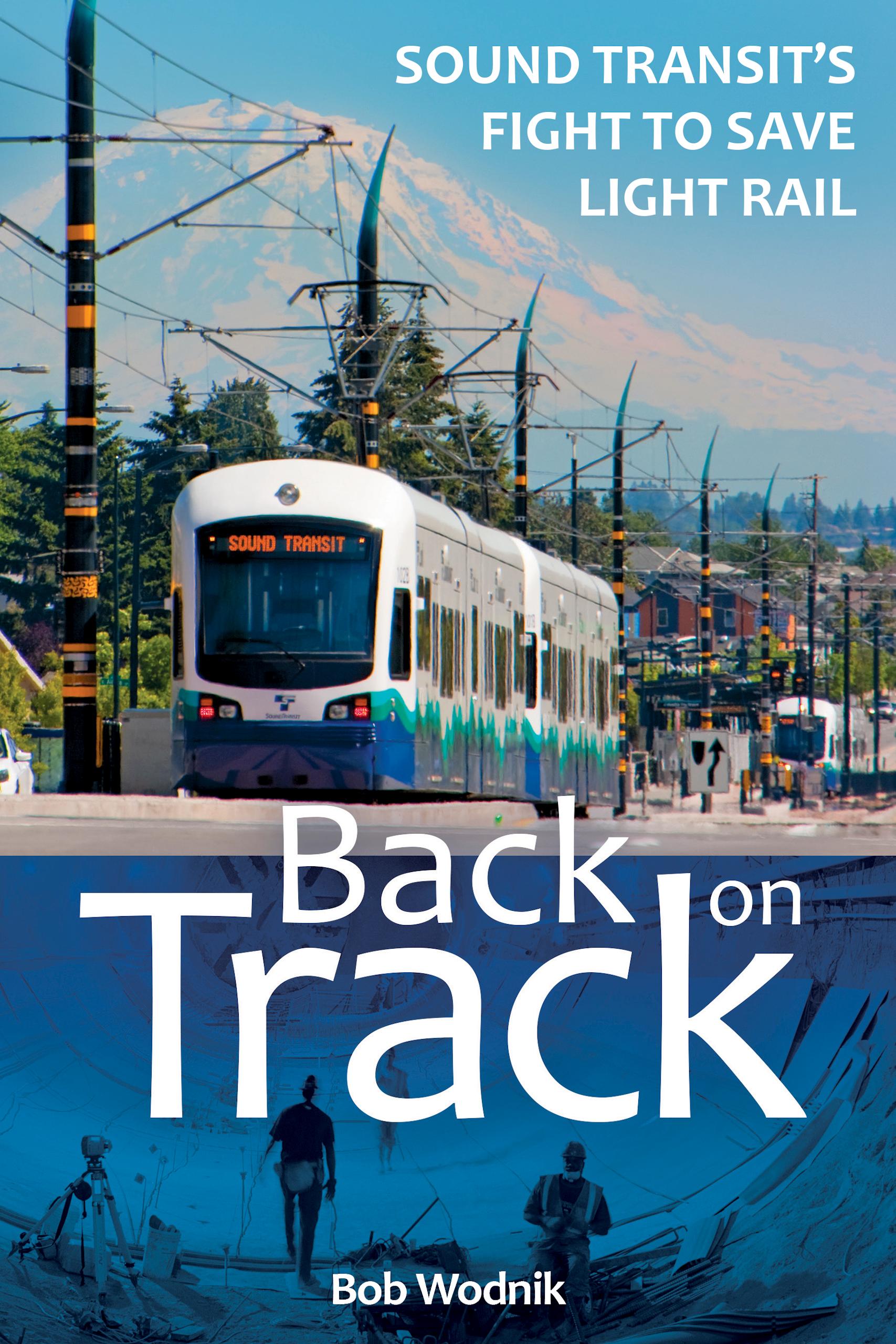
Observing its busy stations today, it is difficult to picture Seattle and Puget Sound without Sound Transit. Or to imagine how close the transportation agency came to folding. Back on Track reveals its astonishing survival story. After the city took the last streetcar out of service in 1941, Seattle subsisted for decades without a rail system, and it was choking on congestion. So for many, it was a joyous day in November 1996 when voters in urban areas of King, Pierce, and Snohomish Counties approved a ten-year, $3.9 billion plan to bring mass transit to Puget Sound. But for the 23 employees of the fledgling Sound Transit, the celebration was short-lived. When light rail plan estimates came in a billion dollars over budget and extended the project three years, the agency faced a torrent of angry taxpayers and public ridicule. News headlines bristled about “Unsound Transit,” and whether the organization was “on the midnight train to nowhere.” Prominent politicians and citizens joined the battle. One by one, Sound Transit’s administrators resigned.
Then Joni Earl stepped in. The new executive director rallied the remaining team members, secured a crucial $500 million federal grant, publicly confronted critics, and presented a realistic revised budget. As construction began, she and her team navigated lawsuits, the complex and at times excessive demands of impacted locations, and the expanding expectations of outlying communities. Earl’s vision, tenacity, and diplomacy transformed Sound Transit. Under her leadership, with strong support from Link Executive Director Ahmad Fazel and Seattle Mayor Greg Nickels, the agency delivered its promised light rail system in July 2009. A resounding success, Sound Transit exceeded usage forecasts, and now its trains and buses serve nearly 50 million passengers a year traveling a combined 73,000 miles every day, and few ever question whether the region’s light rail system should exist.
Maksa helposti kortilla, Klarnalla, Apple Paylla tai Google Paylla. Etkö ole tyytyväinen? Sinulla on aina 14 päivän palautusoikeus. Lue lisää ehdoistamme. Jos sinulla on kysyttävää, lähetä meille sähköpostia osoitteeseen hello@memmo.org.
Memmo tekee opiskelusta helpompaa – missä päin maailmaa ikinä oletkin. Meillä yhdistät kurssikirjat ja fiksut opiskelutyökalut yhteen paikkaan: tiivistelmät, visat, podcastit ja muistikortit. Ja sitten Ted, opiskelukaverisi, joka vastaa kaikkeen, mitä ikinä mietitkin. Yli 50 000 opiskelijaa opiskelee jo täällä – rakennettu auttamaan sinua oppimaan nopeammin ja stressaamaan vähemmän.