
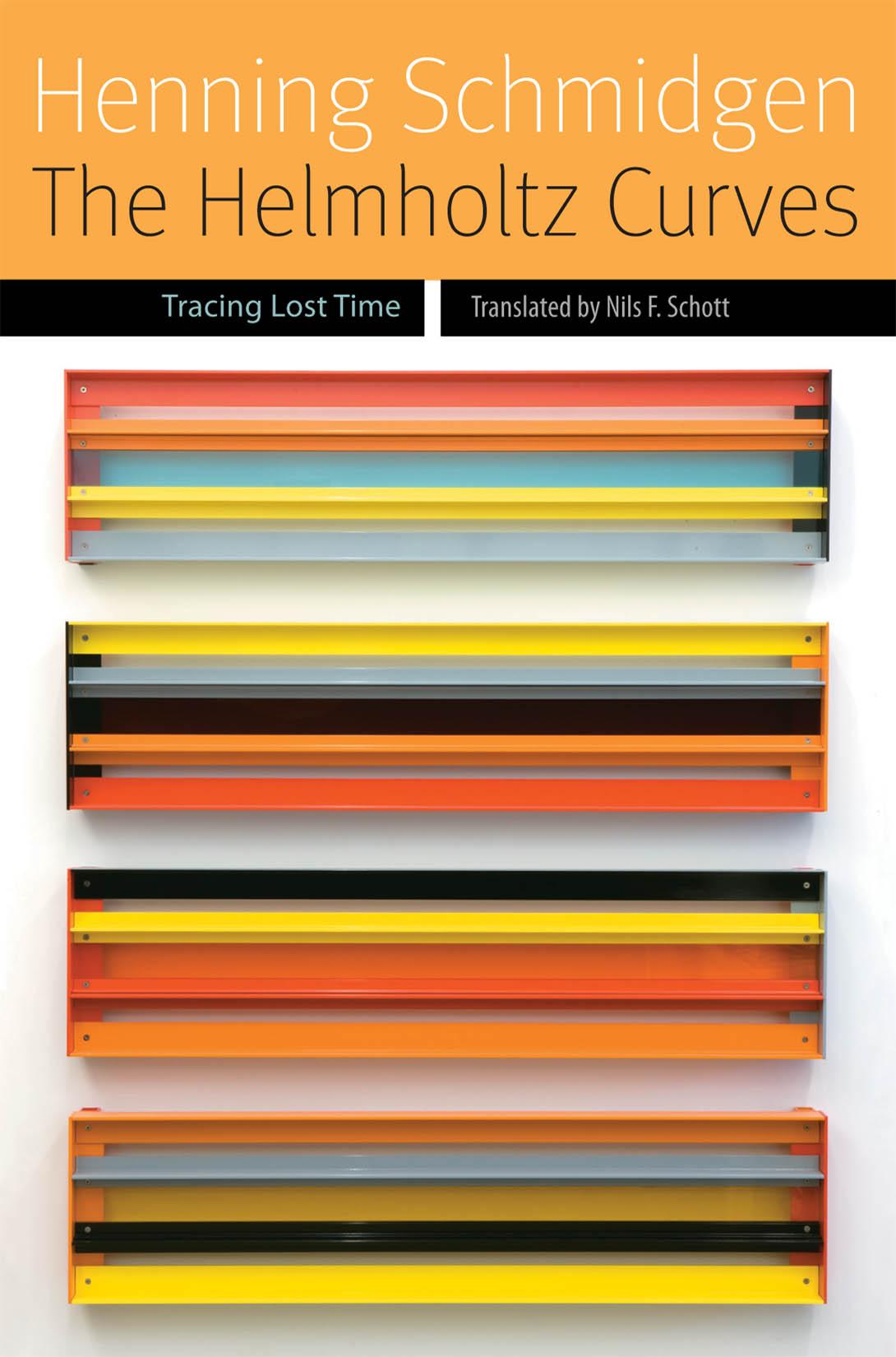
This book reconstructs the emergence of the phenomenon of “lost time” by engaging with two of the most significant time experts of the nineteenth century: the German physiologist Hermann von Helmholtz and the French writer Marcel Proust.
Its starting point is the archival discovery of curve images that Helmholtz produced in the context of pathbreaking experiments on the temporality of the nervous system in 1851. With a “frog drawing machine,” Helmholtz established the temporal gap between stimulus and response that has remained a core issue in debates between neuroscientists and philosophers.
When naming the recorded phenomena, Helmholtz introduced the term temps perdu, or lost time. Proust had excellent contacts with the biomedical world of late-nineteenth-century Paris, and he was familiar with this term and physiological tracing technologies behind it. Drawing on the machine philosophy of Deleuze, Schmidgen highlights the resemblance between the machinic assemblages and rhizomatic networks within which Helmholtz and Proust pursued their respective projects.
Maksa helposti kortilla, Klarnalla, Apple Paylla tai Google Paylla. Etkö ole tyytyväinen? Sinulla on aina 14 päivän palautusoikeus. Lue lisää ehdoistamme. Jos sinulla on kysyttävää, lähetä meille sähköpostia osoitteeseen hello@memmo.org.
Memmo tekee opiskelusta helpompaa – missä päin maailmaa ikinä oletkin. Meillä yhdistät kurssikirjat ja fiksut opiskelutyökalut yhteen paikkaan: tiivistelmät, visat, podcastit ja muistikortit. Ja sitten Ted, opiskelukaverisi, joka vastaa kaikkeen, mitä ikinä mietitkin. Yli 50 000 opiskelijaa opiskelee jo täällä – rakennettu auttamaan sinua oppimaan nopeammin ja stressaamaan vähemmän.