
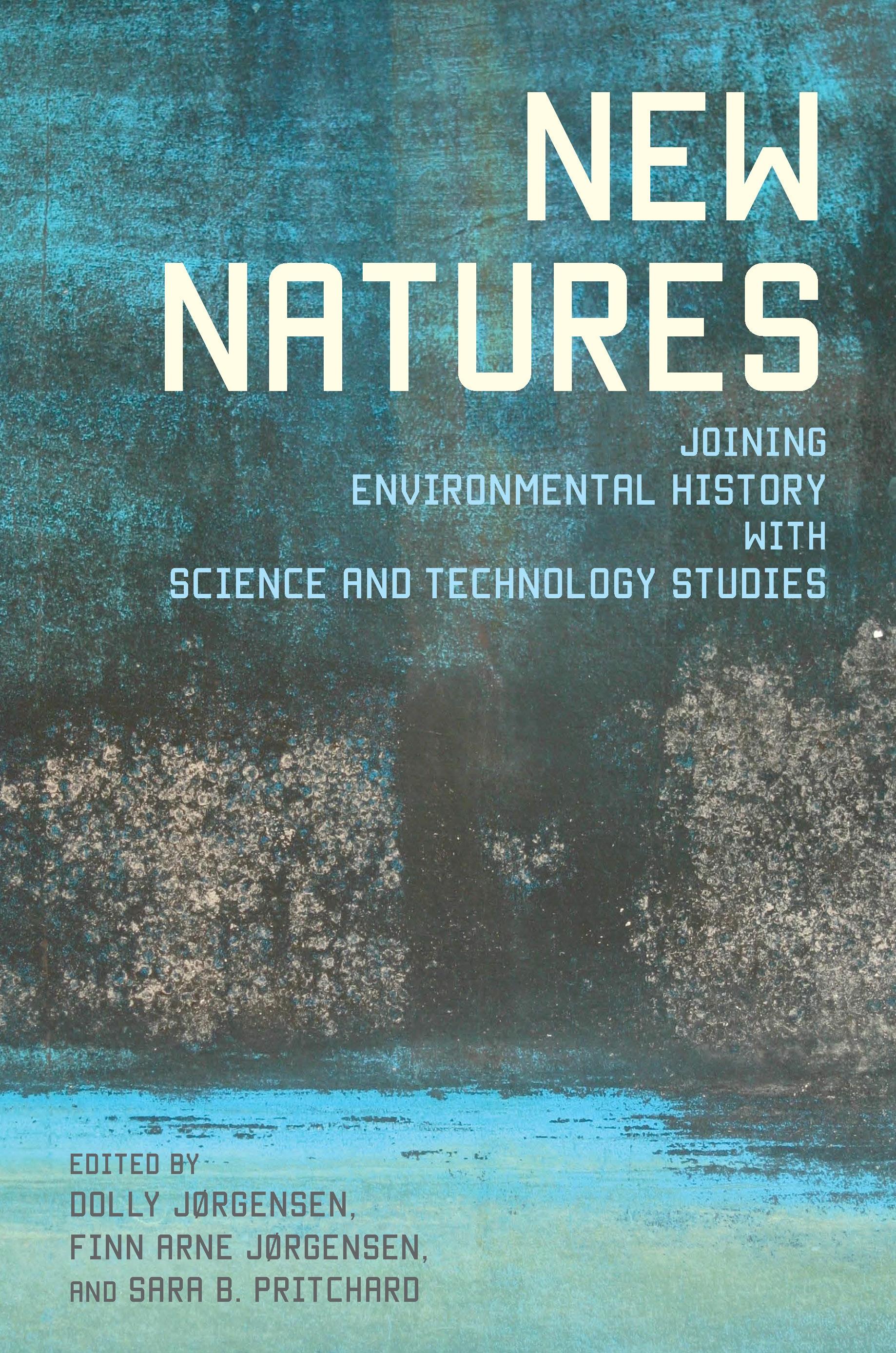
New Natures broadens the dialogue between the disciplines of science and technology studies (STS) and environmental history in hopes of deepening and even transforming understandings of human-nature interactions. The volume presents richly developed historical studies that explicitly engage with key STS theories, offering models for how these theories can help crystallize central lessons from empirical histories, facilitate comparative analysis, and provide a language for complicated historical phenomena. Overall, the collection exemplifies the fruitfulness of cross-disciplinary thinking.
The chapters follow three central themes: ways of knowing, or how knowledge is produced and how this mediates our understanding of the environment; constructions of environmental expertise, showing how expertise is evaluated according to categories, categorization, hierarchies, and the power afforded to expertise; and lastly, an analysis of networks, mobilities, and boundaries, demonstrating how knowledge is both diffused and constrained and what this means for humans and the environment.
Contributors explore these themes by discussing a wide array of topics, including farming, forestry, indigenous land management, ecological science, pollution, trade, energy, and outer space, among others. The epilogue, by the eminent environmental historian Sverker Sorlin, views the deep entanglements of humans and nature in contemporary urbanity and argues we should preserve this relationship in the future. Additionally, the volume looks to extend the valuable conversation between STS and environmental history to wider communities that include policy makers and other stakeholders, as many of the issues raised can inform future courses of action.
The chapters follow three central themes: ways of knowing, or how knowledge is produced and how this mediates our understanding of the environment; constructions of environmental expertise, showing how expertise is evaluated according to categories, categorization, hierarchies, and the power afforded to expertise; and lastly, an analysis of networks, mobilities, and boundaries, demonstrating how knowledge is both diffused and constrained and what this means for humans and the environment.
Contributors explore these themes by discussing a wide array of topics, including farming, forestry, indigenous land management, ecological science, pollution, trade, energy, and outer space, among others. The epilogue, by the eminent environmental historian Sverker Sorlin, views the deep entanglements of humans and nature in contemporary urbanity and argues we should preserve this relationship in the future. Additionally, the volume looks to extend the valuable conversation between STS and environmental history to wider communities that include policy makers and other stakeholders, as many of the issues raised can inform future courses of action.
Kategoria: Vetenskapsteori och forskningsmetod
e-ISBN: 9780822978725
Maksa helposti kortilla, Klarnalla, Apple Paylla tai Google Paylla. Etkö ole tyytyväinen? Sinulla on aina 14 päivän palautusoikeus. Lue lisää ehdoistamme. Jos sinulla on kysyttävää, lähetä meille sähköpostia osoitteeseen hello@memmo.org.
Memmo tekee opiskelusta helpompaa – missä päin maailmaa ikinä oletkin. Meillä yhdistät kurssikirjat ja fiksut opiskelutyökalut yhteen paikkaan: tiivistelmät, visat, podcastit ja muistikortit. Ja sitten Ted, opiskelukaverisi, joka vastaa kaikkeen, mitä ikinä mietitkin. Yli 50 000 opiskelijaa opiskelee jo täällä – rakennettu auttamaan sinua oppimaan nopeammin ja stressaamaan vähemmän.
Saatat pitää myös näistä
Osta kirja0