
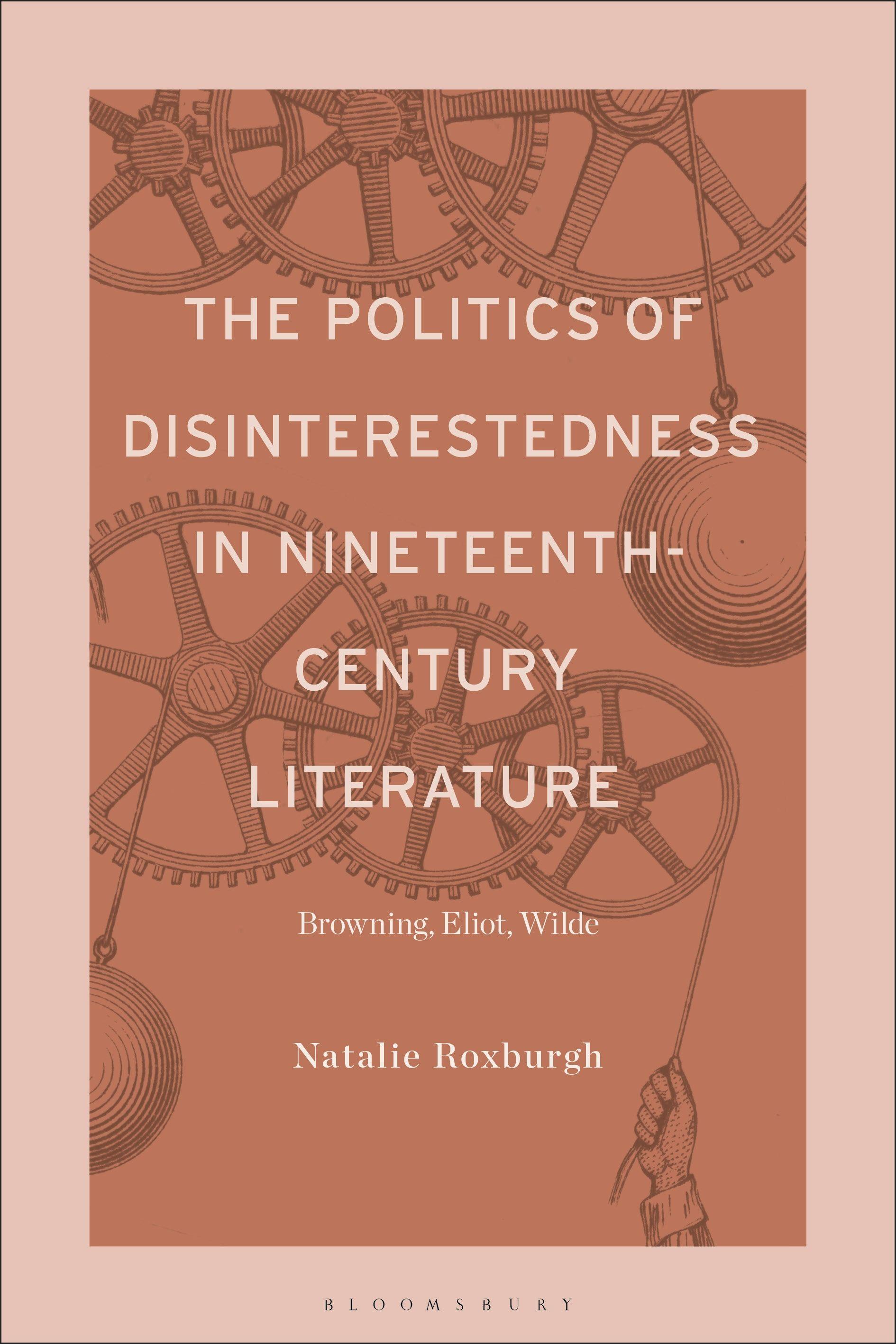
The Politics of Disinterestedness in Nineteenth-Century Literature historicizes the concept of disinterestedness by examining discourses on political economy during and before the 19th century. It argues that certain literary texts respond to the way all interests are transformed into economic interests during this period. It also shows that this has implications for aesthetics and questions of aesthetic autonomy, in which discourses on disinterestedness are tied up.
Through a New Formalist approach, Natalie Roxburgh provides fresh readings of texts by Robert Browning, George Eliot, and Oscar Wilde, whose respective oeuvres demonstrate an attention to the formal affordances of literary disinterestedness that compete with-and critically assess-other versions. Browning develops a dramatic monologue so that the reader is enticed to re-read his poems; Eliot cultivates the problematic character who must struggle with her desire within a larger play of interests in a way that evolves the realist Condition of England novel; and Wilde experiments with the blending of genres in his critical essays by rendering them as dramatic dialogues that serve as contemplative mechanisms for playing with a multiplicity of interests, which he explores in terms of influence.
Reading these canonical authors through the politics of disinterestedness sheds new light on literary value and, in particular, the formal techniques seen as important by the end of the 19th century, just as liberal democracy emerged in Britain.
Through a New Formalist approach, Natalie Roxburgh provides fresh readings of texts by Robert Browning, George Eliot, and Oscar Wilde, whose respective oeuvres demonstrate an attention to the formal affordances of literary disinterestedness that compete with-and critically assess-other versions. Browning develops a dramatic monologue so that the reader is enticed to re-read his poems; Eliot cultivates the problematic character who must struggle with her desire within a larger play of interests in a way that evolves the realist Condition of England novel; and Wilde experiments with the blending of genres in his critical essays by rendering them as dramatic dialogues that serve as contemplative mechanisms for playing with a multiplicity of interests, which he explores in terms of influence.
Reading these canonical authors through the politics of disinterestedness sheds new light on literary value and, in particular, the formal techniques seen as important by the end of the 19th century, just as liberal democracy emerged in Britain.
Pages: 192
Category: Litteraturvetenskap & Teori
e-ISBN: 9798765135006
Shipping weight: 1.2 kg
Ships in: 1-2 days
Pay easily by card, Klarna, Apple Pay or Google Pay. Not happy? You always have a 14-day money-back guarantee. Read more in our terms. If you have any questions, email us at hello@memmo.org.
Memmo makes studying easier – wherever you are in the world. We bring your course books and smart study tools together in one place: summaries, quizzes, podcasts and flashcards. Plus Ted, your study buddy who answers anything you wonder. Over 50,000 students already study here – built to help you learn faster and stress less.