
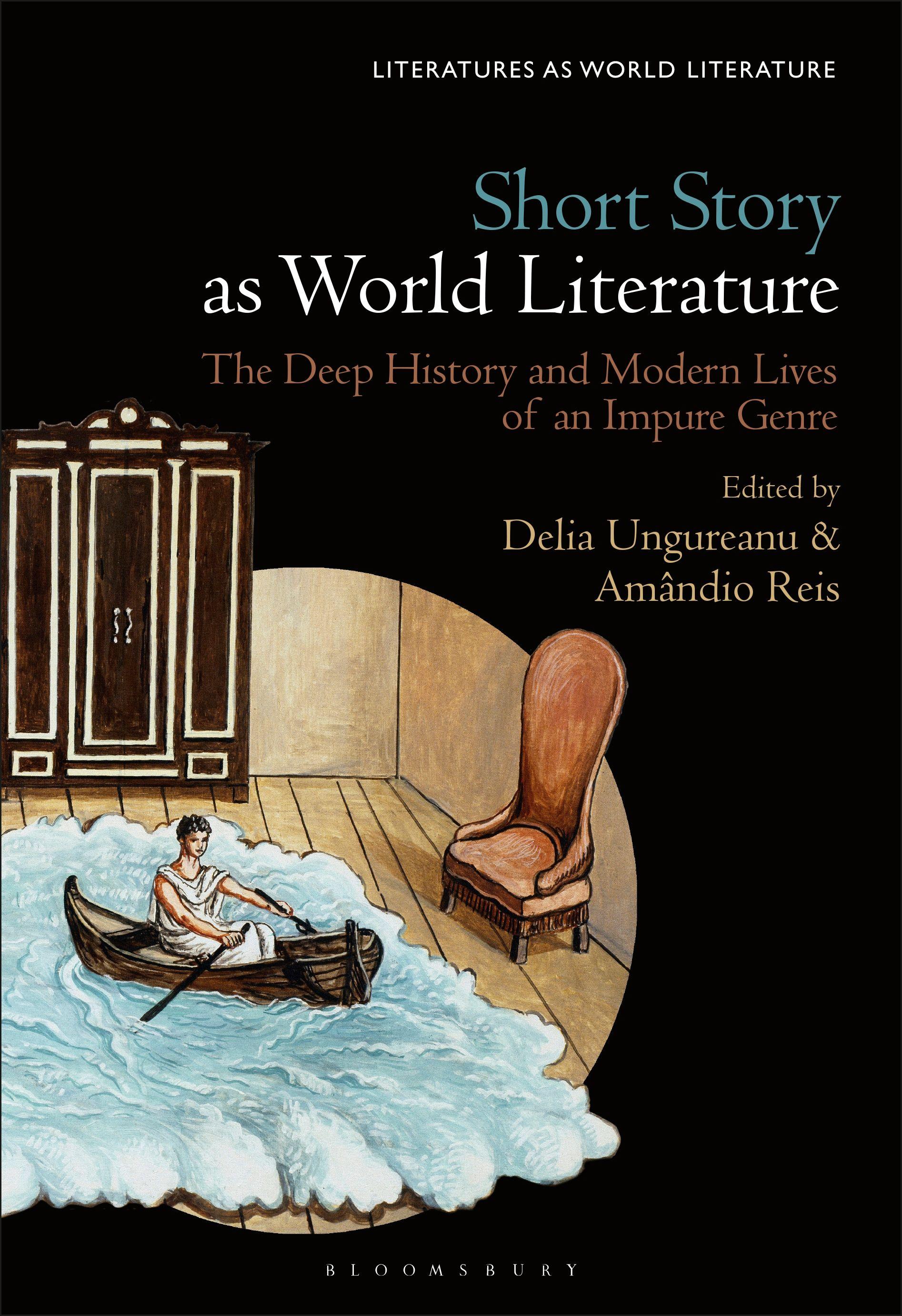
Global in scope, this volume uncovers the deep history of the short story as an "impure" genre by challenging the commonplace understanding in contemporary literary studies that the short story is primarily a product of Western modernity.
Genres do not have rigid, timeless, once-and-for-all definitions, and the short story is no exception. Short Story as World Literature invites the reader to reflect on the historical becoming of this impure genre, analyzing various forms of the short story throughout its deep history. It also challenges established ideas about the genre that limit its history to the prose form practiced by Edgar Allan Poe and canonized in Western Europe following Charles Baudelaire's influential translation.
The story of the short story presented here goes into a much deeper history throughout time and space: its earliest forms include dreams and visions in ancient religious texts, parables, poems, maxims, but also more recently poem-objects and films. The authors examine how the short story evolves, sometimes almost beyond recognition, across different forms of art, genres, and media, as well as through translation and circulation – with effects on institutions, educational politics, and the construction of a moral system of values.
An international team of established and emerging scholars in the fields of comparative and world literature – including David Damrosch, Paulo Horta, Dominique Jullien, and Mads Rosendahl Thomsen, as well as Maria Dabija, Sophus Helle, and Michael Makarovsky – untangle this complex and complicated (hi)story.
Genres do not have rigid, timeless, once-and-for-all definitions, and the short story is no exception. Short Story as World Literature invites the reader to reflect on the historical becoming of this impure genre, analyzing various forms of the short story throughout its deep history. It also challenges established ideas about the genre that limit its history to the prose form practiced by Edgar Allan Poe and canonized in Western Europe following Charles Baudelaire's influential translation.
The story of the short story presented here goes into a much deeper history throughout time and space: its earliest forms include dreams and visions in ancient religious texts, parables, poems, maxims, but also more recently poem-objects and films. The authors examine how the short story evolves, sometimes almost beyond recognition, across different forms of art, genres, and media, as well as through translation and circulation – with effects on institutions, educational politics, and the construction of a moral system of values.
An international team of established and emerging scholars in the fields of comparative and world literature – including David Damrosch, Paulo Horta, Dominique Jullien, and Mads Rosendahl Thomsen, as well as Maria Dabija, Sophus Helle, and Michael Makarovsky – untangle this complex and complicated (hi)story.
Pay easily by card, Klarna, Apple Pay or Google Pay. Not happy? You always have a 14-day money-back guarantee. Read more in our terms. If you have any questions, email us at hello@memmo.org.
Memmo makes studying easier – wherever you are in the world. We bring your course books and smart study tools together in one place: summaries, quizzes, podcasts and flashcards. Plus Ted, your study buddy who answers anything you wonder. Over 50,000 students already study here – built to help you learn faster and stress less.