
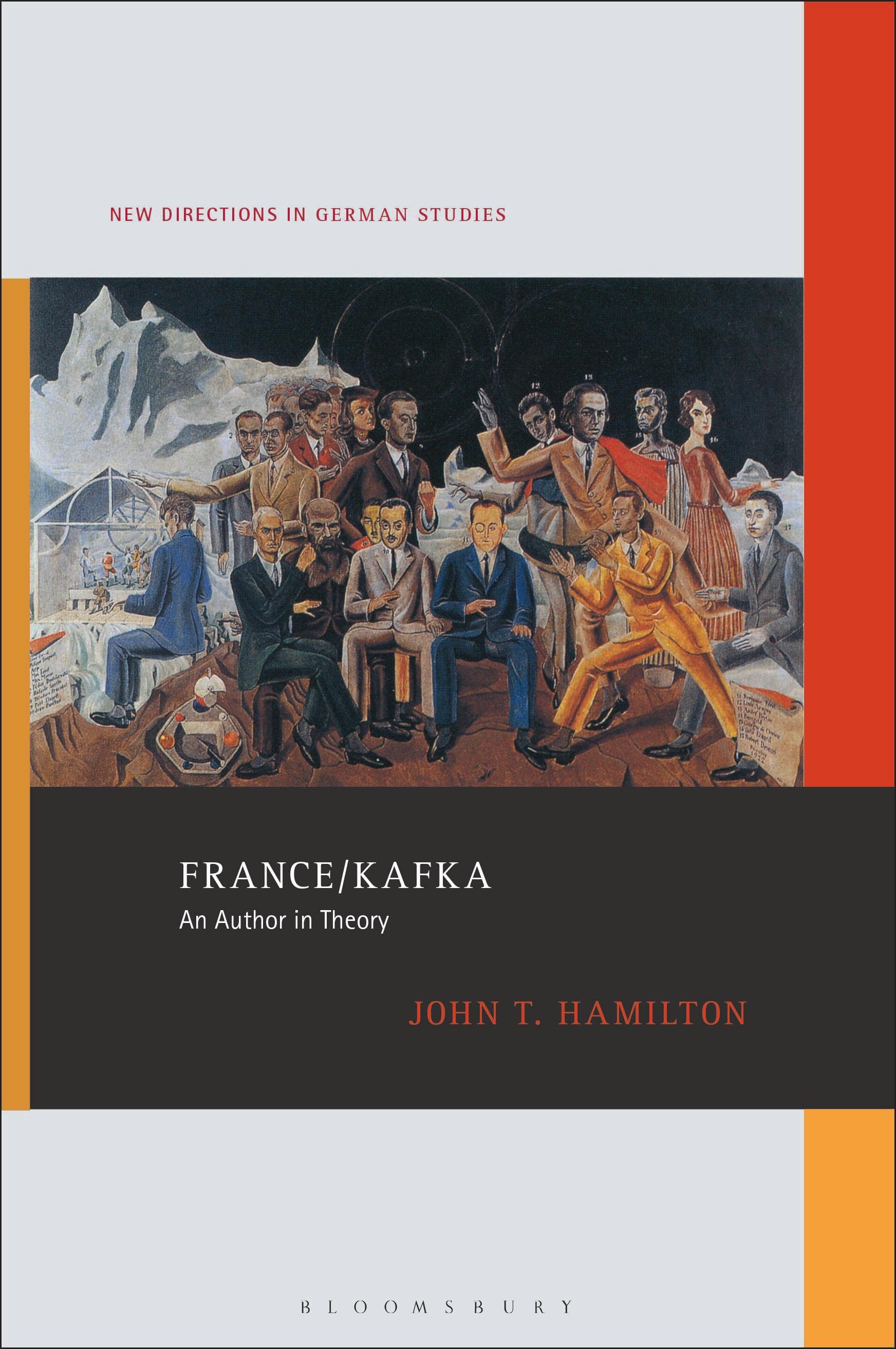
While his memory languished under Nazi censorship, Franz Kafka covertly circulated through occupied France and soon emerged as a cultural icon, read by the most influential intellectuals of the time as a prophet of the rampant bureaucracy, totalitarian oppression, and absurdity that branded the twentieth century. In tracing the history of Kafka's reception in postwar France, John T. Hamilton explores how the work of a German-Jewish writer from Prague became a modern classic capable of addressing universal themes of the human condition.
Hamilton also considers how Kafka's unique literary corpus came to stimulate reflection in diverse movements, critical approaches, and philosophical schools, from surrealism and existentialism through psychoanalysis, phenomenology, and structuralism to Marxism, deconstruction, and feminism. The story of Kafka's afterlife in Paris thus furnishes a key chapter in the unfolding of French theory, which continues to guide how we read literature and understand its relationship to the world.
Hamilton also considers how Kafka's unique literary corpus came to stimulate reflection in diverse movements, critical approaches, and philosophical schools, from surrealism and existentialism through psychoanalysis, phenomenology, and structuralism to Marxism, deconstruction, and feminism. The story of Kafka's afterlife in Paris thus furnishes a key chapter in the unfolding of French theory, which continues to guide how we read literature and understand its relationship to the world.
Pay easily by card, Klarna, Apple Pay or Google Pay. Not happy? You always have a 14-day money-back guarantee. Read more in our terms. If you have any questions, email us at hello@memmo.org.
Memmo makes studying easier – wherever you are in the world. We bring your course books and smart study tools together in one place: summaries, quizzes, podcasts and flashcards. Plus Ted, your study buddy who answers anything you wonder. Over 50,000 students already study here – built to help you learn faster and stress less.