
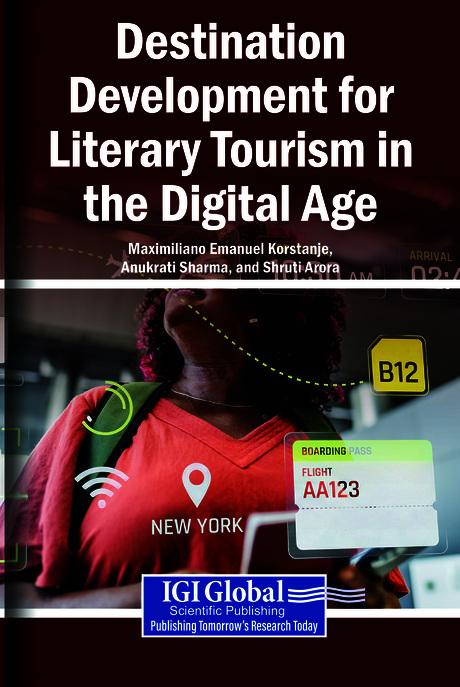
In today’s fast-changing digital world, the way people experience literature and travel has rapidly evolved. Literary tourism, once centered on visiting authors’ homes, fictional settings, and literary landmarks, is now transformed through digital platforms and intelligent technologies. Social media, blogs, and online storytelling have made literary destinations more accessible and engaging, allowing travelers to connect with places before they visit. Websites, mobile apps, and smart tourism platforms also play an important role in promoting and interpreting these destinations. Immersive tools make literary tourism more interactive by allowing visitors to experience stories in a vivid and engaging way. From virtually stepping into a novel’s setting to interacting with story elements, technology may bring literature to life like never before. Destination Development for Literary Tourism in the Digital Age explores how tools like social media, virtual reality (VR), augmented reality (AR), and digital storytelling reshape the connection between readers, travelers, and literary spaces. This book examines how literary places act as emotional and imaginative landscapes for visitors seeking meaningful and memorable experiences. Covering topics such as travel literature, digital technology, and visitor engagement, this book is a valuable resource for business owners, sociologists, engineers, academicians, researchers, and scientists.
Pay easily by card, Klarna, Apple Pay or Google Pay. Not happy? You always have a 14-day money-back guarantee. Read more in our terms. If you have any questions, email us at hello@memmo.org.
Memmo makes studying easier – wherever you are in the world. We bring your course books and smart study tools together in one place: summaries, quizzes, podcasts and flashcards. Plus Ted, your study buddy who answers anything you wonder. Over 75,000 students already study here – built to help you learn faster and stress less.
You might also like
Buy the book0