
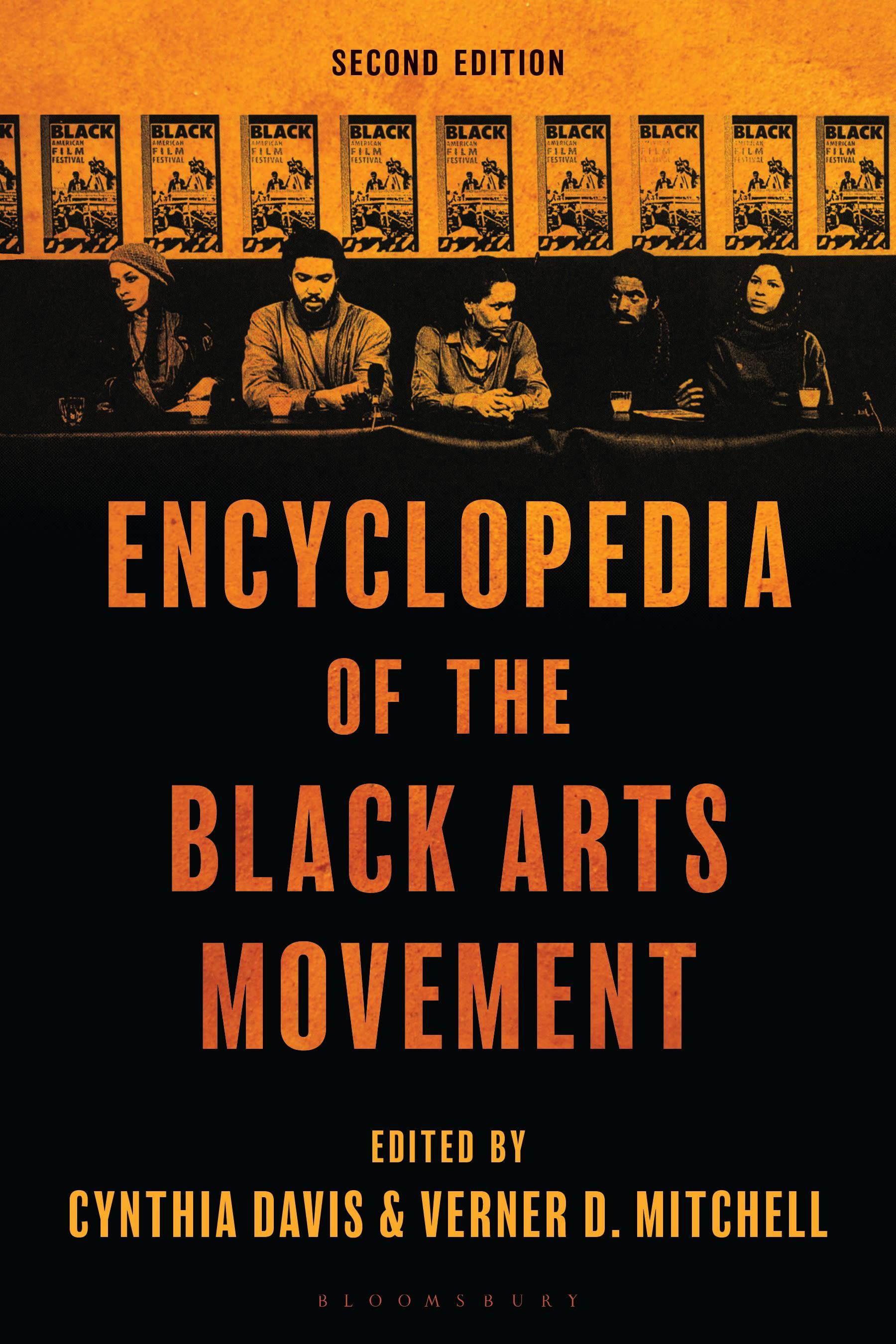
The Black Arts Movement combined innovative approaches to literature, film, music, visual arts, and theatre with a heightened consciousness of black agency and autonomy, along with the radical politics of the Civil Rights Movement, the Black Muslims, and the Black Panthers.
Between the late 1950s and the end of the 1970s, the movement produced some of America's most original and controversial artists and intellectuals, including Amiri Baraka, James Baldwin, Larry Neal, Maya Angelou, Nikki Giovanni, Sonia Sanchez, Ntozake Shange, June Jordan, Audre Lorde, John Coltrane, and Archie Shepp. Although the movement began in New York City, with the Umbra Poets Workshop and the Negro Ensemble Company on the Lower East Side, and Baraka's Black Arts Repertory Theatre in Harlem, it quickly spread to Chicago, Detroit, and San Francisco. In Chicago, the movement was disseminated by Hoyt Fuller and John Johnson who edited and published Negro Digest (later Black World), an important venue for the new artists. Although all the creative arts were represented, the emphasis on spoken word poetry and jazz helped lay the groundwork for contemporary rap and hip-hop.
An essential reference for students and scholars of 20th-century American Literature and African American Cultural Studies, this volume compiles current scholarship on the Black Arts Movement. Encyclopedia of the Black Arts Movement includes essays on well-known artists and activists, as well as lesser-known groups and individuals, including Kathleen Collins, June Jordan, Bill Gunn, Mae Mallory, Chicago's AfriCOBRA group, and the New York Umbra Poetry Workshop.
Between the late 1950s and the end of the 1970s, the movement produced some of America's most original and controversial artists and intellectuals, including Amiri Baraka, James Baldwin, Larry Neal, Maya Angelou, Nikki Giovanni, Sonia Sanchez, Ntozake Shange, June Jordan, Audre Lorde, John Coltrane, and Archie Shepp. Although the movement began in New York City, with the Umbra Poets Workshop and the Negro Ensemble Company on the Lower East Side, and Baraka's Black Arts Repertory Theatre in Harlem, it quickly spread to Chicago, Detroit, and San Francisco. In Chicago, the movement was disseminated by Hoyt Fuller and John Johnson who edited and published Negro Digest (later Black World), an important venue for the new artists. Although all the creative arts were represented, the emphasis on spoken word poetry and jazz helped lay the groundwork for contemporary rap and hip-hop.
An essential reference for students and scholars of 20th-century American Literature and African American Cultural Studies, this volume compiles current scholarship on the Black Arts Movement. Encyclopedia of the Black Arts Movement includes essays on well-known artists and activists, as well as lesser-known groups and individuals, including Kathleen Collins, June Jordan, Bill Gunn, Mae Mallory, Chicago's AfriCOBRA group, and the New York Umbra Poetry Workshop.
Pages: 626
Category: Kultur-, Genus- & Postkoloniala studier
e-ISBN: 9798216391623
Shipping weight: 1.2 kg
Ships in: 1-2 days
Pay easily by card, Klarna, Apple Pay or Google Pay. Not happy? You always have a 14-day money-back guarantee. Read more in our terms. If you have any questions, email us at hello@memmo.org.
Memmo makes studying easier – wherever you are in the world. We bring your course books and smart study tools together in one place: summaries, quizzes, podcasts and flashcards. Plus Ted, your study buddy who answers anything you wonder. Over 50,000 students already study here – built to help you learn faster and stress less.