
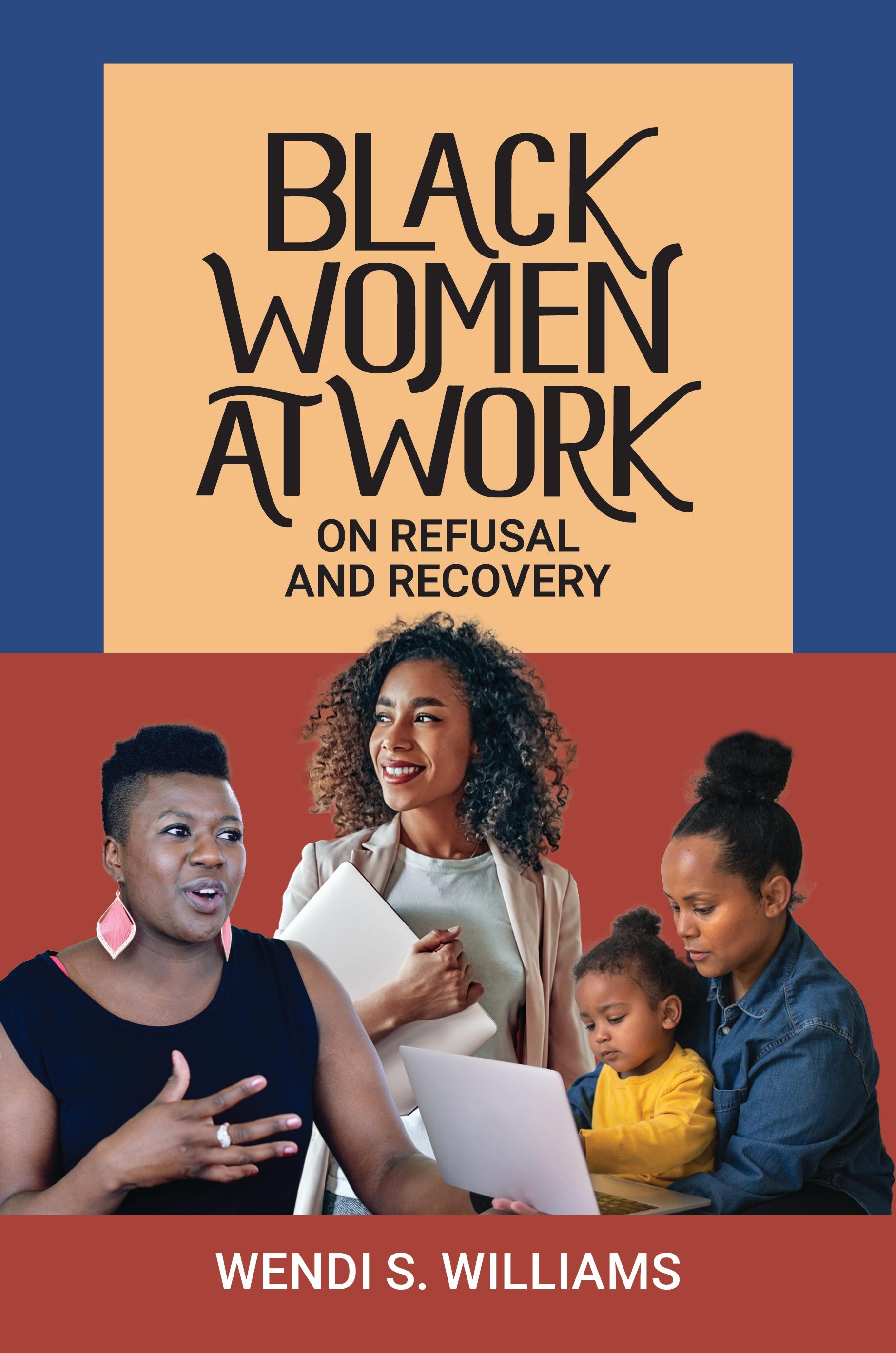
Details, and offers vignettes to illustrate, how patriarchy and white supremacy have restricted Black women at work, both historically and currently.
Around water coolers and over glasses of wine, Black women come together and process the ways in which their labor is taken for granted and their excellence called into question. Black Women at Work: On Refusal and Recovery makes the direct connection between these contemporary experiences and the long legacy of Black labor exploitation. Through the trafficking and enslavement of Africans, European Americans laid the inhumane foundation of their present-day wealth and privilege and established oppressive labor dynamics for workers that persist to this day.
In Black Women at Work, Wendi S. Williams moves the conversation beyond the stubborn audacity of inequity, focusing instead on the powerful history and example of Black women's labor and refusal practices and on the potent role that choice and voice can play in dismantling seemingly impenetrable systems of unfairness. Through the interweaving of personal narratives and social media reflections, Williams crafts a larger narrative of recovery and refusal that articulates a liberatory path toward recovery and reclamation through refusal-a path that will ultimately help to bring us all closer to freedom.
Around water coolers and over glasses of wine, Black women come together and process the ways in which their labor is taken for granted and their excellence called into question. Black Women at Work: On Refusal and Recovery makes the direct connection between these contemporary experiences and the long legacy of Black labor exploitation. Through the trafficking and enslavement of Africans, European Americans laid the inhumane foundation of their present-day wealth and privilege and established oppressive labor dynamics for workers that persist to this day.
In Black Women at Work, Wendi S. Williams moves the conversation beyond the stubborn audacity of inequity, focusing instead on the powerful history and example of Black women's labor and refusal practices and on the potent role that choice and voice can play in dismantling seemingly impenetrable systems of unfairness. Through the interweaving of personal narratives and social media reflections, Williams crafts a larger narrative of recovery and refusal that articulates a liberatory path toward recovery and reclamation through refusal-a path that will ultimately help to bring us all closer to freedom.
Pages: 152
Category: Kultur-, Genus- & Postkoloniala studier
e-ISBN: 9798216184430
Shipping weight: 1.2 kg
Ships in: 1-2 days
Pay easily by card, Klarna, Apple Pay or Google Pay. Not happy? You always have a 14-day money-back guarantee. Read more in our terms. If you have any questions, email us at hello@memmo.org.
Memmo makes studying easier – wherever you are in the world. We bring your course books and smart study tools together in one place: summaries, quizzes, podcasts and flashcards. Plus Ted, your study buddy who answers anything you wonder. Over 50,000 students already study here – built to help you learn faster and stress less.