
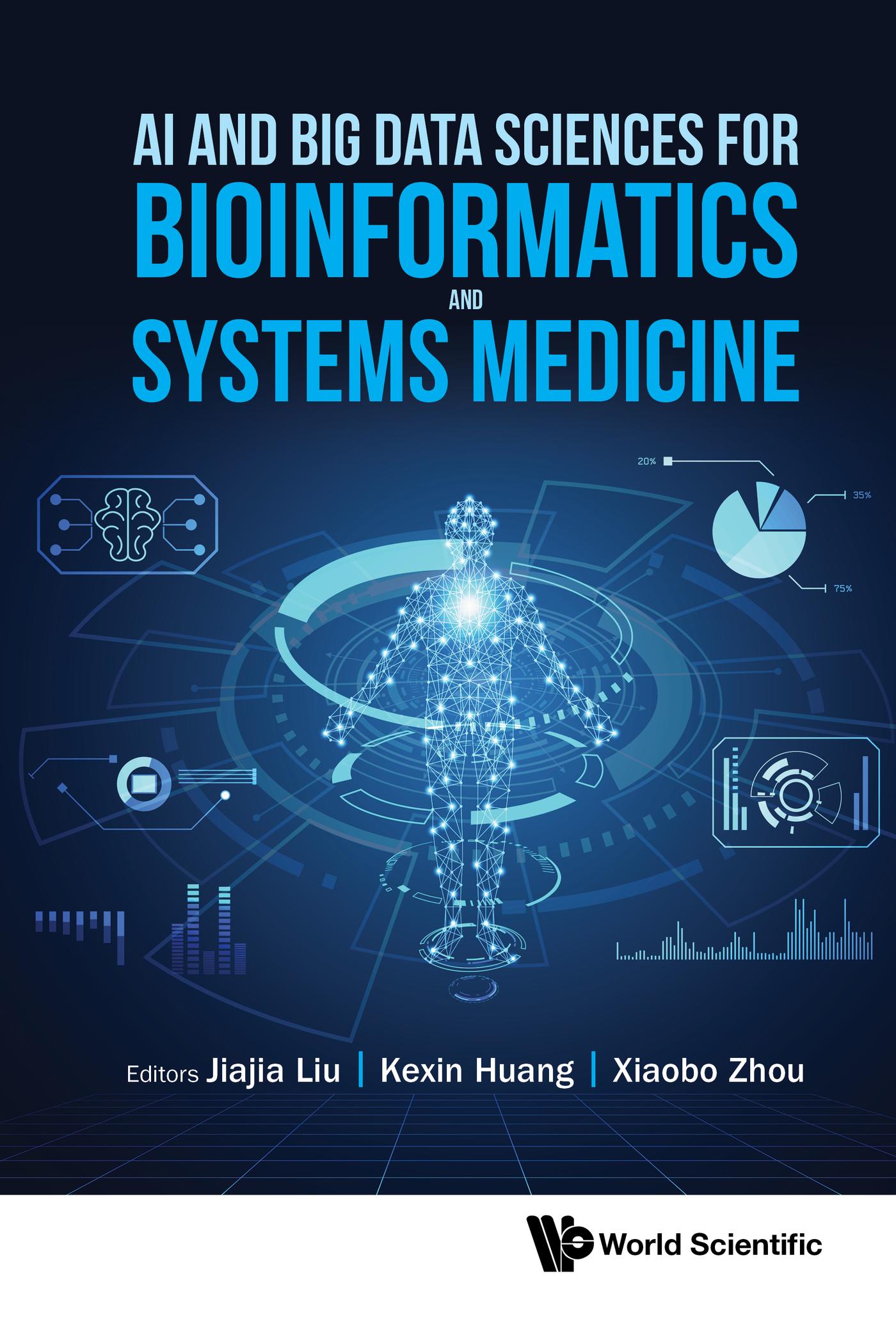
This book aims to provide a comprehensive overview of how artificial intelligence (AI) and big data analytics are transforming bioinformatics and biomedical research. It covers a wide range of computational methods applied to biomedical big data, including genomics, transcriptomics, proteomics, and imaging data, with a focus on their role in precision medicine.
The book is structured to guide readers from foundational AI models and data integration techniques to advanced applications in systems biology and drug discovery. It explores key topics such as single-cell and spatial omics analysis, genetic variation studies, and computational modeling of disease processes. Additionally, it highlights cutting-edge approaches in synthetic biology, mRNA optimization, and small molecule generation.
Designed for researchers, bioinformaticians, and clinicians, this book bridges the gap between computational sciences and biomedical applications. It aims to equip readers with the necessary knowledge to develop AI-driven solutions for diagnosing diseases, predicting treatment responses, and designing novel therapeutics. By integrating theoretical insights with real-world applications, the book serves as both an educational resource and a reference for ongoing advancements in AI-driven biomedical research.
Contents:
- Basic Statistical Modeling and Machine Learning Approaches
- Biomedical Big Data in EMR, H&E, and Medical Imaging
- Functional Annotation and Knowledgebase
- General Introduction to Omics Data Analysis for Precision Medicine
- Genome-Wide Association Studies and Imaging Genetics
- Single-Cell Sequencing Data Analysis: Basic Analysis
- Single-Cell Sequencing Data Analysis: Advanced Analysis
- Spatial Transcriptomics Data Analysis
- Spatial Proteomics Data Analysis
- Single-Cell Multimodal Integration
- Systems Biology in Modeling Disease Processes from Precancer to Cancer
- Systems Biology in Cancer Immunology
- Systems Biology for Cancer Drug Resistance Research
- Computational Insights in Metastasis: Exploring the Omics Revolution
- Systems Modeling for Cancer Microenvironment and Regenerative Medicine
- AI and Synthetic Biology
- Small Molecular Generation
Readership: Target Readership by Discipline/Profession: This book is designed for professionals and researchers at the intersection of artificial intelligence, bioinformatics, systems biology, and biomedical sciences. The key audience includes: Academia: Graduate students and advanced undergraduate students in bioinformatics, computational biology, biomedical data science, AI in healthcare, and systems medicine; Postdoctoral researchers and faculty working on AI-driven biomedical research, multi-omics data integration, and systems medicine applications; Medical and biological science researchers interested in incorporating AI techniques into their studies. Textbook Potential and Course Relevance: This book can serve as a primary or supplementary textbook for various graduate-level and advanced undergraduate courses, including: Bioinformatics and Computational Biology: AI and Machine Learning in Healthcare; Big Data in Biomedical Research; Precision Medicine and Translational Bioinformatics; Genomics, Proteomics, and Multi-Omics Data Analysis; Systems Biology and Disease Modeling; Biomedical Data Science and Biostatistics. Adoption Potential: Graduate-level courses in bioinformatics, AI in medicine, and biomedical data science will find this book particularly useful due to its comprehensive coverage of AI applications in multi-omics and systems medicine. Advanced undergraduate courses in bioinformatics and computational biology could adopt sections of the book, particularly for students specializing in AI-driven biomedical research. Medical schools and research institutions offering courses on precision medicine and computational modeling of diseases may include this book in their recommended reading lists. Secondary Market: Industry: Bioinformatics and computational biology professionals in biotech, pharmaceutical, and healthcare companies; Data scientists and AI researchers specializing in biomedical applications, drug discovery, and medical diagnostics; Pharmaceutical and biotech R&D teams working on AI-driven precision medicine, synthetic biology, and therapeutic development; Healthcare technology professionals and clinicians looking to integrate AI tools into medical research and practice.
Pay easily by card, Klarna, Apple Pay or Google Pay. Not happy? You always have a 14-day money-back guarantee. Read more in our terms. If you have any questions, email us at hello@memmo.org.
Memmo makes studying easier – wherever you are in the world. We bring your course books and smart study tools together in one place: summaries, quizzes, podcasts and flashcards. Plus Ted, your study buddy who answers anything you wonder. Over 50,000 students already study here – built to help you learn faster and stress less.