
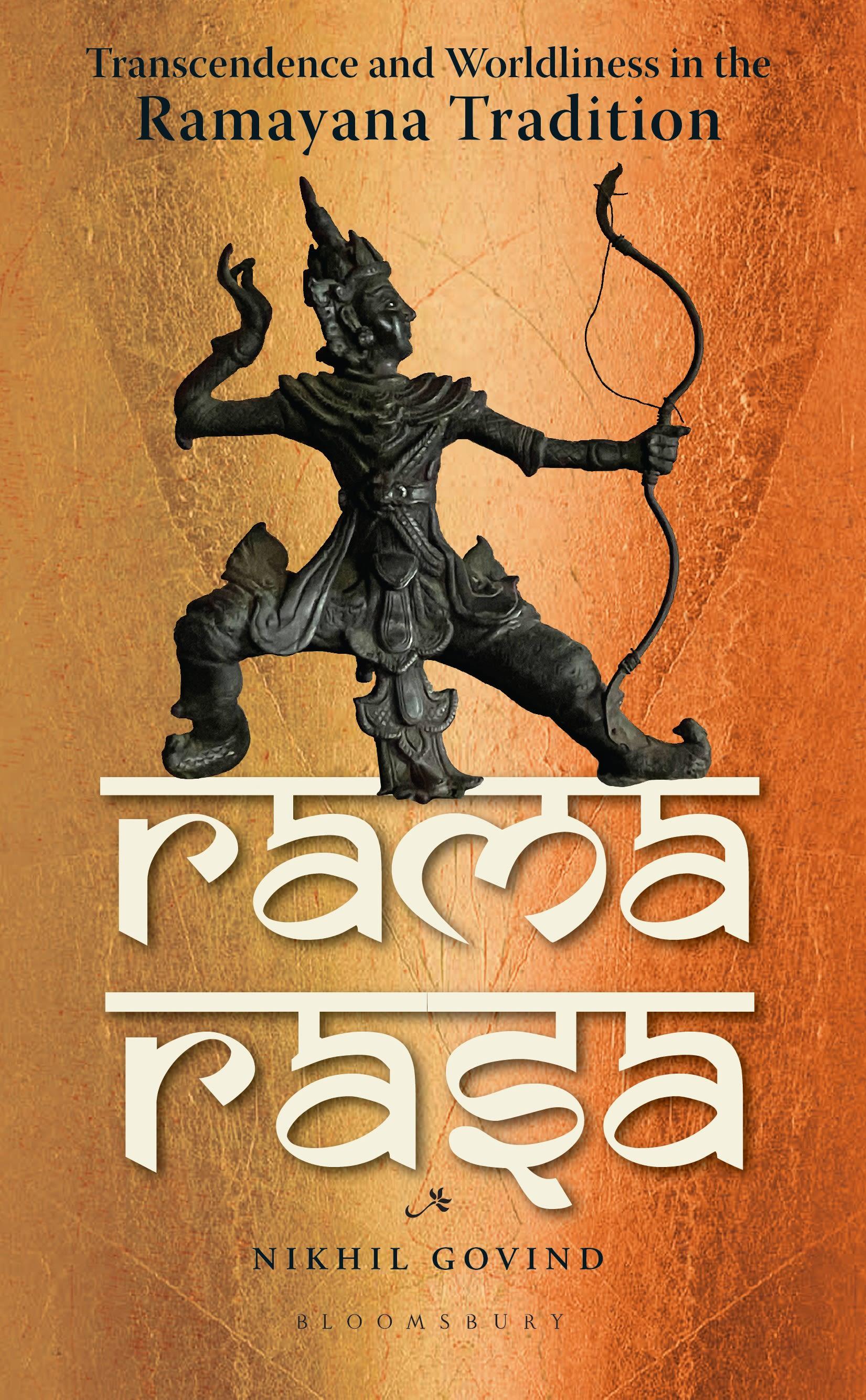
The Ramayana tradition, with its multifarious aesthetic and spiritual claims, reveals its depth and versatility in this study of three influential texts: Bhavabhuthi's Uttara Rama Carita, the anonymous Adhyatma Ramayana, and Tulsidas' Ramcaritmanas.
The eighth-century Uttara Rama Carita (Rama's Last Act) is a culmination of the Rama-tradition's aesthetic dimension. It showcases the tradition as crystallizing a pathos of viraha in myriad modes: separation between self and beloved, between parents and children, between royalty and populace, between life and after-life, between bereavement and memory. Drawing from this dramatic tradition, the fourteenth-century Adhyatma Ramayana and Tulsidas' epochal sixteenth-century Ramcaritmanas develop the Rama-narratives in the
more soteriological directions of Advaita and Bhakti.
Throughout the tradition, Rama's self is understood in both the dimension of time (learning and growth, despite all the wounds the world inflicts), as well as that which exists in the moment in the heated everyday encounter with partner, parents, children, and citizens. Taken together, these three texts provide a refreshing vantage into the Rama-tradition as it boldly takes on humanity's deepest quest for love, justice, and spiritual freedom. This book is written in a style that invites one to respectfully inhabit the tradition and allow the Rama-narrative to emerge, query, and ennoble our shared contemporary moment.
The eighth-century Uttara Rama Carita (Rama's Last Act) is a culmination of the Rama-tradition's aesthetic dimension. It showcases the tradition as crystallizing a pathos of viraha in myriad modes: separation between self and beloved, between parents and children, between royalty and populace, between life and after-life, between bereavement and memory. Drawing from this dramatic tradition, the fourteenth-century Adhyatma Ramayana and Tulsidas' epochal sixteenth-century Ramcaritmanas develop the Rama-narratives in the
more soteriological directions of Advaita and Bhakti.
Throughout the tradition, Rama's self is understood in both the dimension of time (learning and growth, despite all the wounds the world inflicts), as well as that which exists in the moment in the heated everyday encounter with partner, parents, children, and citizens. Taken together, these three texts provide a refreshing vantage into the Rama-tradition as it boldly takes on humanity's deepest quest for love, justice, and spiritual freedom. This book is written in a style that invites one to respectfully inhabit the tradition and allow the Rama-narrative to emerge, query, and ennoble our shared contemporary moment.
Pages: 200
Category: Litteraturvetenskap & Teori
e-ISBN: 9789361312342
Shipping weight: 1.2 kg
Ships in: 1-2 days
Pay easily by card, Klarna, Apple Pay or Google Pay. Not happy? You always have a 14-day money-back guarantee. Read more in our terms. If you have any questions, email us at hello@memmo.org.
Memmo makes studying easier – wherever you are in the world. We bring your course books and smart study tools together in one place: summaries, quizzes, podcasts and flashcards. Plus Ted, your study buddy who answers anything you wonder. Over 50,000 students already study here – built to help you learn faster and stress less.