
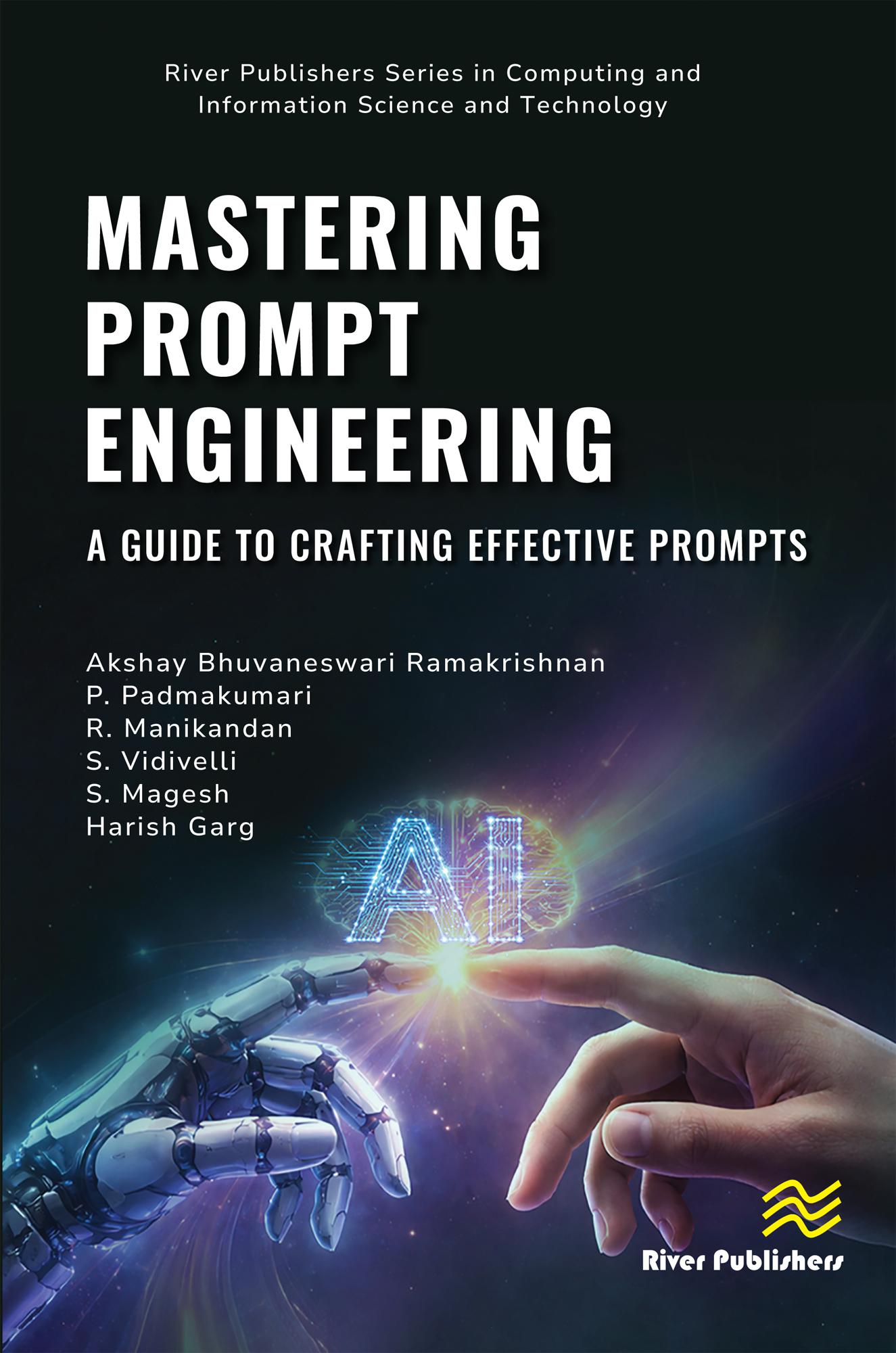
This book explains the principles, structure, and real-world practice of prompt engineering in a way that anyone working with large language models can understand and apply. Rather than treating prompting as a collection of hacks, it walks the reader through how to think about role, context, task, constraints, and examples so that LLMs produce reliable, domain-appropriate outputs. Starting from the basics of “what is a prompt,” the book then connects prompting to how generative AI models actually work, introduces core and advanced prompting patterns (prompt chaining, dynamic templates, tool-augmented prompting), and shows how to evaluate and refine model responses.
Designed for students, educators, and practitioners, each chapter includes learning objectives and hands-on exercises that can be tried directly in tools like ChatGPT. Later chapters move from theory to application, demonstrating how to build LLM-powered chatbots and retrieval-augmented generation (RAG) systems, and how to incorporate ethics, safety, and bias awareness into prompt design. By the end, readers will have a reusable toolkit for crafting effective prompts across education, research, business, and technical use cases.
Pay easily by card, Klarna, Apple Pay or Google Pay. Not happy? You always have a 14-day money-back guarantee. Read more in our terms. If you have any questions, email us at hello@memmo.org.
Memmo makes studying easier – wherever you are in the world. We bring your course books and smart study tools together in one place: summaries, quizzes, podcasts and flashcards. Plus Ted, your study buddy who answers anything you wonder. Over 50,000 students already study here – built to help you learn faster and stress less.