
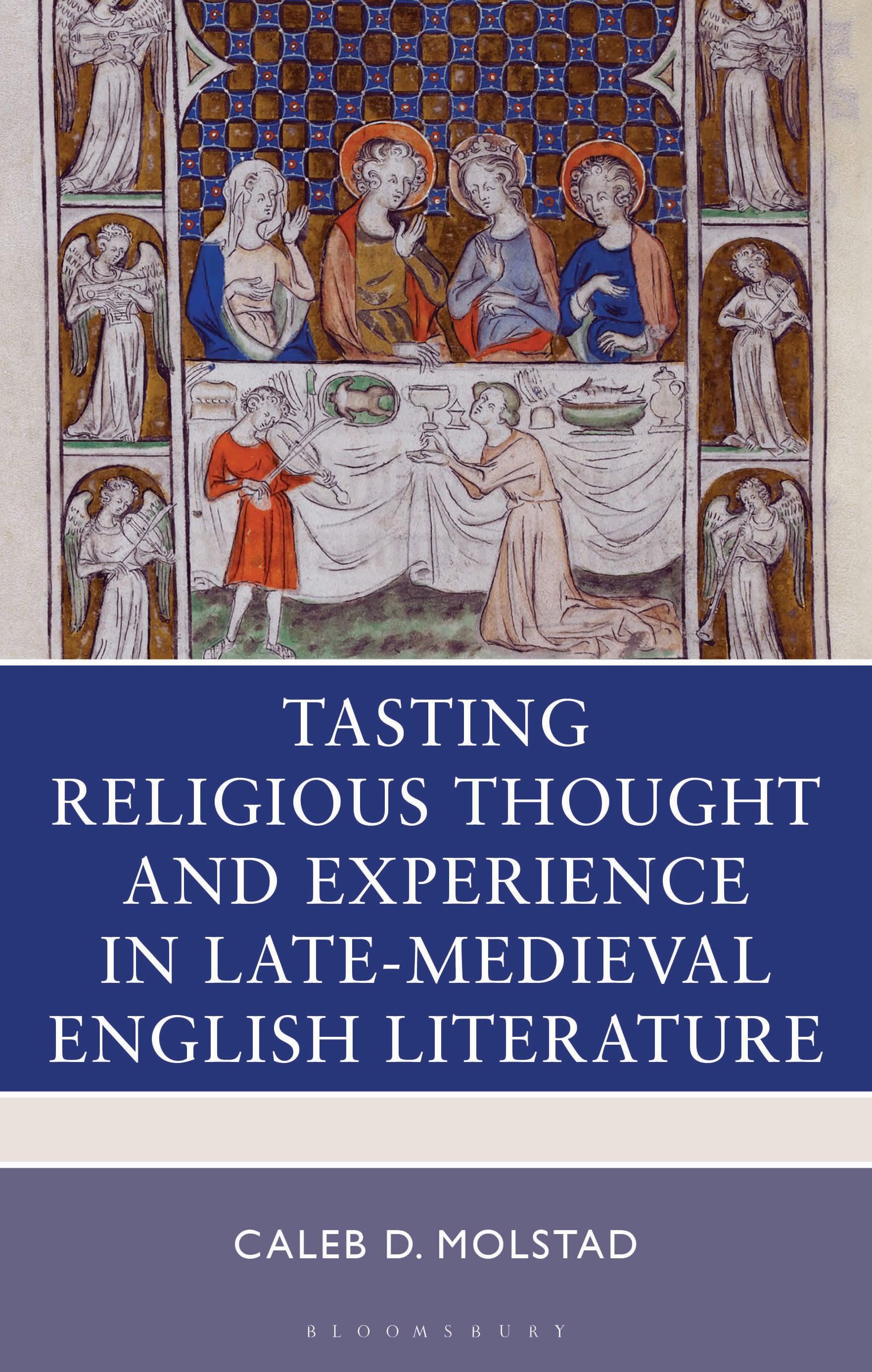
Through an analysis of vernacular metaphors of food and consumption for religious experience and theology in late-fourteenth and early fifteenth century England, Caleb D. Molstad explores what that language reveals about late-medieval religion during a time of swift religious and linguistic change.
In the move from Latin to Middle English, medieval authors gave vibrant expression to religious ideas through the emerging literary language, a phenomenon Nicholas Watson has termed “vernacular theology.” Molstad places focus on poetic and prose works including William Langland's Piers Plowman, Nicholas Love's A Mirror of the Blessed Life of Jesus Christ, and Walter Hilton's Scale of Perfection, Pearl-Poet's Cleanness, and A Ladder of Foure Ronges. Alimentary metaphors not only make religious concepts more accessible to a non-educated, lay audience, the language of food and consumption alters the shape of the religious content communicated through it. This book employs cognitive linguistics and food studies to explore the transcultural, sociological, anthropological, and historical significance of the food and foodways behind the metaphorical language and the theological transformations the metaphors produce.
In the move from Latin to Middle English, medieval authors gave vibrant expression to religious ideas through the emerging literary language, a phenomenon Nicholas Watson has termed “vernacular theology.” Molstad places focus on poetic and prose works including William Langland's Piers Plowman, Nicholas Love's A Mirror of the Blessed Life of Jesus Christ, and Walter Hilton's Scale of Perfection, Pearl-Poet's Cleanness, and A Ladder of Foure Ronges. Alimentary metaphors not only make religious concepts more accessible to a non-educated, lay audience, the language of food and consumption alters the shape of the religious content communicated through it. This book employs cognitive linguistics and food studies to explore the transcultural, sociological, anthropological, and historical significance of the food and foodways behind the metaphorical language and the theological transformations the metaphors produce.
Pay easily by card, Klarna, Apple Pay or Google Pay. Not happy? You always have a 14-day money-back guarantee. Read more in our terms. If you have any questions, email us at hello@memmo.org.
Memmo makes studying easier – wherever you are in the world. We bring your course books and smart study tools together in one place: summaries, quizzes, podcasts and flashcards. Plus Ted, your study buddy who answers anything you wonder. Over 50,000 students already study here – built to help you learn faster and stress less.