
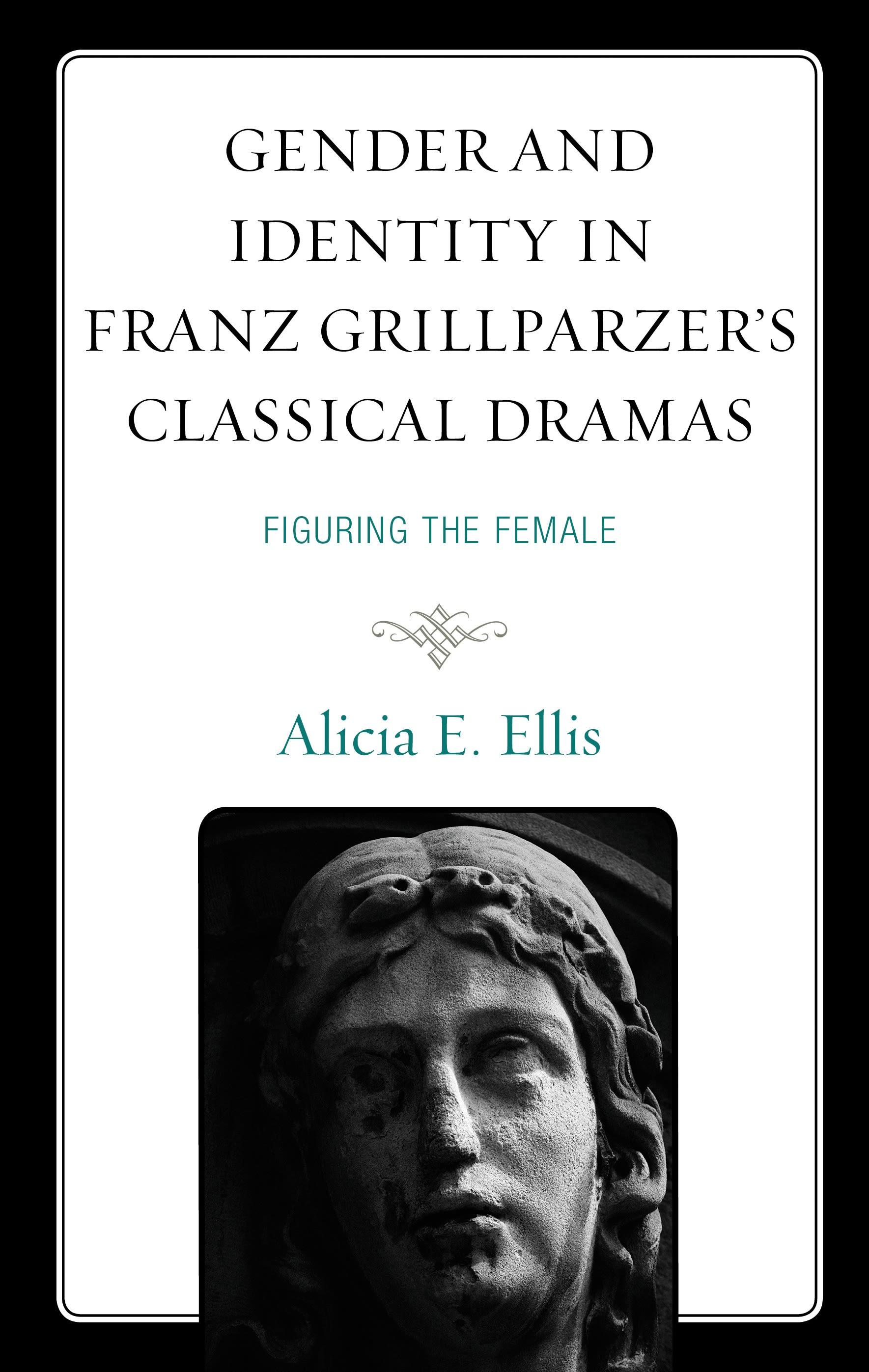
In this provocative work, Alicia E. Ellis provides readings of Franz Grillparzer’s dramas as proto-feminist formulations of female figures who refuse the gendered constraints of the ancient world. The revisionist perspectives of the tragedies recover a latent feminist impulse in the stories of Sappho, Medea, and Hero as identities marked by linguistic refusals. Activating new ideas of narrative experience, Ellis transports the figure of the female to the seat of language, testimony, and presence. Inflected by a taut impasse with a culture not produced to include female speech, Ellis shows how Grillparzer’s adaptations of classical materials offer a working theory about the ways in which new forms of language highlight female energy around autonomy and agency providing a corrective to previous cultural practices. A failure to comply with social and political norms demonstrates how the three assessed and then resolved exclusionary acts through rebellious discursive performances that frame how contested identities can be thought and reformulated. Readings in this study draw from the work of Sara Ahmed and Judith Butler on cultural framing and cultural translation in contemporary feminist critique. Ahmed and Butler direct attention to the language of the texts, what they mean, and how they produce that meaning.
Pay easily by card, Klarna, Apple Pay or Google Pay. Not happy? You always have a 14-day money-back guarantee. Read more in our terms. If you have any questions, email us at hello@memmo.org.
Memmo makes studying easier – wherever you are in the world. We bring your course books and smart study tools together in one place: summaries, quizzes, podcasts and flashcards. Plus Ted, your study buddy who answers anything you wonder. Over 50,000 students already study here – built to help you learn faster and stress less.