
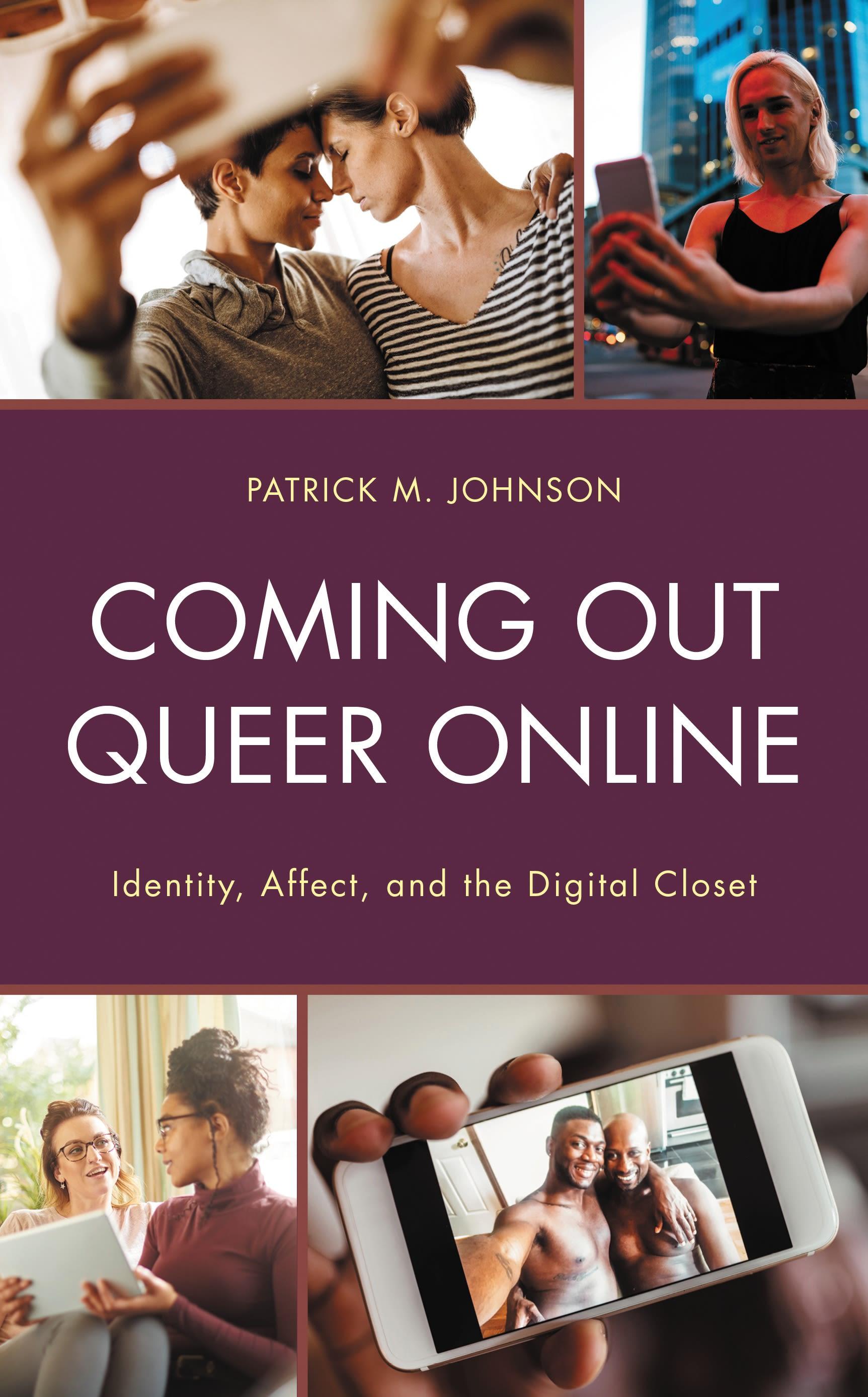
The Digital Closet: LGBT*Q Identities and Affective Politics in a Social Media Age discusses how LGBT*Q individuals occupy a precarious space within society as a marginalized community in the United States. They are afforded representation in some venues yet are often invisible. Through social media, LGBT*Q individuals have sought new ways to forge communities and increase their visibility. This rise in visibility afforded individuals means to seek out and distribute information to help in the coming out process. Combining archival research, observation, interviews, and visual discourse analysis of social media feeds, the Patrick Johnson examines the role social media plays in expressions of LGBT*Q politics, culture, and coming out. Despite the messages not having changed fundamentally, the improved access to LGBT*Q stories have amplified the ones that are sent. Johnson argues that this is positive in acting as intervention for LGBT*Q suicide rates, hate crimes, and discrimination from the outside. However, the author also contends that it has vastly re-centered and prioritized white, cisgender, masculinity, obscuring other stories and creating potentially dangerous environments for POC, women, trans* individuals, and gay men who do not meet this high standard of masculinity. Scholars of gender studies, media studies, and queer theory will find this book particularly interesting.
Pay easily by card, Klarna, Apple Pay or Google Pay. Not happy? You always have a 14-day money-back guarantee. Read more in our terms. If you have any questions, email us at hello@memmo.org.
Memmo makes studying easier – wherever you are in the world. We bring your course books and smart study tools together in one place: summaries, quizzes, podcasts and flashcards. Plus Ted, your study buddy who answers anything you wonder. Over 50,000 students already study here – built to help you learn faster and stress less.