
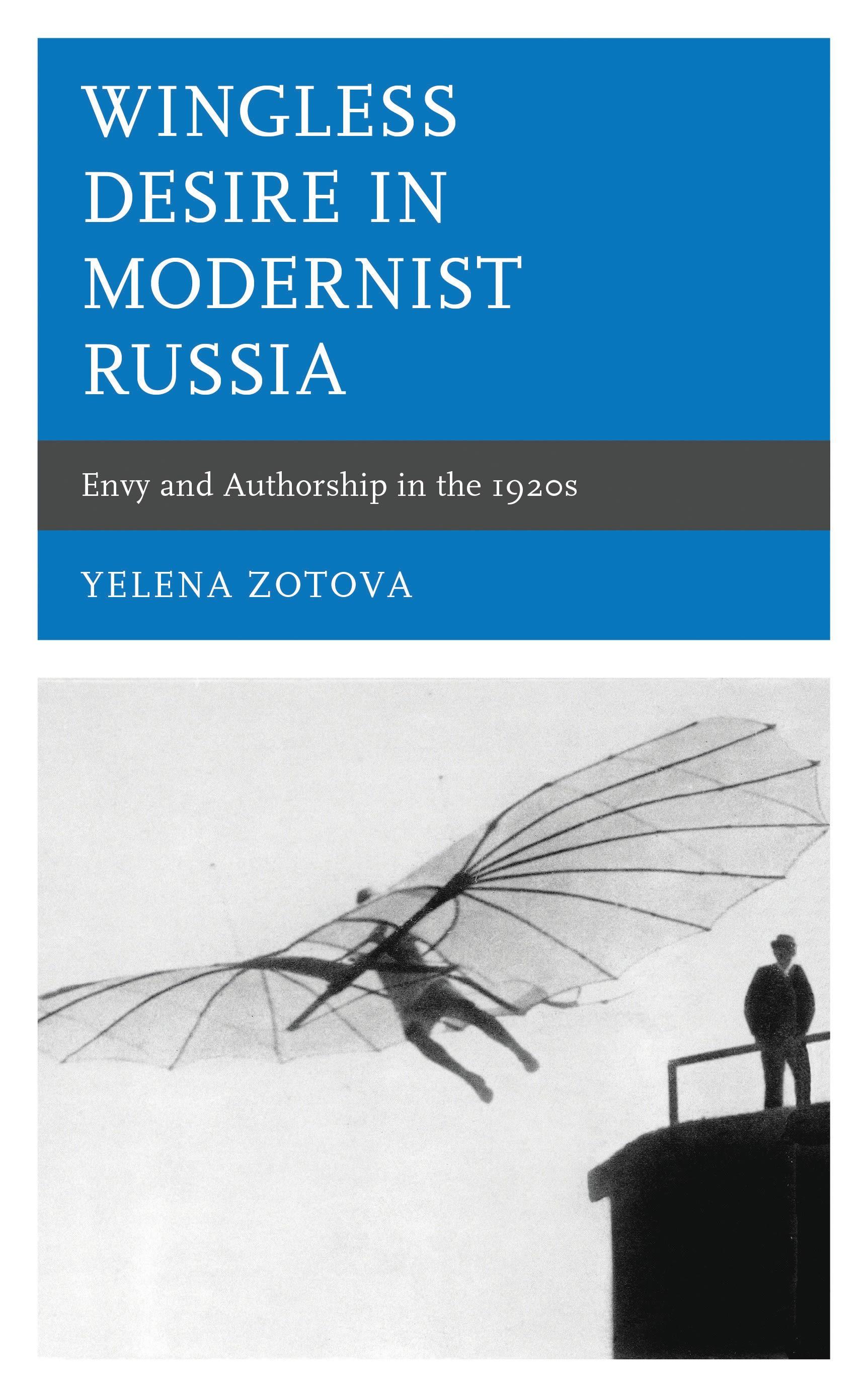
In Wingless Desire in Modernist Russia, Yelena Zotova argues that the concept of envy underwent a peculiar transformation in the Russian Modernist prose of the 1920s due to a series of radical shifts in societal values, with each subsequent change thwarting Russia’s volatile axiological hierarchy. Industriousness and austerity, inferior to playful genius in Pushkin’s “Mozart and Salieri,” became virtues, while the intrinsic value of nonutilitarian art was officially nullified by the Bolshevik state.Consequently, a new literary type emerged, and envy, described as “wingless desire” by Russia’s chief poet Alexander Pushkin, obtained new ownership as the envied became the envier. Superimposing twentieth-century theories of envy onto Mikhail Bakhtin’s “Author and Hero in the Aesthetic Activity” (1923), Zotova proposes that Salieri’s envy could be the wingless embryo of the Bakhtinian authorship.
Pay easily by card, Klarna, Apple Pay or Google Pay. Not happy? You always have a 14-day money-back guarantee. Read more in our terms. If you have any questions, email us at hello@memmo.org.
Memmo makes studying easier – wherever you are in the world. We bring your course books and smart study tools together in one place: summaries, quizzes, podcasts and flashcards. Plus Ted, your study buddy who answers anything you wonder. Over 50,000 students already study here – built to help you learn faster and stress less.