
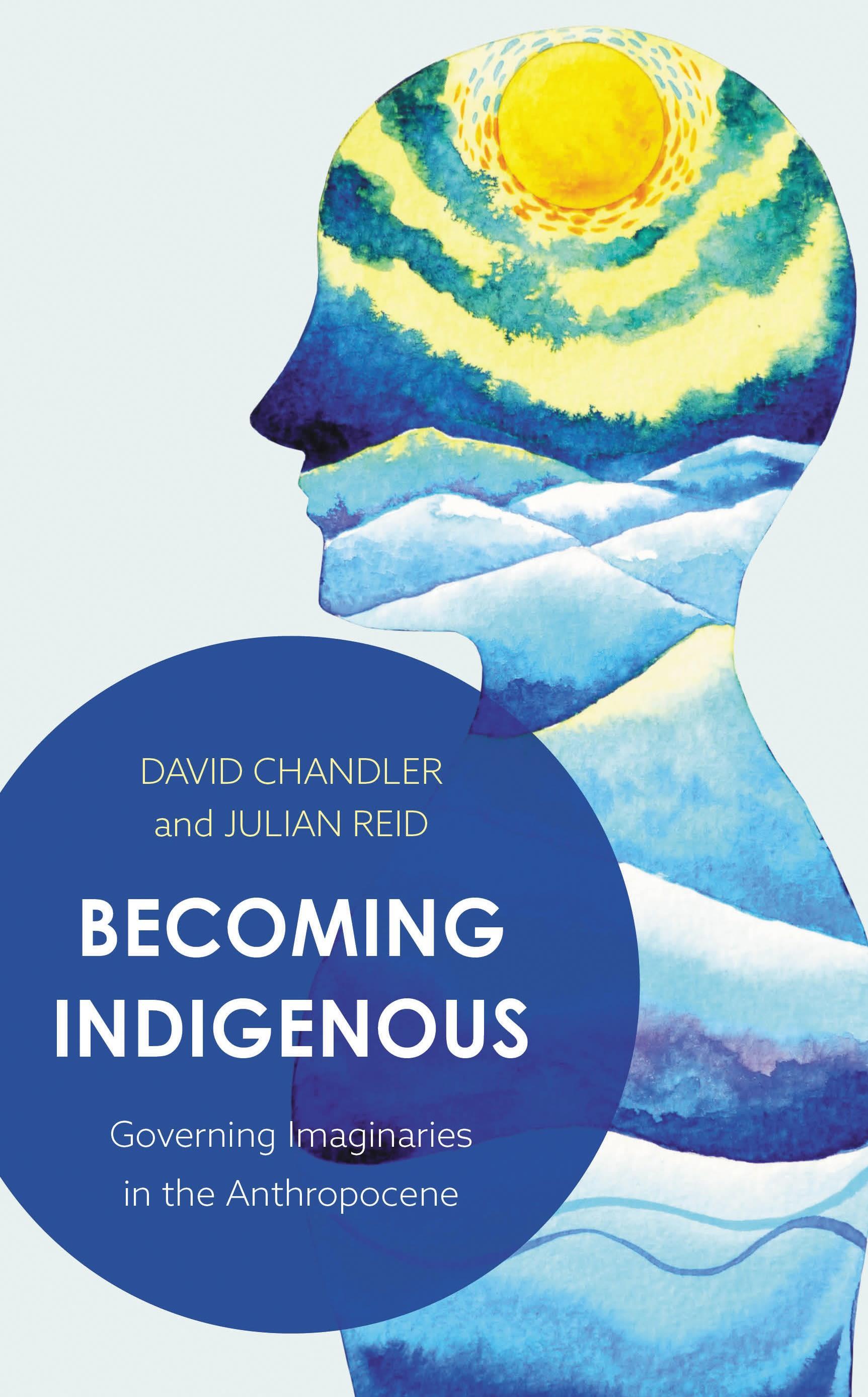
Representations of indigenous peoples, while never static, have always served the interests of settler-colonialism. Historically, the dominant framing marginalised indigenous practices as legacies of the distant past. Today indigenous approaches are demanded in order for settler-colonialism itself to have a future. Becoming indigenous, we are told, is a necessity if humanity is to survive and cope with the catastrophic changes wrought by modernist excess in the Anthropocene.
Becoming Indigenous provides an agenda-setting critique, analysing how and why indigeneity has been reduced to instrumental imaginaries of perseverance and resilience. Indigenous ‘alternatives’ are today central to a range of governing discourses, which promise empowerment but are highly disciplinary. Critical theorists often endorse these framings, happy to instrumentalise indigenous peoples as caretakers of the environment or as teaching the moderns about their ‘more-than-human’ responsibilities.
Chandler and Reid argue that these discourses have little to do with indigenous struggles or with challenging settler-colonial power. In fact, instrumentalising indigeneity in these ways merely reinforces neoliberal hegemony, marginalising critical alternatives for both indigenous and non-indigenous peoples alike.
Becoming Indigenous provides an agenda-setting critique, analysing how and why indigeneity has been reduced to instrumental imaginaries of perseverance and resilience. Indigenous ‘alternatives’ are today central to a range of governing discourses, which promise empowerment but are highly disciplinary. Critical theorists often endorse these framings, happy to instrumentalise indigenous peoples as caretakers of the environment or as teaching the moderns about their ‘more-than-human’ responsibilities.
Chandler and Reid argue that these discourses have little to do with indigenous struggles or with challenging settler-colonial power. In fact, instrumentalising indigeneity in these ways merely reinforces neoliberal hegemony, marginalising critical alternatives for both indigenous and non-indigenous peoples alike.
Pages: 160
Category: Kultur-, Genus- & Postkoloniala studier
e-ISBN: 9781786605733
Shipping weight: 1.2 kg
Ships in: 1-2 days
Pay easily by card, Klarna, Apple Pay or Google Pay. Not happy? You always have a 14-day money-back guarantee. Read more in our terms. If you have any questions, email us at hello@memmo.org.
Memmo makes studying easier – wherever you are in the world. We bring your course books and smart study tools together in one place: summaries, quizzes, podcasts and flashcards. Plus Ted, your study buddy who answers anything you wonder. Over 50,000 students already study here – built to help you learn faster and stress less.