
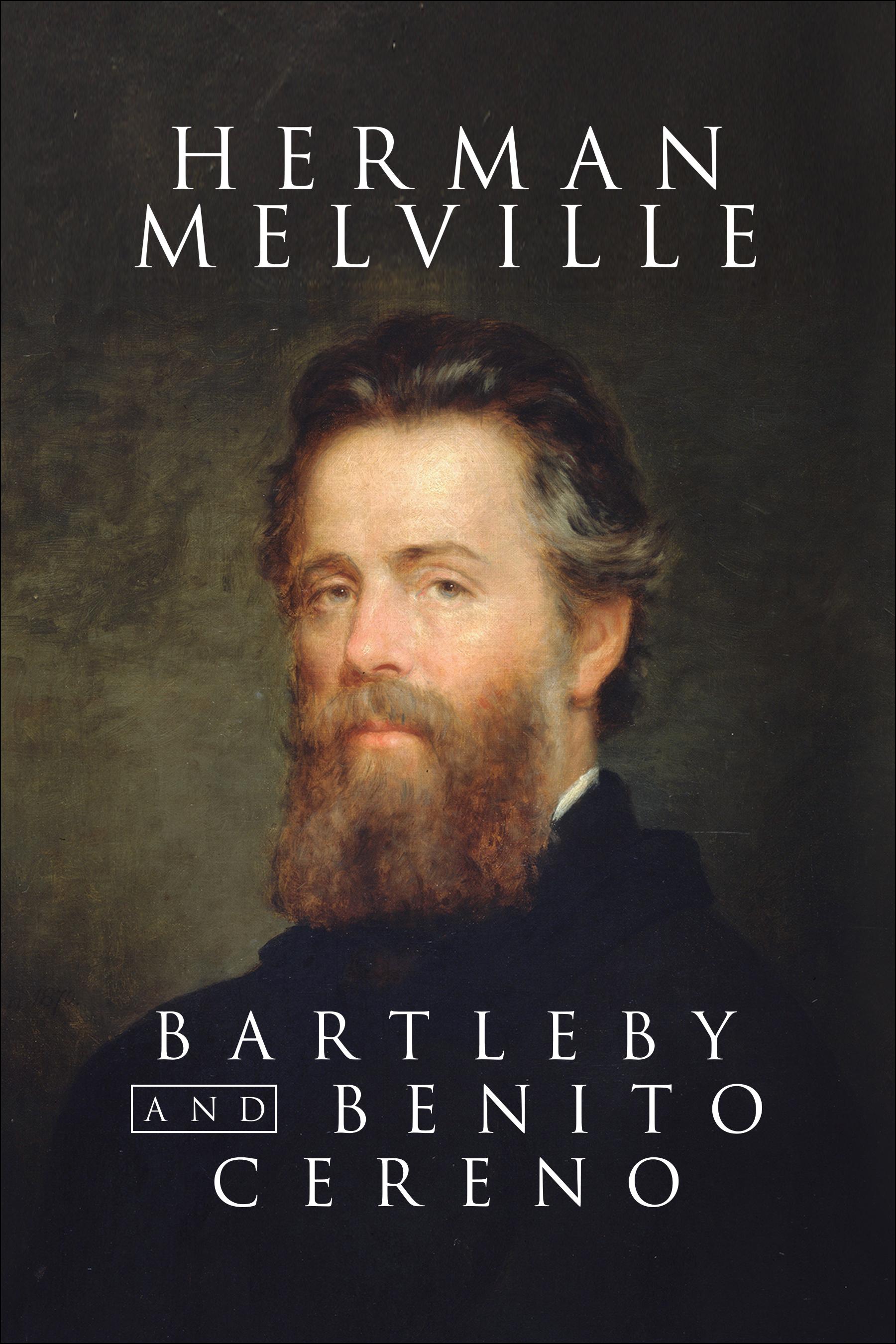
"I would prefer not to." - Herman Melville, "Bartleby the Scrivener"
Herman Melville is considered to be among the best of American writers not only for his powerful novels, but also for his short stories and stirring novellas. Two of these are the most renowned of his shorter works, Bartleby: The Scrivener, and Benito Cereno. They first appeared as magazine pieces and were then published in 1856 as part of a collection of short stories, The Piazza Tales.
In Bartleby, also known as Bartleby and the Scrivener, a Wall Street lawyer hires a new clere, Bartleby, to copy legal documents by hand. At first Bartleby proves to be a very productive worker but one day when asked to proofread a document he replies “I would prefer not to”, an answer he begins repeating perpetually in regards to all the tasks asked of him. What follows for Bartleby is a tragic decline into apathy. It is an intriguing moral allegory set in the business world of New York in the mid 19th-century in which Bartleby forces his employer to come to grips with the most basic questions of human responsibility and it haunts his conscience even after Bartleby is fired.
Benito Cereno, is considered to be one of Melville's best short stories and a masterpiece of short fiction. The story is about Don Benito Cereno, the captain of a Spanish slave ship, and the bloody revolt that happens aboard his ship. It is an interesting parable of man's struggle against the forces of evil, and the carefully developed plot builds to a dramatic climax as it reveals the depravity and horror of which man is capable.
Both of these Melville tales are sterling examples of a literary giant at his story-telling best and are widely regarded as two of Melville’s finest compositions which belong on every bookshelf.
Herman Melville is considered to be among the best of American writers not only for his powerful novels, but also for his short stories and stirring novellas. Two of these are the most renowned of his shorter works, Bartleby: The Scrivener, and Benito Cereno. They first appeared as magazine pieces and were then published in 1856 as part of a collection of short stories, The Piazza Tales.
In Bartleby, also known as Bartleby and the Scrivener, a Wall Street lawyer hires a new clere, Bartleby, to copy legal documents by hand. At first Bartleby proves to be a very productive worker but one day when asked to proofread a document he replies “I would prefer not to”, an answer he begins repeating perpetually in regards to all the tasks asked of him. What follows for Bartleby is a tragic decline into apathy. It is an intriguing moral allegory set in the business world of New York in the mid 19th-century in which Bartleby forces his employer to come to grips with the most basic questions of human responsibility and it haunts his conscience even after Bartleby is fired.
Benito Cereno, is considered to be one of Melville's best short stories and a masterpiece of short fiction. The story is about Don Benito Cereno, the captain of a Spanish slave ship, and the bloody revolt that happens aboard his ship. It is an interesting parable of man's struggle against the forces of evil, and the carefully developed plot builds to a dramatic climax as it reveals the depravity and horror of which man is capable.
Both of these Melville tales are sterling examples of a literary giant at his story-telling best and are widely regarded as two of Melville’s finest compositions which belong on every bookshelf.
Pay easily by card, Klarna, Apple Pay or Google Pay. Not happy? You always have a 14-day money-back guarantee. Read more in our terms. If you have any questions, email us at hello@memmo.org.
Memmo makes studying easier – wherever you are in the world. We bring your course books and smart study tools together in one place: summaries, quizzes, podcasts and flashcards. Plus Ted, your study buddy who answers anything you wonder. Over 50,000 students already study here – built to help you learn faster and stress less.
You might also like
Buy the book0