
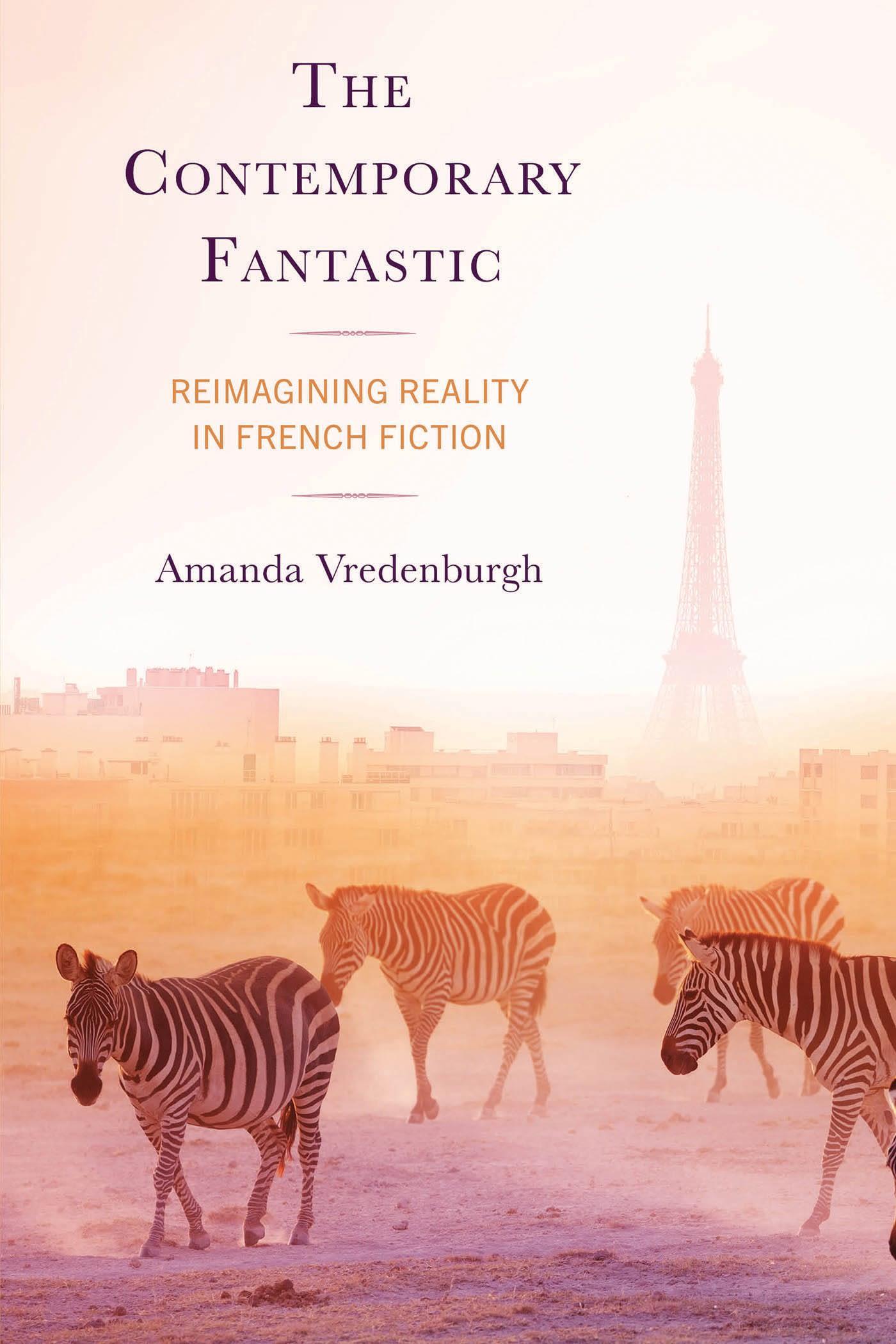
In The Contemporary Fantastic: Reimagining Reality in French Fiction, Amanda Vredenburgh identifies a contemporary shift in the use of fantastic modalities in French fiction, no longer dominated by the desire to escape the disappointments of reality nor the reader's hesitation about the reality of the novel's events, but by its innovative confrontation with the real. What could bizarre, uncanny, or supernatural literary representations have to tell us about very urgent, real issues like the environmental crisis, racism, migration, and the formation of egalitarian communities? Through close readings of a selection of novels by Marie Darrieussecq, Marie NDiaye, and Antoine Volodine, Vredenburgh argues that the ability to blur boundaries gives the fantastic both an emancipatory and reparative function in its engagement with contemporary political issues. These authors complicate categories such as human/nonhuman, French/foreign, inclusion/exclusion, and individual/community and shift the focus to the experiential and affective dimensions of these issues, ultimately allowing us to better think and feel with those that are excluded. Vredenburgh concludes that this use of the fantastic has a specific ethical stance, which encourages a community-based approach founded on compassion and inclusion.
Pay easily by card, Klarna, Apple Pay or Google Pay. Not happy? You always have a 14-day money-back guarantee. Read more in our terms. If you have any questions, email us at hello@memmo.org.
Memmo makes studying easier – wherever you are in the world. We bring your course books and smart study tools together in one place: summaries, quizzes, podcasts and flashcards. Plus Ted, your study buddy who answers anything you wonder. Over 50,000 students already study here – built to help you learn faster and stress less.