
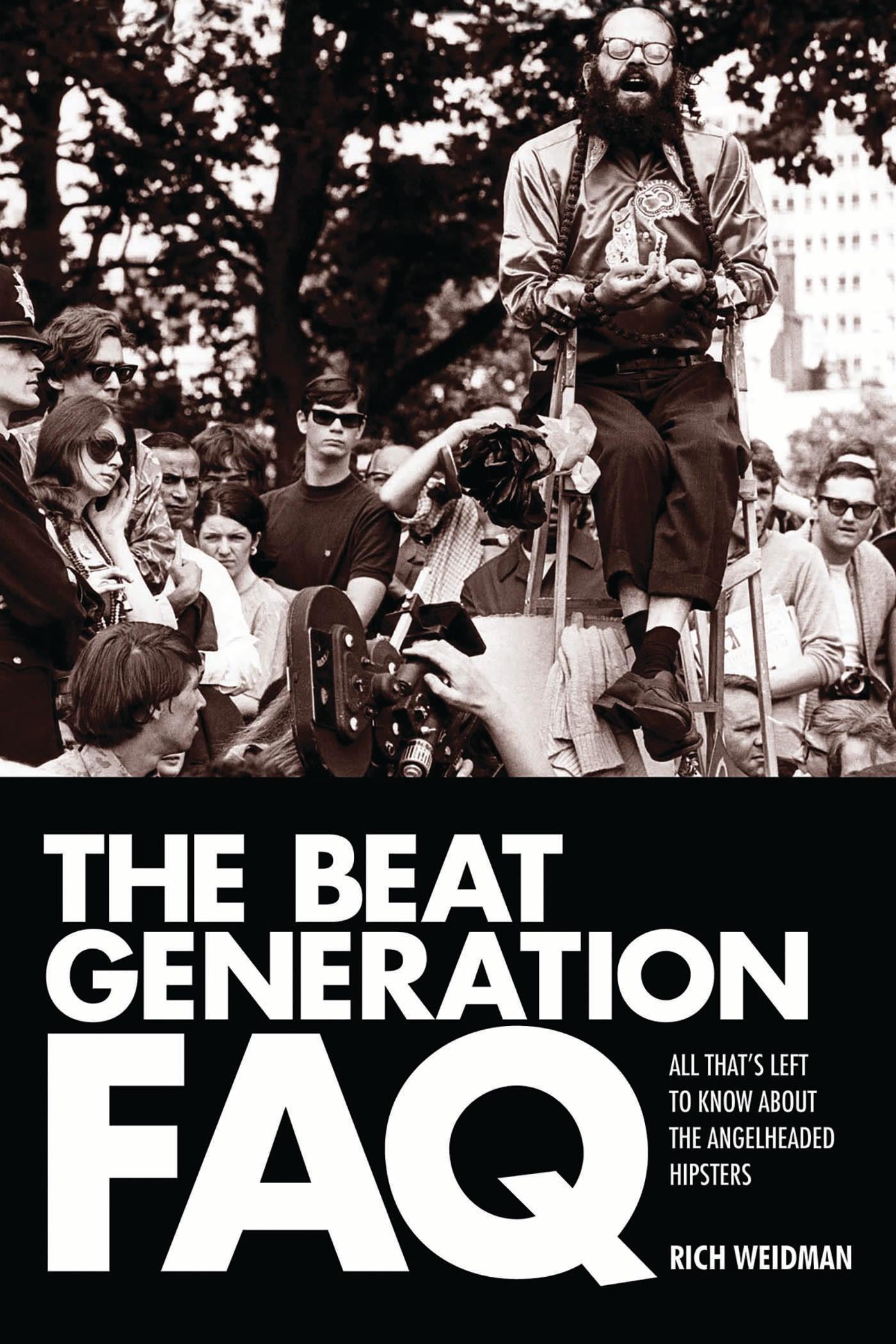
The Beat Generation FAQ is an informative and entertaining look at the enigmatic authors and cutting-edge works that shaped this fascinating cultural and literary movement. Disillusioned with the repression and conformity encompassing post-World War II life in the United States, the Beat writers sought creative alternatives to the mind-numbing banality of modern culture.
Beat Generation writers were no strangers to controversy: Both Allen Ginsberg's prophetic, William Blakean-style poem “Howl” (1956) and William S. Burroughs' groundbreaking novel Naked Lunch (1959) led to obscenity trials, while Jack Kerouac's highly influential novel On the Road (1957) was blamed by the establishment for corrupting the nation's youth and continues to this day to serve as a beacon of hipster culture and the bohemian lifestyle.
The Beat writers shared a vision for a new type of literature, one that escaped the boundaries of academia and employed an organic use of language, inspired by the spontaneity and improvisational nature of jazz music and abstract expressionism (Kerouac coined this writing style “spontaneous prose”). In search of deeper meaning, Beat Generation writers experimented not only with language but also with spirituality, art, drugs, sexuality, and unconventional lifestyles. Although the movement as a whole flamed out quickly in the early 1960s, replaced by the onset of the hippie counterculture, the Beats made an indelible mark on the nation's consciousness and left a long-lasting influence on its art and culture. This book details the movement – its works, creative forces, and its legacy.
Beat Generation writers were no strangers to controversy: Both Allen Ginsberg's prophetic, William Blakean-style poem “Howl” (1956) and William S. Burroughs' groundbreaking novel Naked Lunch (1959) led to obscenity trials, while Jack Kerouac's highly influential novel On the Road (1957) was blamed by the establishment for corrupting the nation's youth and continues to this day to serve as a beacon of hipster culture and the bohemian lifestyle.
The Beat writers shared a vision for a new type of literature, one that escaped the boundaries of academia and employed an organic use of language, inspired by the spontaneity and improvisational nature of jazz music and abstract expressionism (Kerouac coined this writing style “spontaneous prose”). In search of deeper meaning, Beat Generation writers experimented not only with language but also with spirituality, art, drugs, sexuality, and unconventional lifestyles. Although the movement as a whole flamed out quickly in the early 1960s, replaced by the onset of the hippie counterculture, the Beats made an indelible mark on the nation's consciousness and left a long-lasting influence on its art and culture. This book details the movement – its works, creative forces, and its legacy.
Pay easily by card, Klarna, Apple Pay or Google Pay. Not happy? You always have a 14-day money-back guarantee. Read more in our terms. If you have any questions, email us at hello@memmo.org.
Memmo makes studying easier – wherever you are in the world. We bring your course books and smart study tools together in one place: summaries, quizzes, podcasts and flashcards. Plus Ted, your study buddy who answers anything you wonder. Over 50,000 students already study here – built to help you learn faster and stress less.