
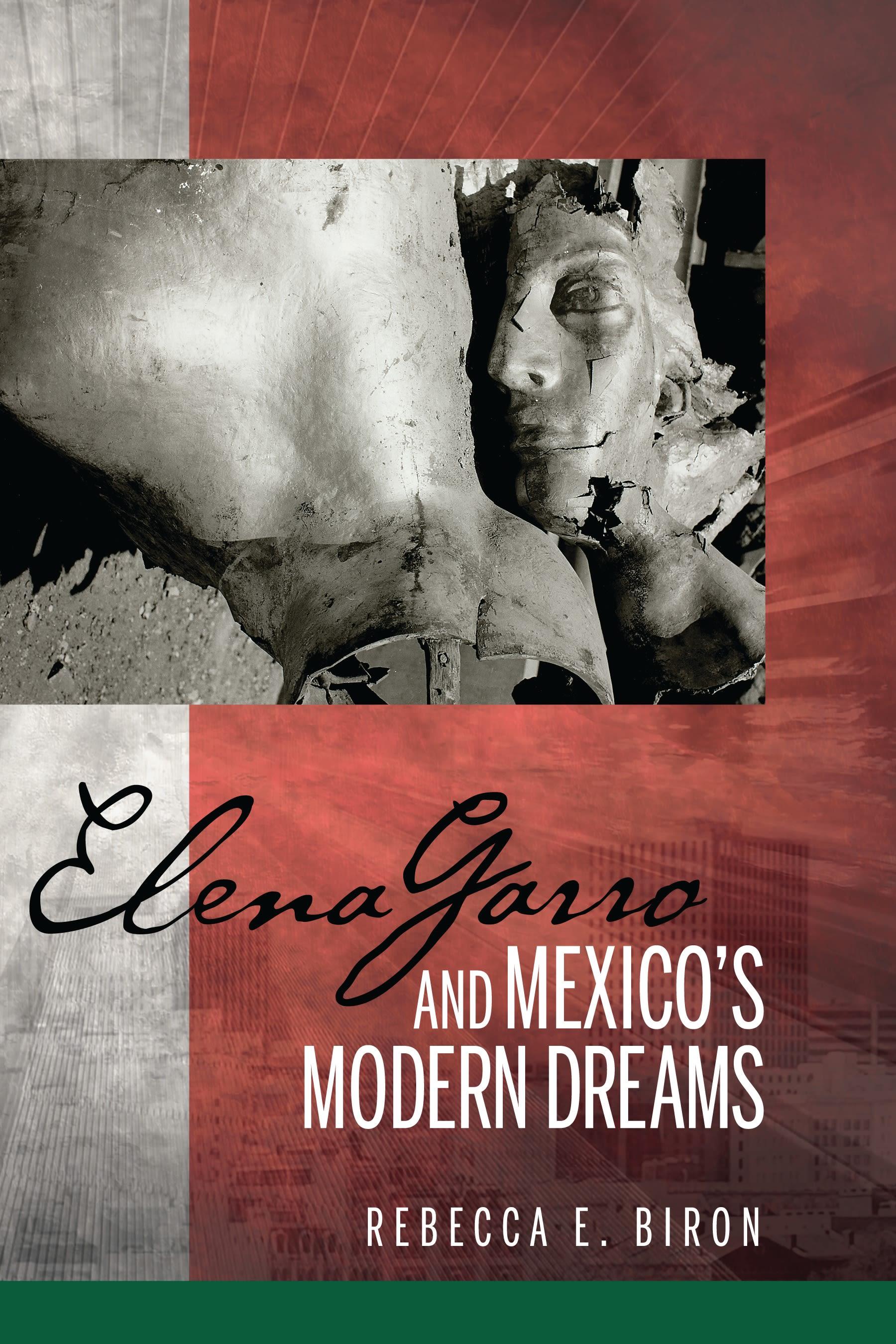
Elena Garro and Mexico's Modern Dreams uses Elena Garro’s eccentric life and work as a lens through which to examine mid-twentieth-century Mexican intellectuals' desire to reconcile mexicanidad with modernidad.
The famously scandalous first wife of Nobel Prize winner poet Octavio Paz, and an award-winning author in her own right, Garro constructed a mysterious and often contradictory persona through her very public participation in Mexican political conflicts. Herself an anxious and contentious Mexican writer, Elena Garro elicited profound political and aesthetic anxiety in her Mexican readers. She confused the personal and the public in her creative fictions as well as in her vision of Mexican modernity. This violation of key distinctions rendered her largely illegible to her contemporaries. That illegibility serves as a symptom of unacknowledged desires that motivate twentieth-century views of national modernity. Taken together, Garro's public persona and critical perspective expose the anxieties regarding ethnicity, gender, economic class, and professional identity that define Mexican modernity.
Blending cultural studies and detailed literary analysis with political and intellectual history, Mexico's Modern Dreams argues that, in addition to the intriguing gossip she elicited in literary and political circles, Garro produced a radical critique of Mexican modernity. Her critique applies as well to the nation's twenty-first-century crisis of globalization, state power, and pervasive violence.
The famously scandalous first wife of Nobel Prize winner poet Octavio Paz, and an award-winning author in her own right, Garro constructed a mysterious and often contradictory persona through her very public participation in Mexican political conflicts. Herself an anxious and contentious Mexican writer, Elena Garro elicited profound political and aesthetic anxiety in her Mexican readers. She confused the personal and the public in her creative fictions as well as in her vision of Mexican modernity. This violation of key distinctions rendered her largely illegible to her contemporaries. That illegibility serves as a symptom of unacknowledged desires that motivate twentieth-century views of national modernity. Taken together, Garro's public persona and critical perspective expose the anxieties regarding ethnicity, gender, economic class, and professional identity that define Mexican modernity.
Blending cultural studies and detailed literary analysis with political and intellectual history, Mexico's Modern Dreams argues that, in addition to the intriguing gossip she elicited in literary and political circles, Garro produced a radical critique of Mexican modernity. Her critique applies as well to the nation's twenty-first-century crisis of globalization, state power, and pervasive violence.
Pay easily by card, Klarna, Apple Pay or Google Pay. Not happy? You always have a 14-day money-back guarantee. Read more in our terms. If you have any questions, email us at hello@memmo.org.
Memmo makes studying easier – wherever you are in the world. We bring your course books and smart study tools together in one place: summaries, quizzes, podcasts and flashcards. Plus Ted, your study buddy who answers anything you wonder. Over 50,000 students already study here – built to help you learn faster and stress less.