
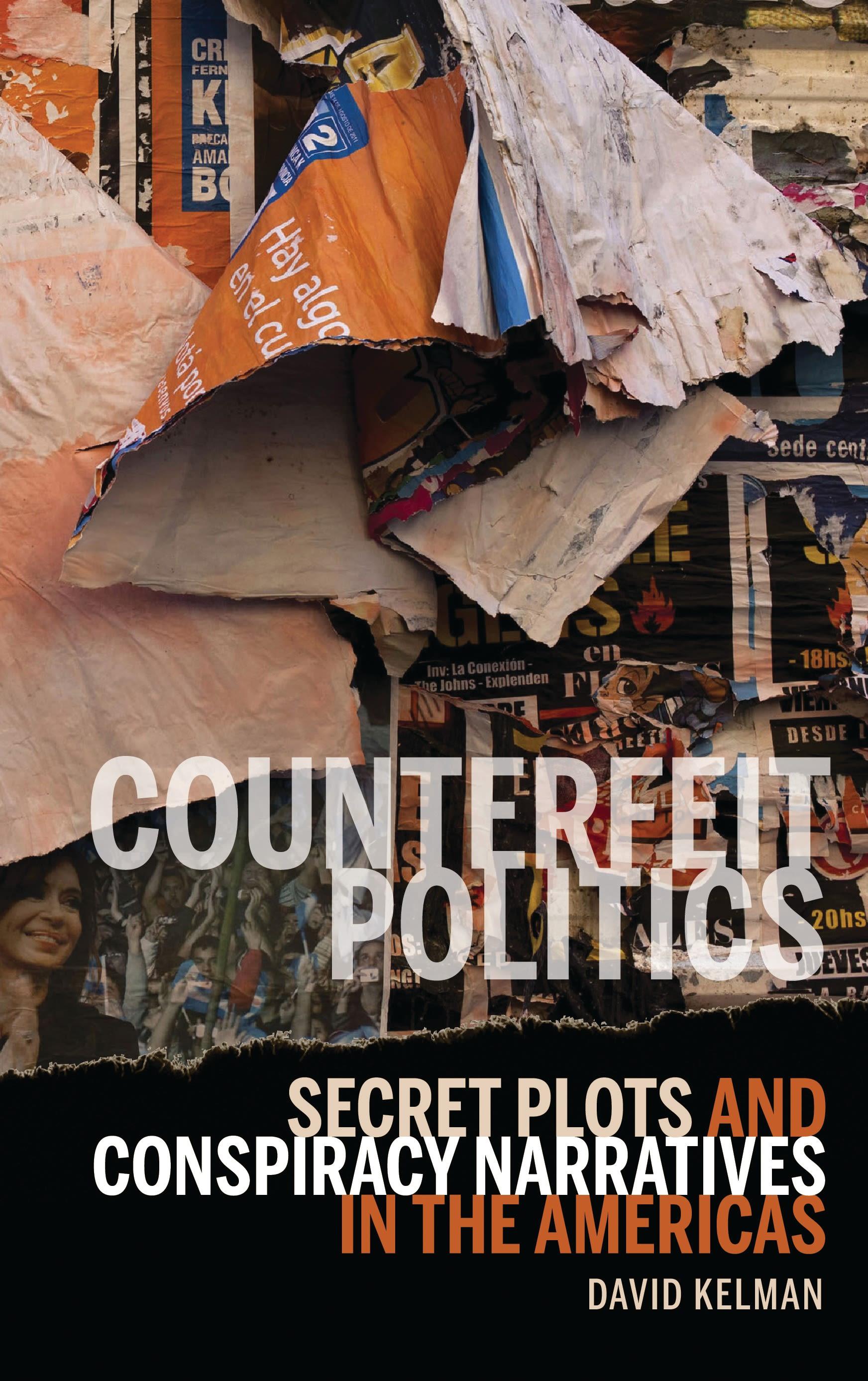
In Counterfeit Politics, David Kelman reassesses the political significance of conspiracy theory. Traditionally, political theory has sought to banish the “paranoid style” from the “proper” domain of politics. But if conspiracy theory lies outside the sphere of legitimate politics, why do these narratives continue to haunt political life? Counterfeit Politics accounts for the seemingly ineradicable nature of conspiracy theory by arguing that all political statements ultimately take the form of conspiracy theory.
Through careful readings of works by Ernest Hemingway, Ricardo Piglia, Thomas Pynchon, Don DeLillo, Jorge Luis Borges, Ishmael Reed, Jorge Volpi, Rigoberta Menchú, and Ángel Rama, Kelman demonstrates that conspiracy narratives bear witness to an illegitimate or “counterfeit” secret that cannot be fully recognized, understood, and controlled. Even though the secret is not authorized to speak, this “silence” is nevertheless precisely what gives the secret its force. Kelmangoes on to suggest that all political statements—even those that do not seem “paranoid”—are constitutively illegitimate or counterfeit, since they always narrate this unresolved play of legitimacy between an official or authorized plot and an unofficial or unauthorized plot (a “complot”). In short, Counterfeit Politics argues that politics only takes place as “conspiracy theory.”
Through careful readings of works by Ernest Hemingway, Ricardo Piglia, Thomas Pynchon, Don DeLillo, Jorge Luis Borges, Ishmael Reed, Jorge Volpi, Rigoberta Menchú, and Ángel Rama, Kelman demonstrates that conspiracy narratives bear witness to an illegitimate or “counterfeit” secret that cannot be fully recognized, understood, and controlled. Even though the secret is not authorized to speak, this “silence” is nevertheless precisely what gives the secret its force. Kelmangoes on to suggest that all political statements—even those that do not seem “paranoid”—are constitutively illegitimate or counterfeit, since they always narrate this unresolved play of legitimacy between an official or authorized plot and an unofficial or unauthorized plot (a “complot”). In short, Counterfeit Politics argues that politics only takes place as “conspiracy theory.”
Pay easily by card, Klarna, Apple Pay or Google Pay. Not happy? You always have a 14-day money-back guarantee. Read more in our terms. If you have any questions, email us at hello@memmo.org.
Memmo makes studying easier – wherever you are in the world. We bring your course books and smart study tools together in one place: summaries, quizzes, podcasts and flashcards. Plus Ted, your study buddy who answers anything you wonder. Over 50,000 students already study here – built to help you learn faster and stress less.