
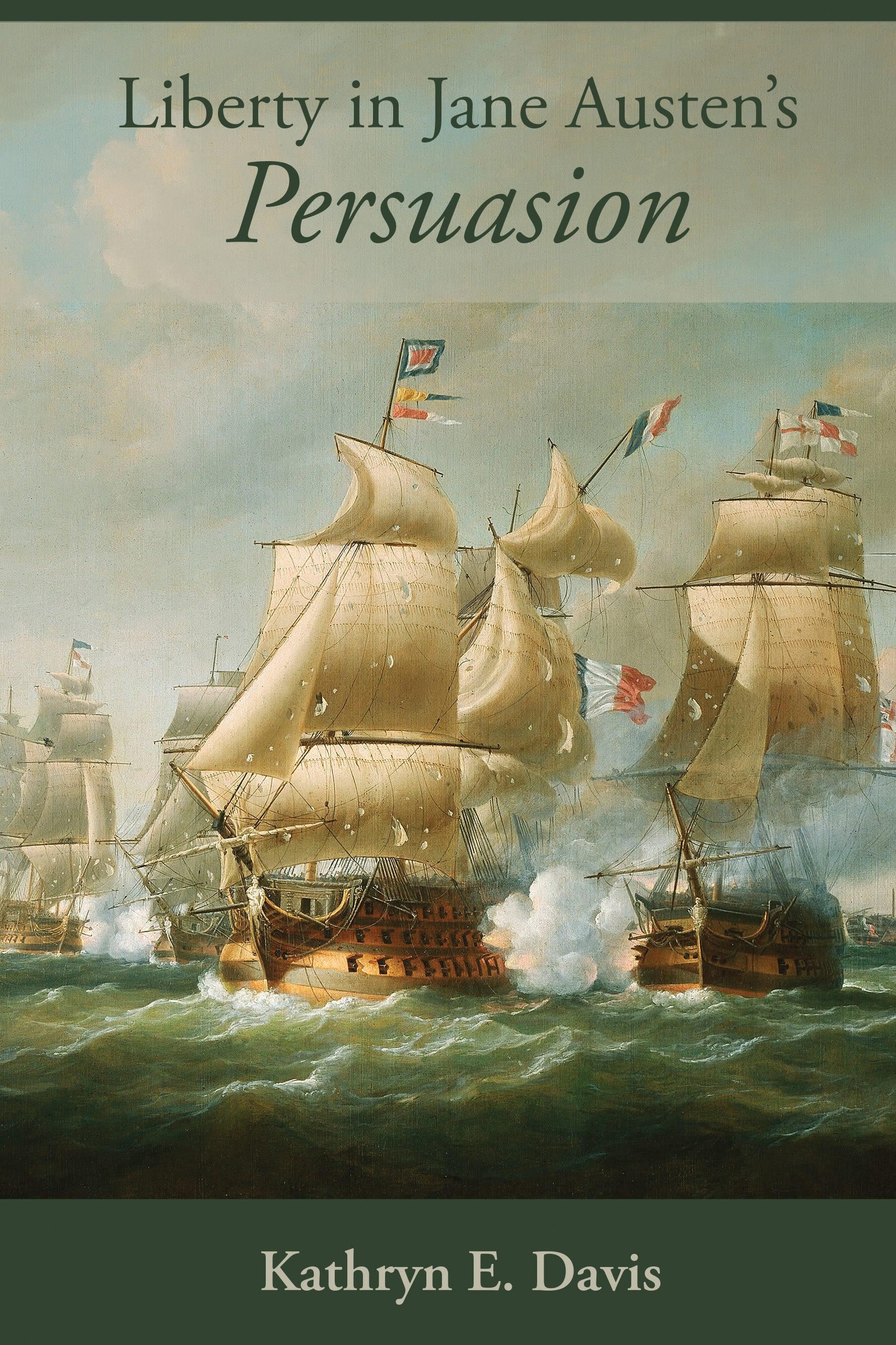
Liberty in Jane Austen’s Persuasion is a meditation on Persuasion as a text in which Jane Austen, writing in the Age of Revolution, enters the conversation of her epoch. Poets, philosophers, theologians and political thinkers of the long eighteenth century, including William Cowper, George Gordon Byron, Samuel Johnson, Hugh Blair, Thomas Sherlock, Edmund Burke, and Charles Pasley, endeavored definitively to determine what it means for a human being to be free. Persuasion is Austen’s elegant, artful and complex addition to this conversation. In this study, Kathryn Davis proposes that Austen's last complete novel offers an apologia for human liberty primarily understood as self-governance. Austen’s characters struggle to attain liberty, not from an oppressive political regime or stifling social conventions, but for a type of excellence that is available to each human being. The novel's presentation of moral virtue has wider cultural significance as a force that shapes both the “little social commonwealth[s]” inhabited by characters of Austen’s own making and, possibly, the identity of the nation whose sovereign read Persuasion.
Pages: 194
Category: Litteraturvetenskap & Teori
e-ISBN: 9781611462289
Shipping weight: 1.2 kg
Ships in: 1-2 days
Pay easily by card, Klarna, Apple Pay or Google Pay. Not happy? You always have a 14-day money-back guarantee. Read more in our terms. If you have any questions, email us at hello@memmo.org.
Memmo makes studying easier – wherever you are in the world. We bring your course books and smart study tools together in one place: summaries, quizzes, podcasts and flashcards. Plus Ted, your study buddy who answers anything you wonder. Over 50,000 students already study here – built to help you learn faster and stress less.