
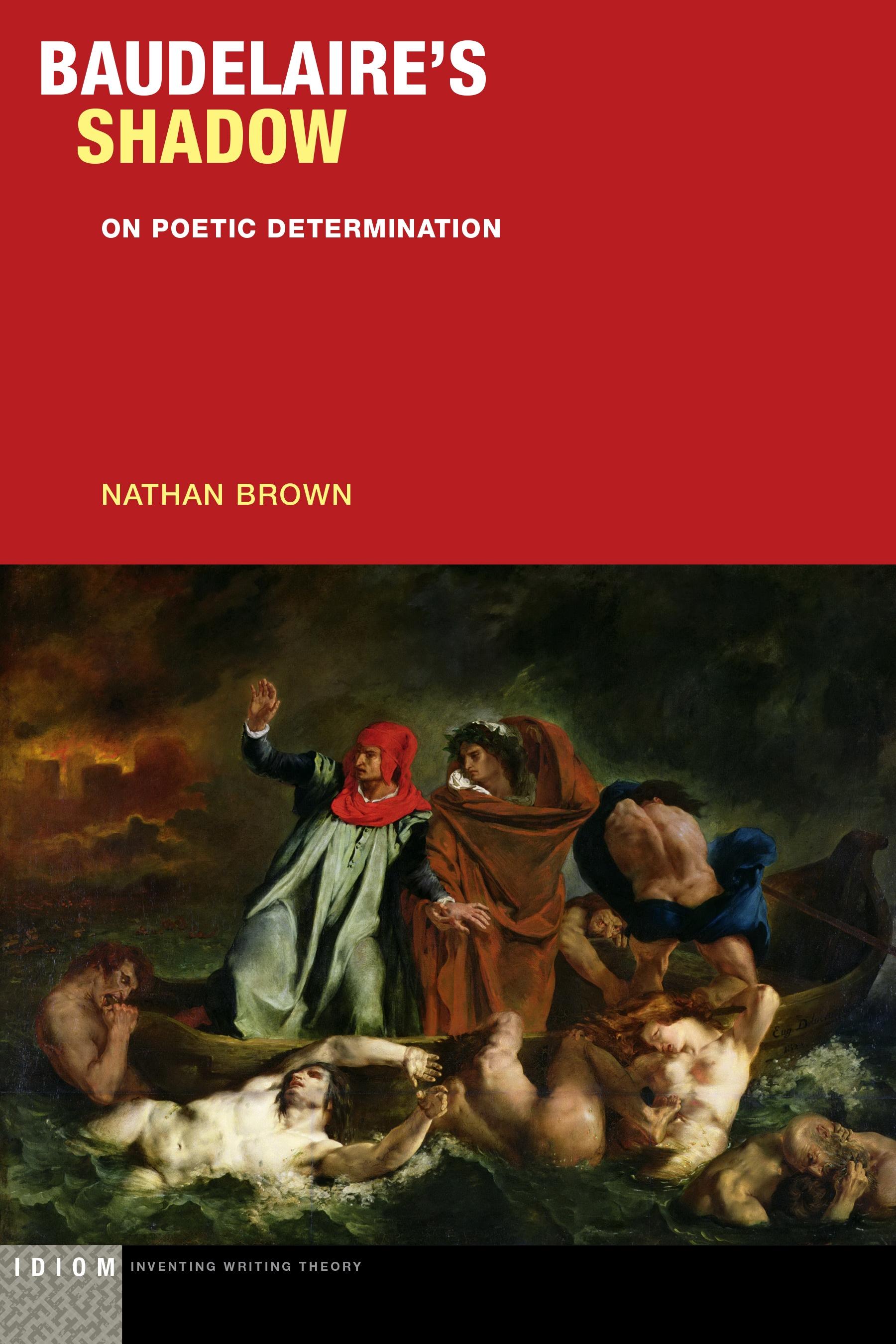
Baudelaire’s fame and notoriety have been established by the reduction of his complex work to simplified profiles: the poet of the modern city, of erotic obsession, of Satanic revolt, of colonial fantasies, of mystical correspondences, of corporeal decay . . . But what is it that holds these facets of the work together? Is there a logic underpinning the proliferation of themes, styles, and personae in The Flowers of Evil, while suturing content and form?
Baudelaire’s Shadow argues that what is most fundamentally at stake across the manifold layers of Baudelaire’s poetic project is the problem of determination: a contradiction between determining and being determined, a dialectic of agency bound up with its negation. This approach enables a new understanding of conceptual, formal, and figural cruxes traversing The Flowers of Evil, including the relationship between writing and reading, the anticipation of death, the negativity of the void, the representation of race, the poetics of ekphrasis, the singularity of the aesthetic, the actuality of the social, the indeterminacy of sense, and the materiality of the signifier.
With philosophical precision and poetic élan, one of Baudelaire’s finest translators reconstructs what we thought we knew about The Flowers of Evil from the ground up, revealing the dialectical logic at the heart of this major work of modern literature.
Pay easily by card, Klarna, Apple Pay or Google Pay. Not happy? You always have a 14-day money-back guarantee. Read more in our terms. If you have any questions, email us at hello@memmo.org.
Memmo makes studying easier – wherever you are in the world. We bring your course books and smart study tools together in one place: summaries, quizzes, podcasts and flashcards. Plus Ted, your study buddy who answers anything you wonder. Over 50,000 students already study here – built to help you learn faster and stress less.