
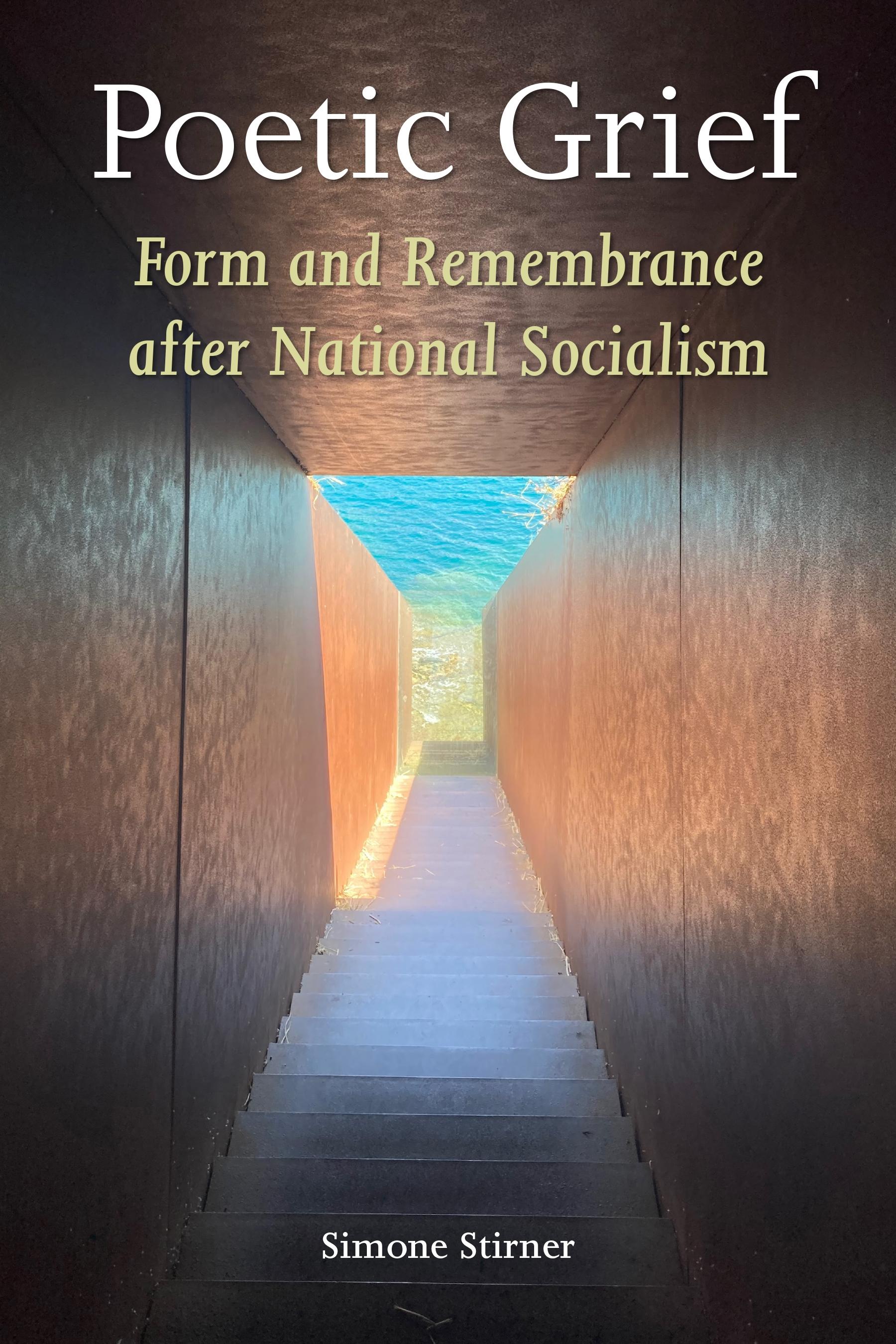
Grief is non-linear and destabilizing. It can unravel our sense of time and relation to the world. Poetic Grief follows these effects across poems written in the wake of National Socialism. Moving beyond established paradigms of trauma and representation, the book offers a formally grounded and affect-oriented approach to post-Holocaust poetry that develops a new framework for understanding the relationship between reading poetry and the experience of grief.
Bringing together phenomenologically informed close readings and historical-political analysis, Poetic Grief considers how poetry can affect embodied experiences through rhythm and breath, how its complex semantic patterns can collapse epistemic certainty and upend the flow of time—like grief does. New readings of poets familiar to the context of Holocaust remembrance such as Paul Celan, Dan Pagis, Charlotte Delbo, and Irena Klepfisz appear alongside analyses of poets remembering National Socialism at different historical moments, including May Ayim, Audre Lorde, Ghayath Almadhoun, and Max Czollek. In their poetry, reading becomes an act of participating in relations that the book’s respective chapters describe as “withness,” “ongoingness,” and “solidarities of grief”—modes of answering to and being with loss.
In a world shaped both by decolonization and the aftermath of the Shoah, Poetic Grief offers a new vocabulary for poetic remembrance alongside reflections about the role of grief in cultures of memory: To confront the force of grief in poetry is to rethink its place in cultures of remembrance, to see where it has been repressed and instrumentalized, and to create openings that respond to what cannot be contained and conceptualized about loss.
This book is a recipient of the Jordan Schnitzer First Book Publication Award, administered by the Association for Jewish Studies.
Pay easily by card, Klarna, Apple Pay or Google Pay. Not happy? You always have a 14-day money-back guarantee. Read more in our terms. If you have any questions, email us at hello@memmo.org.
Memmo makes studying easier – wherever you are in the world. We bring your course books and smart study tools together in one place: summaries, quizzes, podcasts and flashcards. Plus Ted, your study buddy who answers anything you wonder. Over 50,000 students already study here – built to help you learn faster and stress less.