
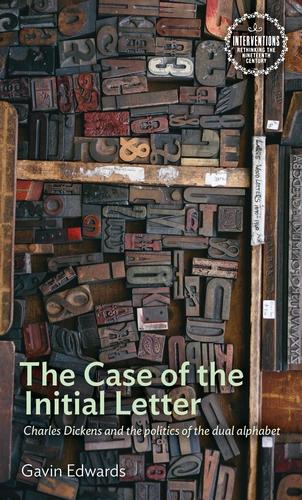
The book analyses attempts by Dickens and other nineteenth-century writers to challenge established ways of using the distinction between upper and lower case letters, in the interests of a wider radicalism. It discusses Dickens’s satire - on ‘Shares’ in Our Mutual Friend, on Paul Dombey’s position as the ‘Son’ of Dombey and Son - alongside the proto-modernist typography of suffragist poet Augusta Webster and the work of Marx’s translators transforming German conventions of capitalisation into English under the influence of Dickens and Carlyle. Placing these innovations within the history of the dual alphabet from its invention by Carolingian scribes to its rejection by modernist poets and the Bauhaus printers, the book tracks the dual alphabet through Dickens’s manuscripts, corrected proofs, and the ‘prompt copies’ for his public Readings, highlighting distinct ways in which writing, printing and speech produce meaning.
Pay easily by card, Klarna, Apple Pay or Google Pay. Not happy? You always have a 14-day money-back guarantee. Read more in our terms. If you have any questions, email us at hello@memmo.org.
Memmo makes studying easier – wherever you are in the world. We bring your course books and smart study tools together in one place: summaries, quizzes, podcasts and flashcards. Plus Ted, your study buddy who answers anything you wonder. Over 50,000 students already study here – built to help you learn faster and stress less.
You might also like
Buy the book0