
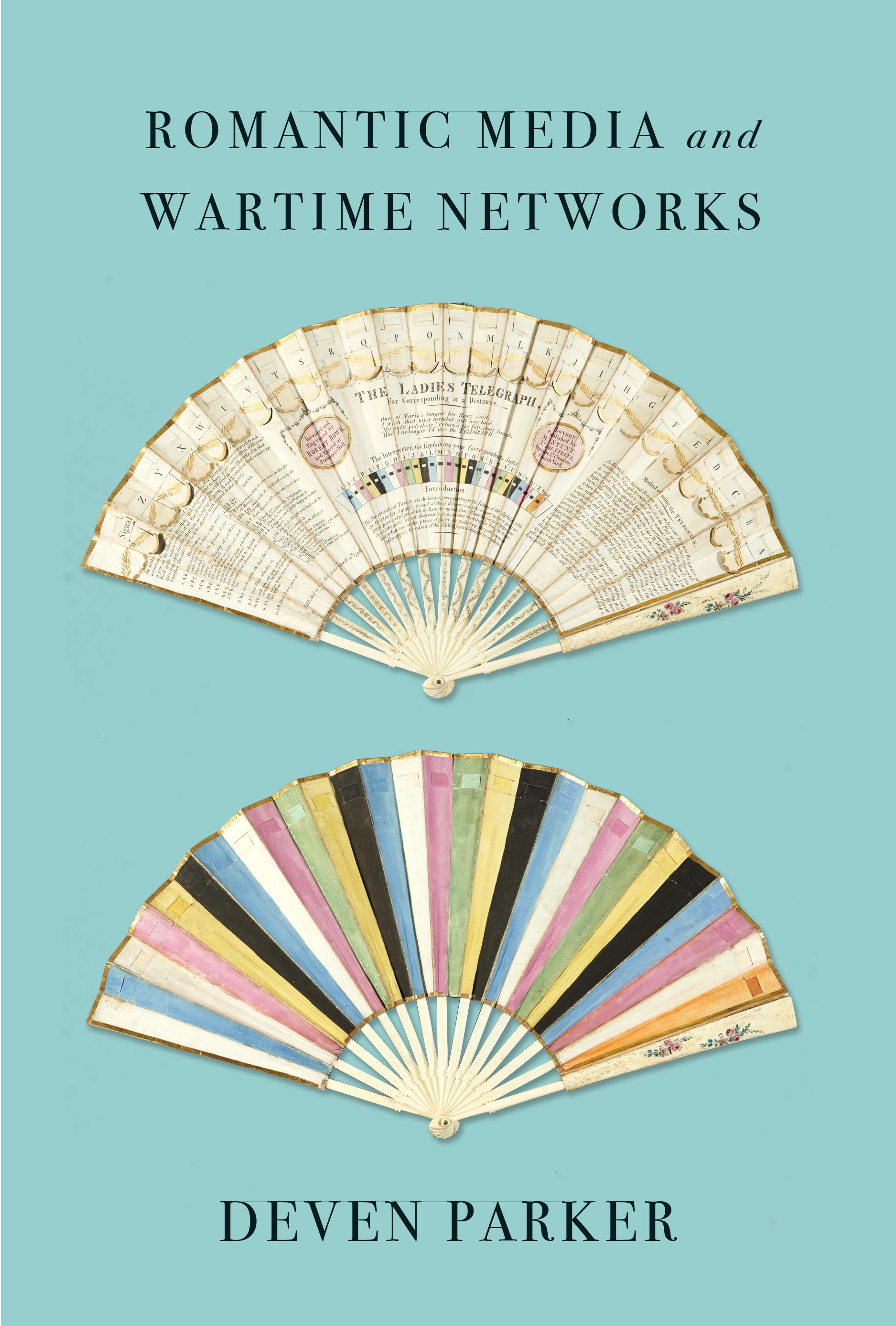
This book tells the story of how Britain revolutionized its state communication networks on an unprecedented scale during the French Revolution and the Napoleonic Wars, setting the stage for our modern infrastructure state where connectivity and surveillance go hand in hand. Deven Parker argues that Romantic literary representations of this state communications network managed to reveal—and, on occasion, to resist—its ideological functions.
In a wide-ranging study drawing upon an archive of military surveys, spy reports, trial records, and even ladies' hand fans, Parker reveals the scope and impact of the British government's investments in shutter telegraphs, mapping projects, and postal routes across two decades of war with France. The writers of the Romantic period, meanwhile, were cognizant of the political motivations undergirding the state's overhauled networks, which were designed to facilitate and speed up but also to more easily control communications. Taking up familiar writers including Lord Byron, Mary Wollstonecraft, William Godwin, Charlotte Smith, Charles Lamb, William Hazlitt, and Thomas De Quincey—as well as lesser-known figures such as radical playwright John Dent, inventor Richard Lovell Edgeworth, and the proto-science fiction novelist Jane Loudon—Parker reads Romantic literature for its astute chronicling and interrogation of the material hardware of the state's media ecology.
Pay easily by card, Klarna, Apple Pay or Google Pay. Not happy? You always have a 14-day money-back guarantee. Read more in our terms. If you have any questions, email us at hello@memmo.org.
Memmo makes studying easier – wherever you are in the world. We bring your course books and smart study tools together in one place: summaries, quizzes, podcasts and flashcards. Plus Ted, your study buddy who answers anything you wonder. Over 50,000 students already study here – built to help you learn faster and stress less.