
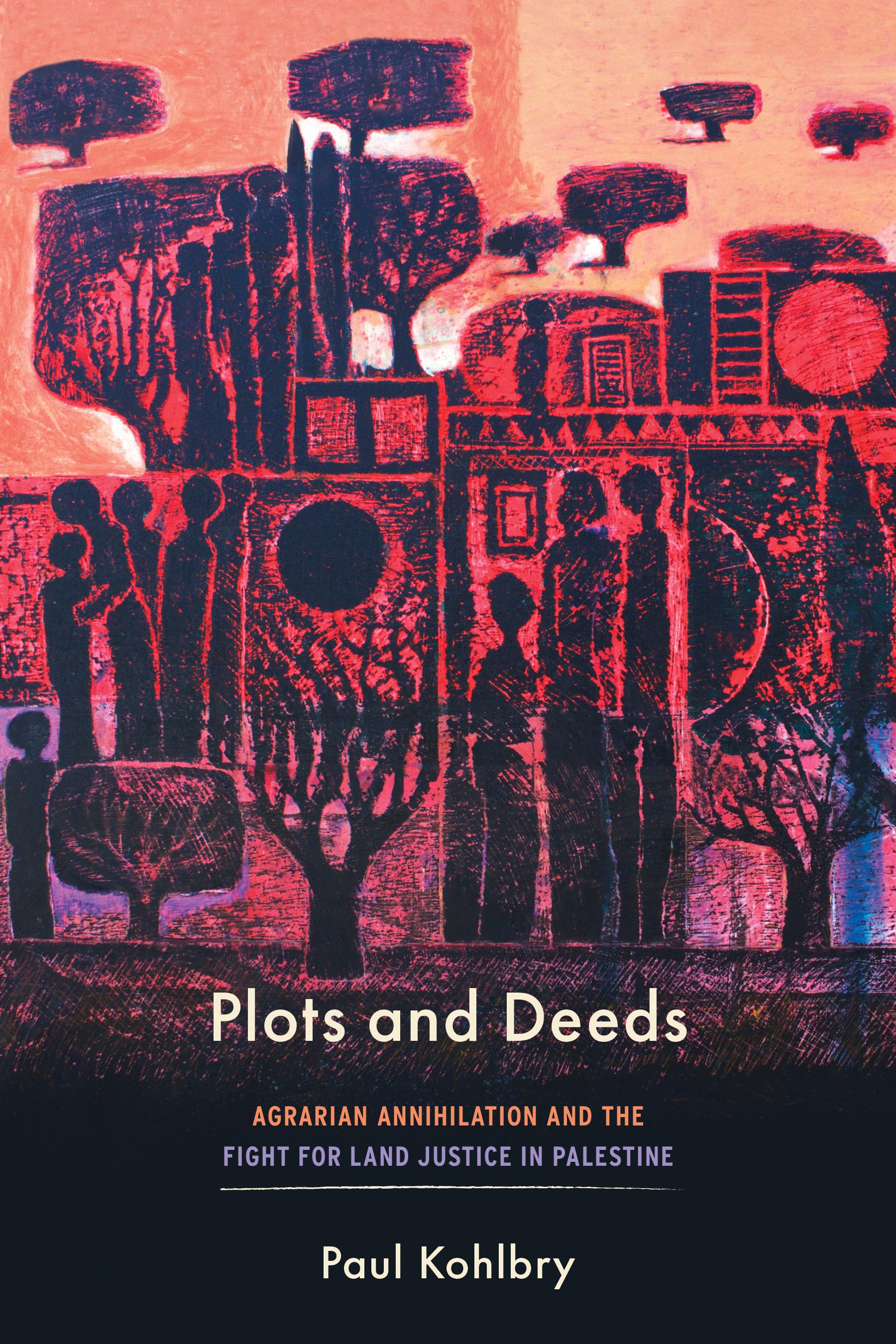
The emancipatory potential and limits of land justice, when land is at once home, property, territory, and homeland.
Peasant farming was once an integral part of Palestine's agrarian fabric. But after military occupation of the West Bank in 1967, Israeli land confiscations and economic policies pushed rural cultivators into wage labor. In recent decades, Palestinian land titling and private developers have driven the slow transformation of agricultural land into real estate. In Plots and Deeds, Paul Kohlbry argues that we should see these changes as part of a larger process of agrarian annihilation, one in which state violence and market coercion together devastate the social, ecological, and economic relationships that make agrarian livelihoods possible.
Kohlbry tells the story of those who, refusing annihilation, struggle both for the return of land, and for their return to it. Through long-term engagements in the central highlands of the West Bank, Kohlbry shows how peasant practices and ethics matter for those fighting to rebuild collective attachments to rural places, and the surprising ways that property ownership has become a means of both land dispossession and defense. Going beyond accounts that treat the peasant as a tragic figure or a heroic national symbol, Kohlbry foregrounds the complexity of agrarian life to reveal the relationships between agrarian regeneration and political liberation—ultimately connecting Palestine within a global struggle for land justice.
Pay easily by card, Klarna, Apple Pay or Google Pay. Not happy? You always have a 14-day money-back guarantee. Read more in our terms. If you have any questions, email us at hello@memmo.org.
Memmo makes studying easier – wherever you are in the world. We bring your course books and smart study tools together in one place: summaries, quizzes, podcasts and flashcards. Plus Ted, your study buddy who answers anything you wonder. Over 50,000 students already study here – built to help you learn faster and stress less.