
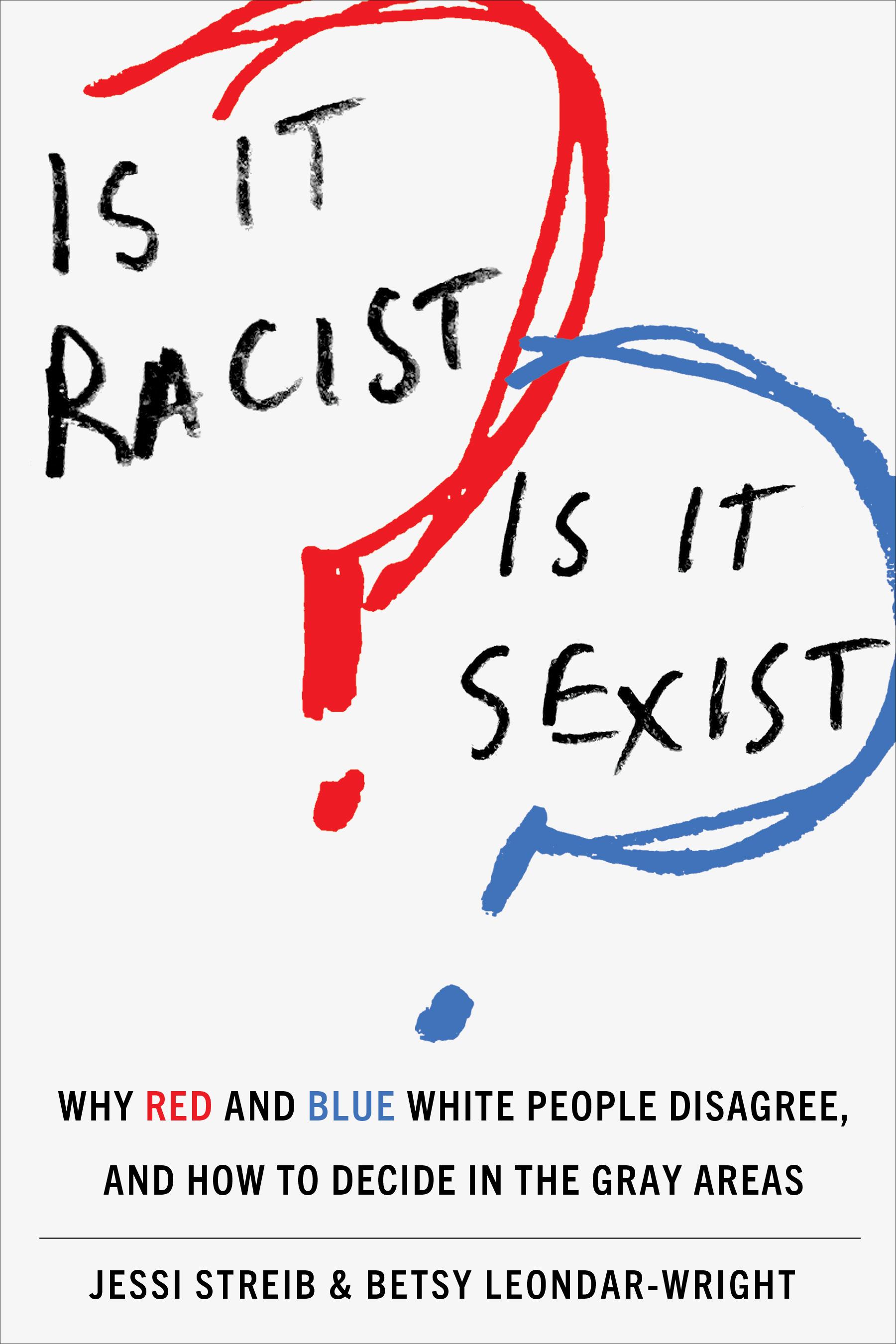
How can the judgment calls we make in everyday life create or help eradicate social inequality?
Is It Racist? Is It Sexist? Two questions that seem simple on their face, but which invite a host of tangled responses. In this book, Jessi Streib and Betsy Leondar-Wright offer a new way of understanding how inequalities persist by focusing on the individual judgment calls that lead us to decide what's racist, what's sexist, and what's not.
Racism and sexism often seem like optical illusions—with some people sure they see them and others sure they're not there—but the lines that most consistently divide our decisions might surprise you. Indeed, white people's views of what's racist and sexist are increasingly up for grabs. As the largest racial group in the country and the group that occupies the most and the highest positions of power, what they decide is racist and sexist helps determine the contours of inequality.
By asking white people—Southerners and Northerners, Republicans and Democrats, working-class and professional-middle-class, men and women—to decide whether specific interactions and institutions are racist, sexist, or not, Streib and Leondar-Wright take us on a journey through the decision-making processes of white people in America. By presenting them with a variety of scenarios, the authors are able to distinguish the responses as being characteristic of different patterns of reasoning. They produce a framework for understanding these patterns that invites us all to engage with each other in a new way, even on topics that might divide us.
Is It Racist? Is It Sexist? will leave you questioning how you decide whether a joke, a hiring decision, or a policy change is or isn't racist or sexist, and will give you new tools for making more accurate and productive judgment calls.
Pay easily by card, Klarna, Apple Pay or Google Pay. Not happy? You always have a 14-day money-back guarantee. Read more in our terms. If you have any questions, email us at hello@memmo.org.
Memmo makes studying easier – wherever you are in the world. We bring your course books and smart study tools together in one place: summaries, quizzes, podcasts and flashcards. Plus Ted, your study buddy who answers anything you wonder. Over 50,000 students already study here – built to help you learn faster and stress less.