
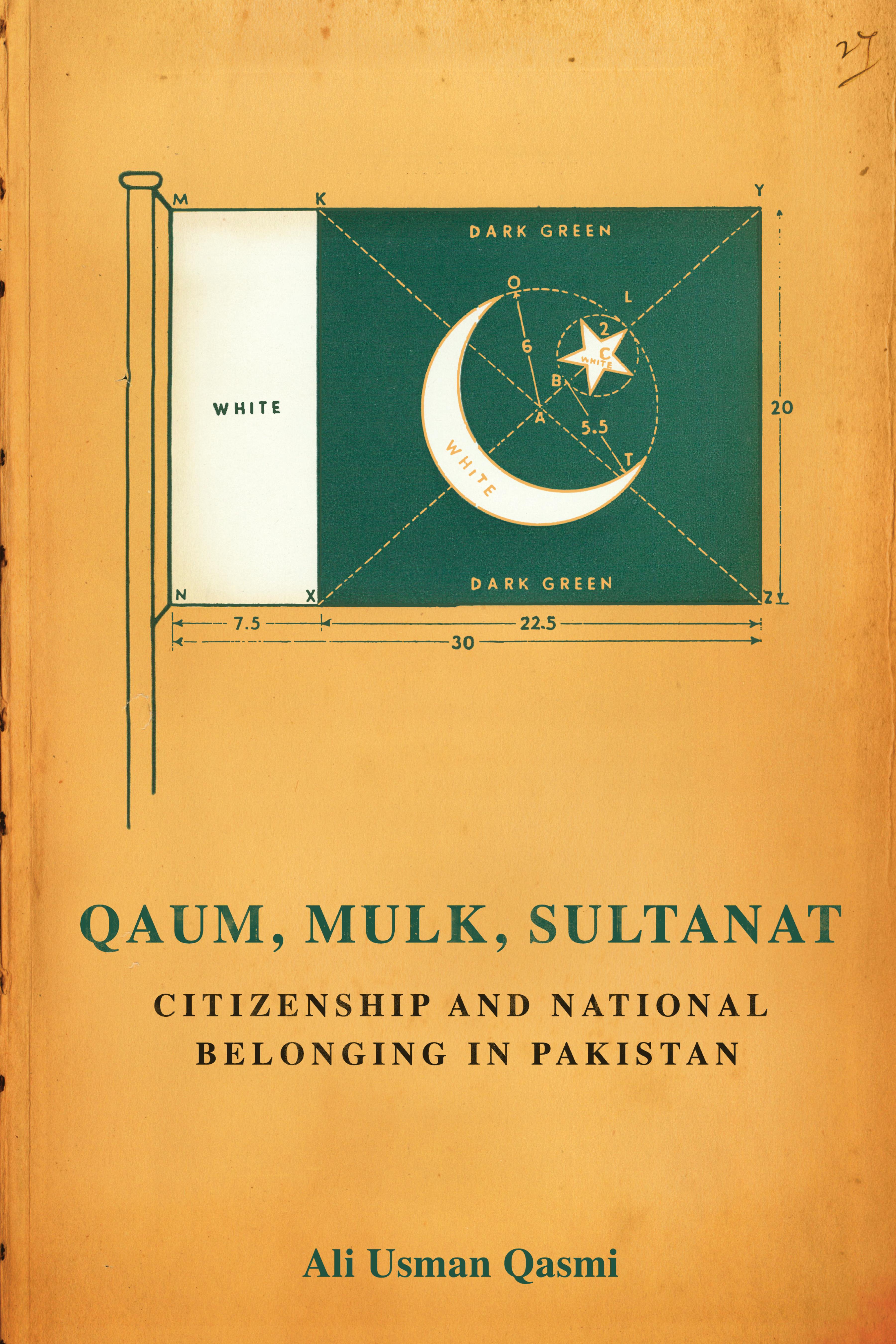
After the trauma of mass violence and massive population movements around the partition of India and Pakistan in 1947, both new nation states faced the enormous challenge of creating new national narratives, symbols, and histories, as well as a new framework for their political life. While leadership in India claimed the anti-colonial movement, Gandhi, and a civilizational legacy in the subcontinent, the new political elite in Pakistan were faced with a more complex task: to carve out a separate and distinct Muslim history and political tradition from a millennium long history of cultural and religious interaction, mixing, and coexistence.
Drawing on a rich archive of diverse sources, Ali Qasmi traces the complex development of ideas of citizenship and national belonging in the postcolonial Muslim state, offering a nuanced and sweeping history of the country's formative period. Qasmi paints a rich picture of the long, arduous, and often conflict-ridden process of writing a democratic constitution of Pakistan, while simultaneously narrating the invention of a range of new rituals of state—such as the exact color of the flag, the precise date of birth of the national poet of Pakistan, and the observation of Eid as a "national festival"—providing an illuminating analysis of the practices of being Pakistani, and a new portrait of Muslim history in the subcontinent.
Pay easily by card, Klarna, Apple Pay or Google Pay. Not happy? You always have a 14-day money-back guarantee. Read more in our terms. If you have any questions, email us at hello@memmo.org.
Memmo makes studying easier – wherever you are in the world. We bring your course books and smart study tools together in one place: summaries, quizzes, podcasts and flashcards. Plus Ted, your study buddy who answers anything you wonder. Over 50,000 students already study here – built to help you learn faster and stress less.