
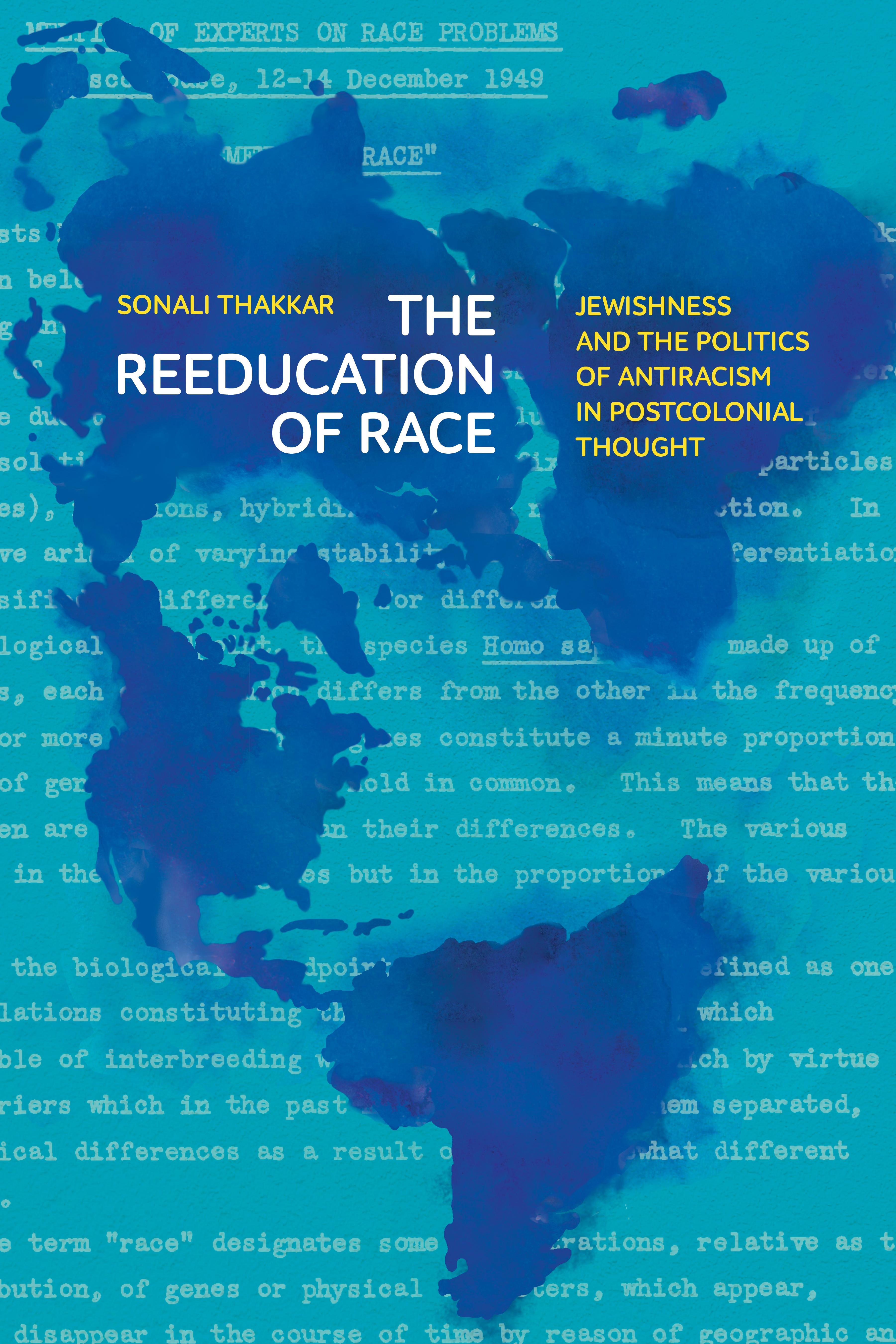
World War II produced a fundamental shift in modern racial discourse. In the postwar period, racism was situated for the first time at the center of international political life, and race's status as conceptual common sense and a justification for colonial rule was challenged with new intensity. In response to this crisis of race, the UN and UNESCO initiated a project of racial reeducation. This global antiracist campaign was framed by the persecution of Europe's Jews and anchored by UNESCO's epochal 1950 Statement on Race, which redefined the race concept and canonized the midcentury liberal antiracist consensus that continues to shape our present.
In this book, Sonali Thakkar tells the story of how UNESCO's race project directly influenced anticolonial thought and made Jewish difference and the Holocaust enduring preoccupations for anticolonial and postcolonial writers. Drawing on UNESCO's rich archival resources and shifting between the scientific, social scientific, literary, and cultural, Thakkar offers new readings of a varied collection of texts from the postcolonial, Jewish, and Black diasporic traditions. Anticolonial thought and postcolonial literature critically recast liberal scientific antiracism, Thakkar argues, and the concepts central to this new moral economy were the medium for postcolonialism's engagement with Jewishness. By recovering these connections, she shows how the midcentury crisis of racial meaning shaped the kinds of solidarities between racialized subjects that are thinkable today.
Pay easily by card, Klarna, Apple Pay or Google Pay. Not happy? You always have a 14-day money-back guarantee. Read more in our terms. If you have any questions, email us at hello@memmo.org.
Memmo makes studying easier – wherever you are in the world. We bring your course books and smart study tools together in one place: summaries, quizzes, podcasts and flashcards. Plus Ted, your study buddy who answers anything you wonder. Over 50,000 students already study here – built to help you learn faster and stress less.