
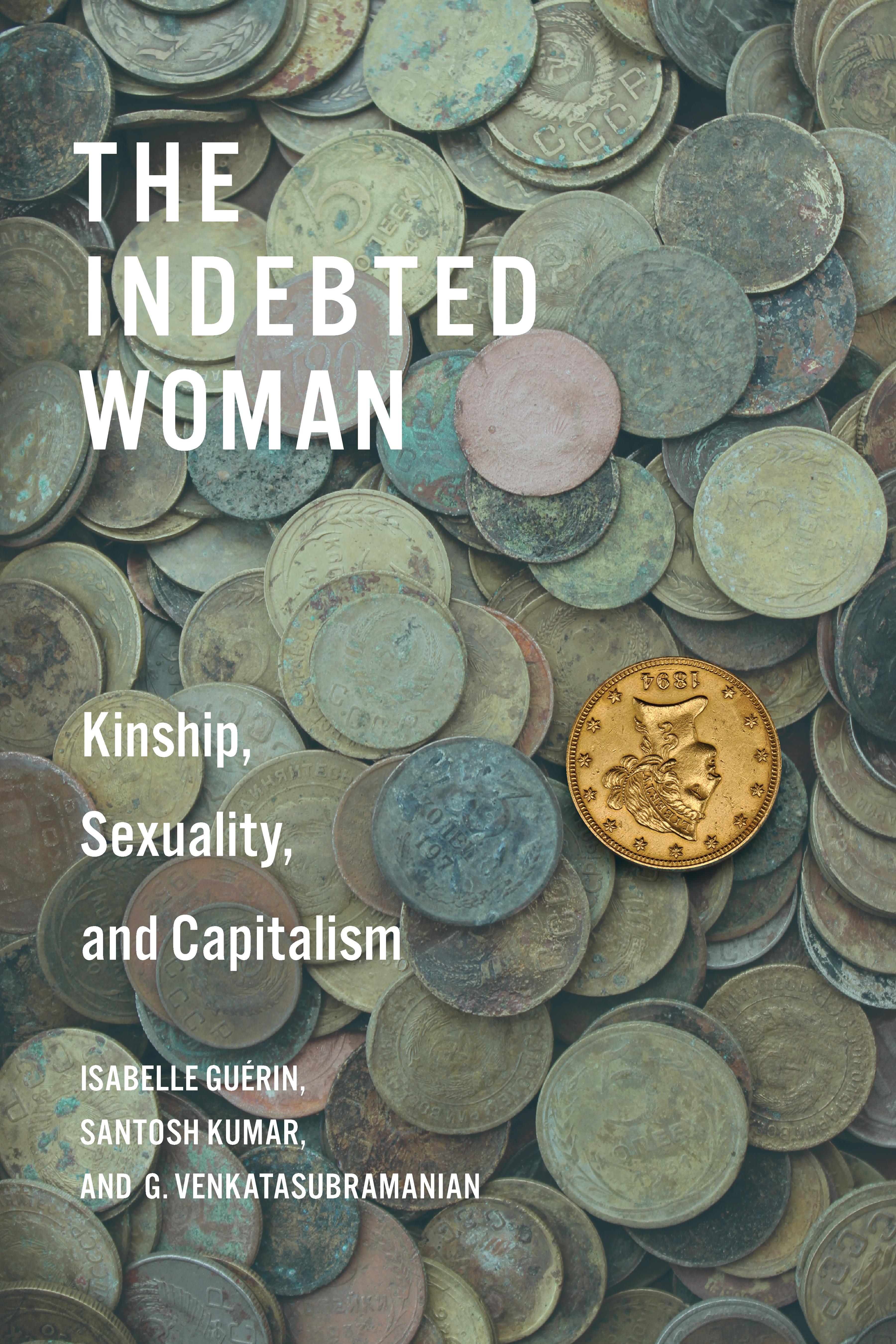
Women, and particularly poor women, have become essential cogs in the wheel of financialized capitalism. Globally, women are responsible for managing household debt, and that debt has exploded over the last decade, reaching an all-time high after the COVID-19 pandemic. Across various categories of loans, including subprime lending, microcredit policies, and consumer loans, as well as rent and utilities, women are overrepresented as clients and managers, and are being enfolded into the system. The Indebted Woman discusses the crucial yet invisible roles poor women play in making and consolidating debt and credit markets. Isabelle Guérin, Santosh Kumar, and G. Venkatasubramanian spent over two decades observing a credit market that specifically targets women in the Indian countryside of east-central Tamil Nadu. They found that paying off debts required labor, frequently involved sexual transactions, and shaped women's bodies and subjectivities. Bringing together ethnography, statistical surveys, and financial diaries, they offer for the first time a comprehensive theory for this sexual division of debt that goes far beyond the Indian case, exposing the ways capitalism transforms womanhood and how this transformation in turn fuels capitalism.
Pay easily by card, Klarna, Apple Pay or Google Pay. Not happy? You always have a 14-day money-back guarantee. Read more in our terms. If you have any questions, email us at hello@memmo.org.
Memmo makes studying easier – wherever you are in the world. We bring your course books and smart study tools together in one place: summaries, quizzes, podcasts and flashcards. Plus Ted, your study buddy who answers anything you wonder. Over 50,000 students already study here – built to help you learn faster and stress less.