
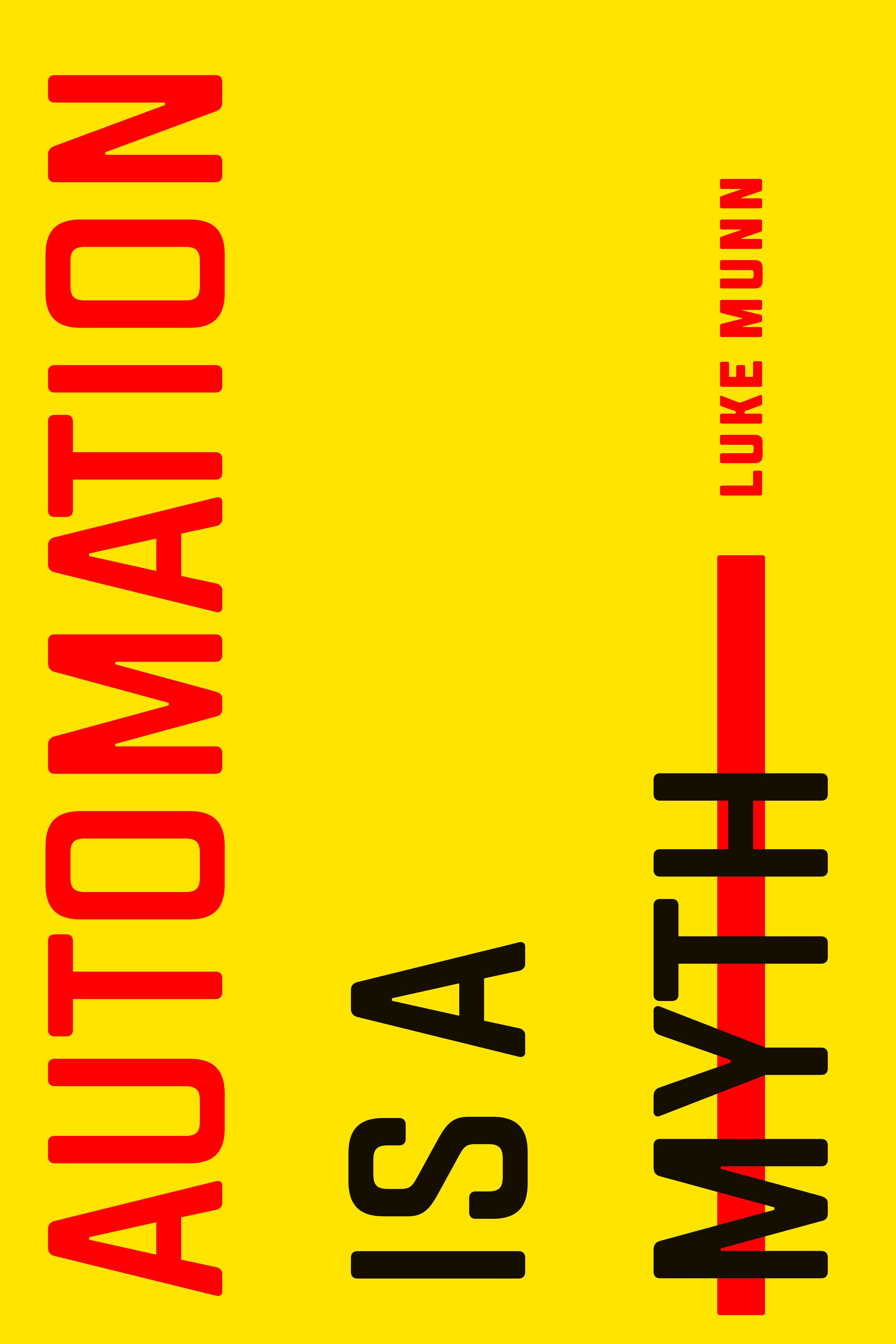
For some, automation will usher in a labor-free utopia; for others, it signals a disastrous age-to-come. Yet whether seen as dream or nightmare, automation, argues Munn, is ultimately a fable that rests on a set of triple fictions. There is the myth of full autonomy, claiming that machines will take over production and supplant humans. But far from being self-acting, technical solutions are piecemeal; their support and maintenance reveals the immense human labor behind "autonomous" processes. There is the myth of universal automation, with technologies framed as a desituated force sweeping the globe. But this fiction ignores the social, cultural, and geographical forces that shape technologies at a local level. And, there is the myth of automating everyone, the generic figure of "the human" at the heart of automation claims. But labor is socially stratified and so automation's fallout will be highly uneven, falling heavier on some (immigrants, people of color, women) than others. Munn moves from machine minders in China to warehouse pickers in the United States to explore the ways that new technologies do (and don't) reconfigure labor. Combining this rich array of human stories with insights from media and cultural studies, Munn points to a more nuanced, localized, and racialized understanding of the "future of work."
Pay easily by card, Klarna, Apple Pay or Google Pay. Not happy? You always have a 14-day money-back guarantee. Read more in our terms. If you have any questions, email us at hello@memmo.org.
Memmo makes studying easier – wherever you are in the world. We bring your course books and smart study tools together in one place: summaries, quizzes, podcasts and flashcards. Plus Ted, your study buddy who answers anything you wonder. Over 50,000 students already study here – built to help you learn faster and stress less.