
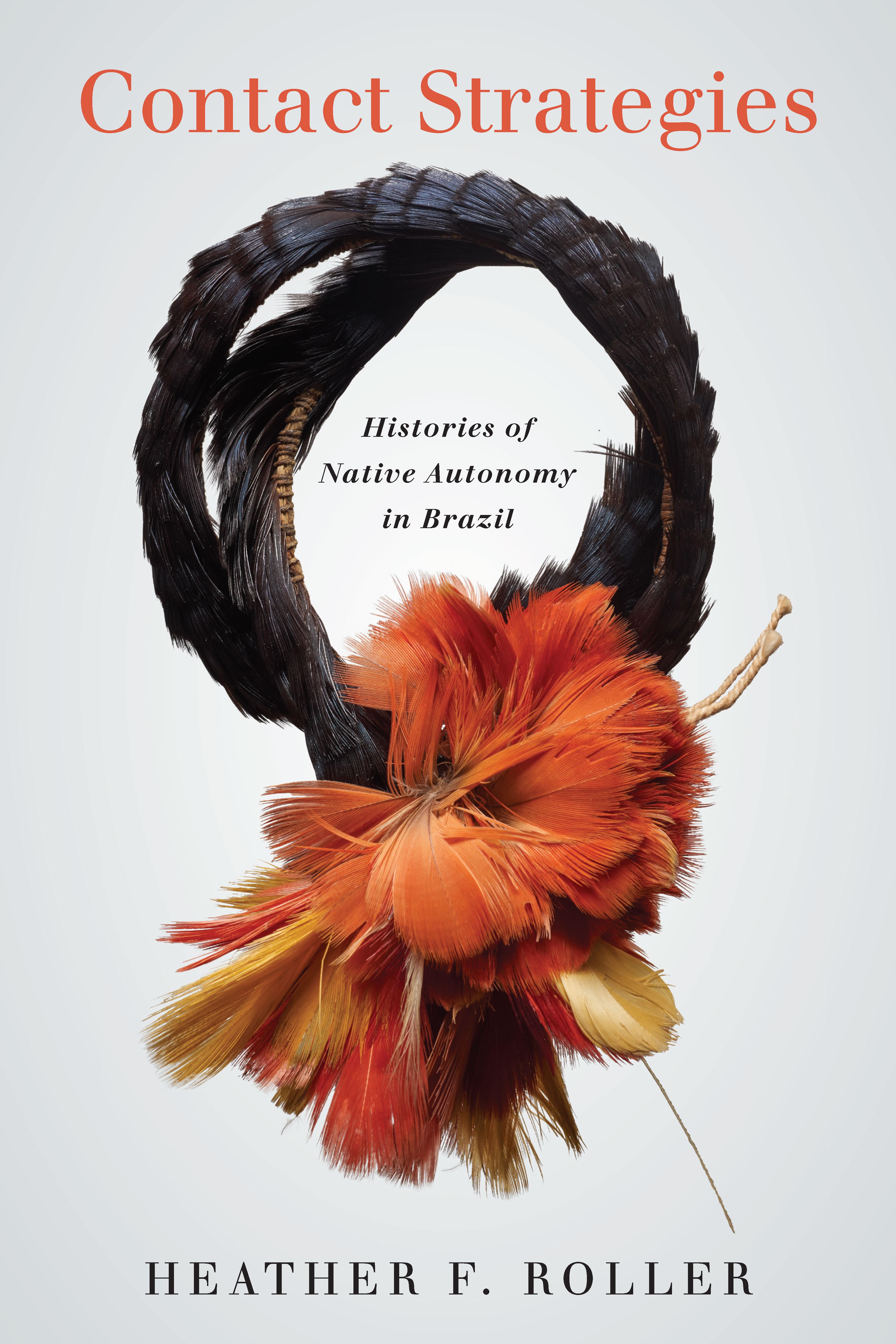
Around the year 1800, independent Native groups still effectively controlled about half the territory of the Americas. How did they maintain their political autonomy and territorial sovereignty, hundreds of years after the arrival of Europeans? In a study that spans the eighteenth to twentieth centuries and ranges across the vast interior of South America, Heather F. Roller examines this history of power and persistence from the vantage point of autonomous Native peoples in Brazil. The central argument of the book is that Indigenous groups took the initiative in their contacts with Brazilian society. Rather than fleeing or evading contact, Native peoples actively sought to appropriate what was useful and potent from outsiders, incorporating new knowledge, products, and even people, on their own terms and for their own purposes.
At the same time, autonomous Native groups aimed to control contact with dangerous outsiders, so as to protect their communities from threats that came in the form of sicknesses, vices, forced labor, and land invasions. Their tactical decisions shaped and limited colonizing enterprises in Brazil, while revealing Native peoples' capacity for cultural persistence through transformation. These contact strategies are preserved in the collective memories of Indigenous groups today, informing struggles for survival and self-determination in the present.
Pay easily by card, Klarna, Apple Pay or Google Pay. Not happy? You always have a 14-day money-back guarantee. Read more in our terms. If you have any questions, email us at hello@memmo.org.
Memmo makes studying easier – wherever you are in the world. We bring your course books and smart study tools together in one place: summaries, quizzes, podcasts and flashcards. Plus Ted, your study buddy who answers anything you wonder. Over 50,000 students already study here – built to help you learn faster and stress less.