
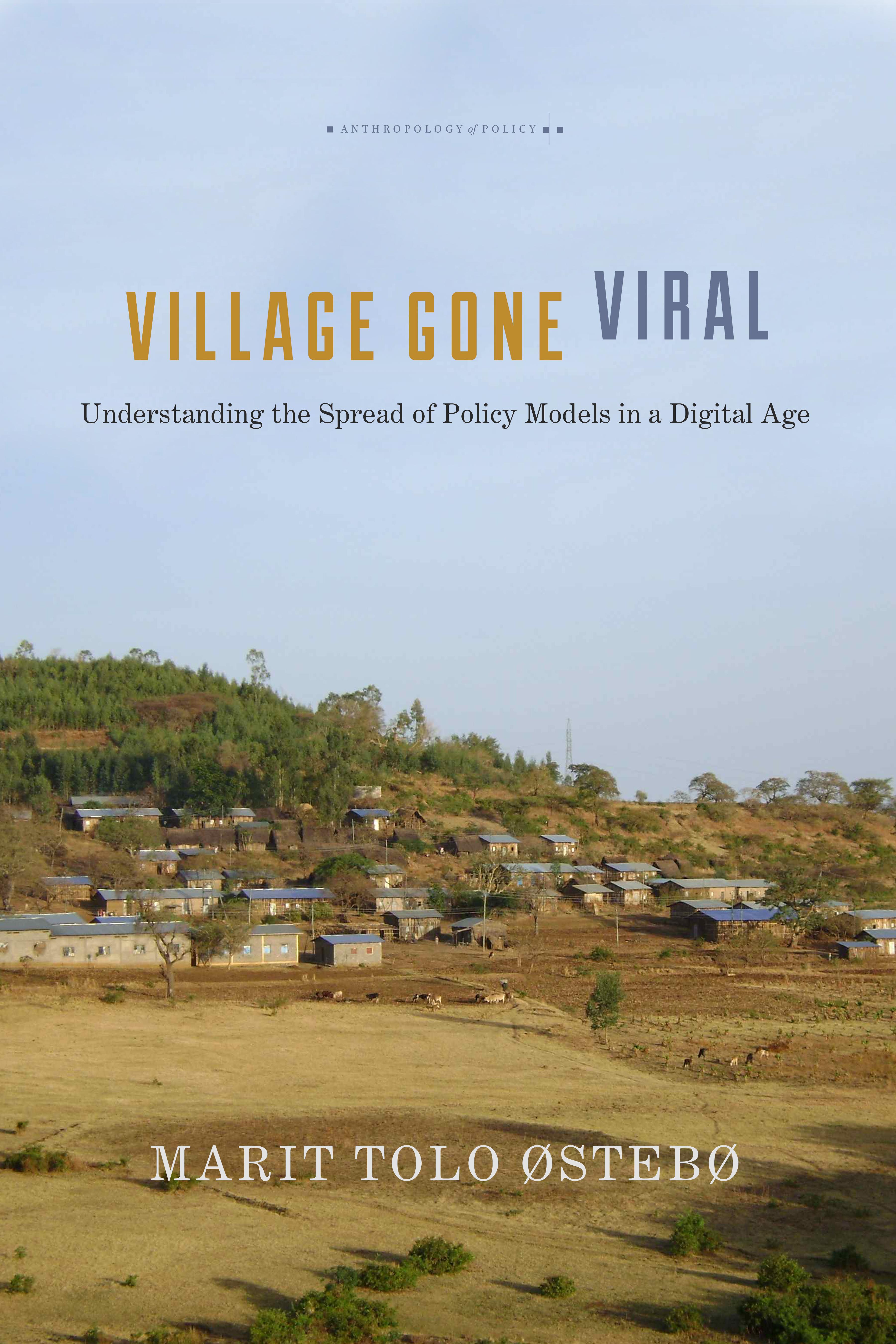
In 2001, Ethiopian Television aired a documentary about a small, rural village called Awra Amba, where women ploughed, men worked in the kitchen, and so-called harmful traditional practices did not exist. The documentary radically challenged prevailing images of Ethiopia as a gender-conservative and aid-dependent place, and Awra Amba became a symbol of gender equality and sustainable development in Ethiopia and beyond.
Village Gone Viral uses the example of Awra Amba to consider the widespread circulation and use of modeling practices in an increasingly transnational and digital policy world. With a particular focus on traveling models—policy models that become "viral" through various vectors, ranging from NGOs and multilateral organizations to the Internet—Marit Tolo Østebø critically examines the hidden dimensions of models and model making. While a policy model may be presented as a "best practice," one that can be scaled up and successfully applied to other places, the local impacts of the model paradigm are far more ambivalent—potentially increasing social inequalities, reinforcing social stratification, and concealing injustice. With this book, Østebø ultimately calls for a reflexive critical anthropology of the production, circulation, and use of models as instruments for social change.
Pay easily by card, Klarna, Apple Pay or Google Pay. Not happy? You always have a 14-day money-back guarantee. Read more in our terms. If you have any questions, email us at hello@memmo.org.
Memmo makes studying easier – wherever you are in the world. We bring your course books and smart study tools together in one place: summaries, quizzes, podcasts and flashcards. Plus Ted, your study buddy who answers anything you wonder. Over 50,000 students already study here – built to help you learn faster and stress less.