
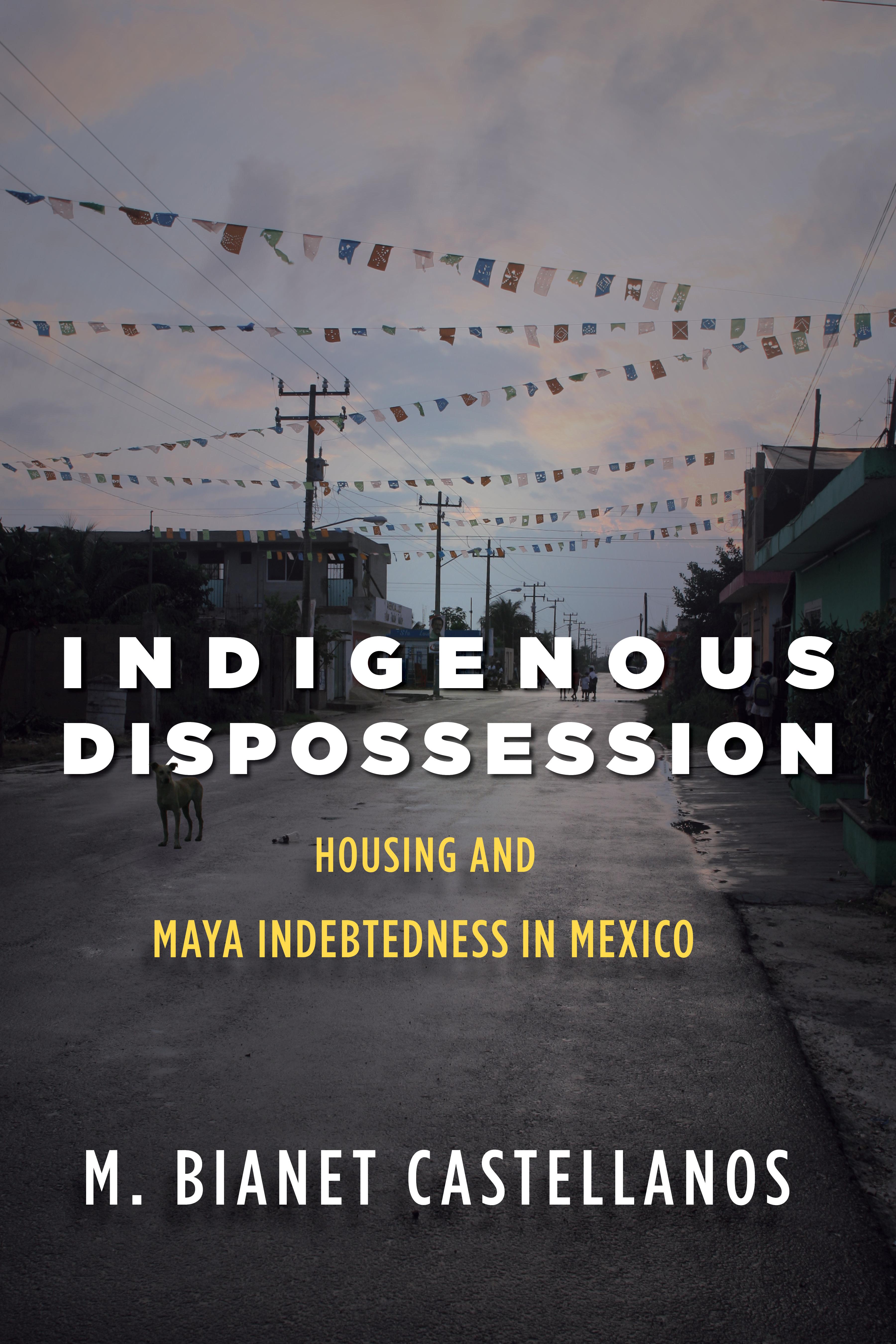
Following the recent global housing boom, tract housing development became a billion-dollar industry in Mexico. At the national level, neoliberal housing policy has overtaken debates around land reform. For Indigenous peoples, access to affordable housing remains crucial to alleviating poverty. But as palapas, traditional thatch and wood houses, are replaced by tract houses in the Yucatán Peninsula, Indigenous peoples' relationship to land, urbanism, and finance is similarly transformed, revealing a legacy of debt and dispossession.
Indigenous Dispossession examines how Maya families grapple with the ramifications of neoliberal housing policies. M. Bianet Castellanos relates Maya migrants' experiences with housing and mortgage finance in Cancún, one of Mexico's fastest-growing cities. Their struggle to own homes reveals colonial and settler colonial structures that underpin the city's economy, built environment, and racial order. But even as Maya people contend with predatory lending practices and foreclosure, they cultivate strategies of resistance—from "waiting out" the state, to demanding Indigenous rights in urban centers. As Castellanos argues, it is through these maneuvers that Maya migrants forge a new vision of Indigenous urbanism.
Pay easily by card, Klarna, Apple Pay or Google Pay. Not happy? You always have a 14-day money-back guarantee. Read more in our terms. If you have any questions, email us at hello@memmo.org.
Memmo makes studying easier – wherever you are in the world. We bring your course books and smart study tools together in one place: summaries, quizzes, podcasts and flashcards. Plus Ted, your study buddy who answers anything you wonder. Over 50,000 students already study here – built to help you learn faster and stress less.