
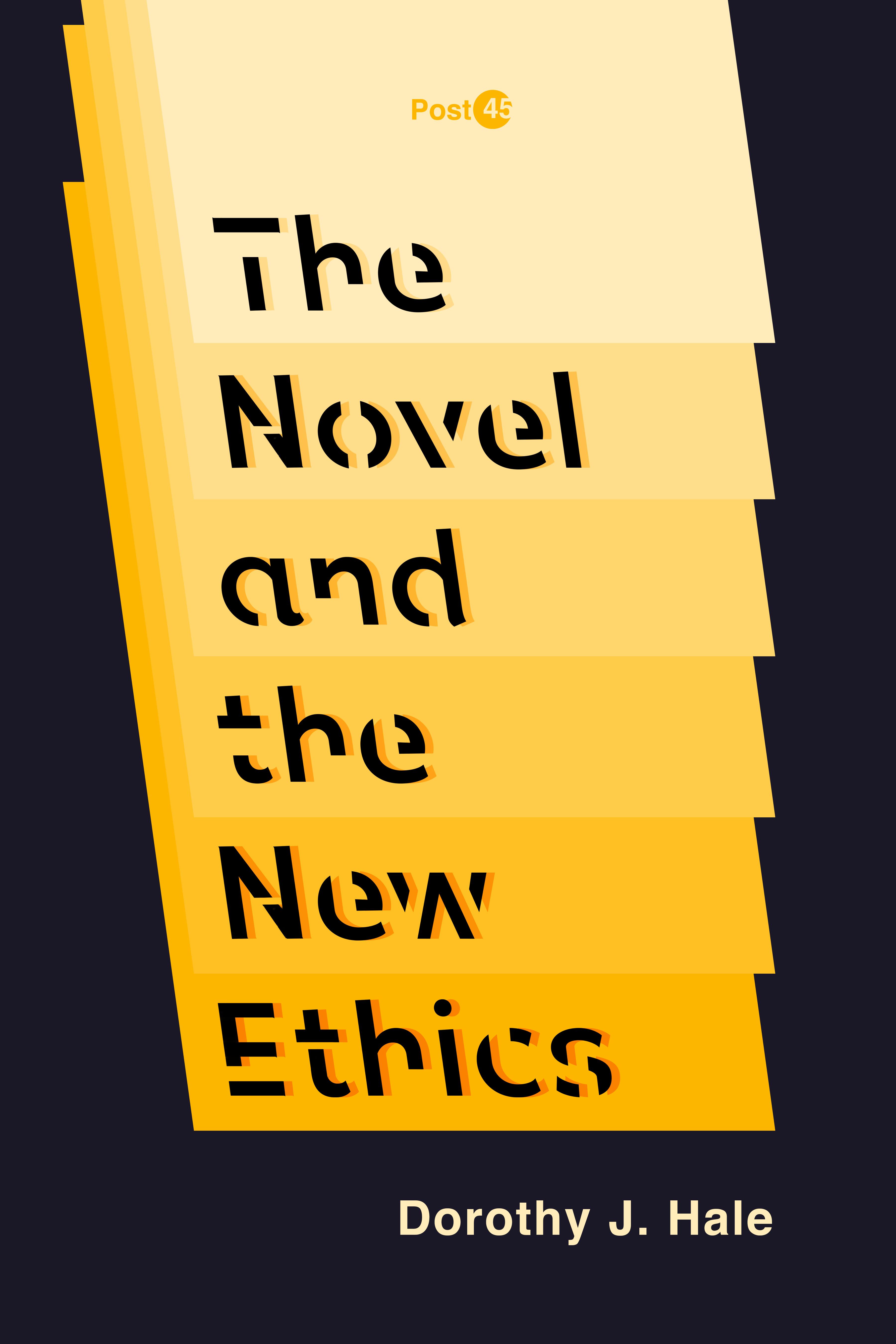
For a generation of contemporary Anglo-American novelists, the question "Why write?" has been answered with a renewed will to believe in the ethical value of literature. Dissatisfied with postmodernist parody and pastiche, a broad array of novelist-critics—including J.M. Coetzee, Toni Morrison, Zadie Smith, Gish Jen, Ian McEwan, and Jonathan Franzen—champion the novel as the literary genre most qualified to illuminate individual ethical action and decision-making within complex and diverse social worlds. Key to this contemporary vision of the novel's ethical power is the task of knowing and being responsible to people different from oneself, and so thoroughly have contemporary novelists devoted themselves to the ethics of otherness, that this ethics frequently sets the terms for plot, characterization, and theme.
In The Novel and the New Ethics, literary critic Dorothy J. Hale investigates how the contemporary emphasis on literature's social relevance sparks a new ethical description of the novel's social value that is in fact rooted in the modernist notion of narrative form. This "new" ethics of the contemporary moment has its origin in the "new" idea of novelistic form that Henry James inaugurated and which was consolidated through the modernist narrative experiments and was developed over the course of the twentieth century. In Hale's reading, the art of the novel becomes defined with increasing explicitness as an aesthetics of alterity made visible as a formalist ethics. In fact, it is this commitment to otherness as a narrative act which has conferred on the genre an artistic intensity and richness that extends to the novel's every word.
Pay easily by card, Klarna, Apple Pay or Google Pay. Not happy? You always have a 14-day money-back guarantee. Read more in our terms. If you have any questions, email us at hello@memmo.org.
Memmo makes studying easier – wherever you are in the world. We bring your course books and smart study tools together in one place: summaries, quizzes, podcasts and flashcards. Plus Ted, your study buddy who answers anything you wonder. Over 50,000 students already study here – built to help you learn faster and stress less.