
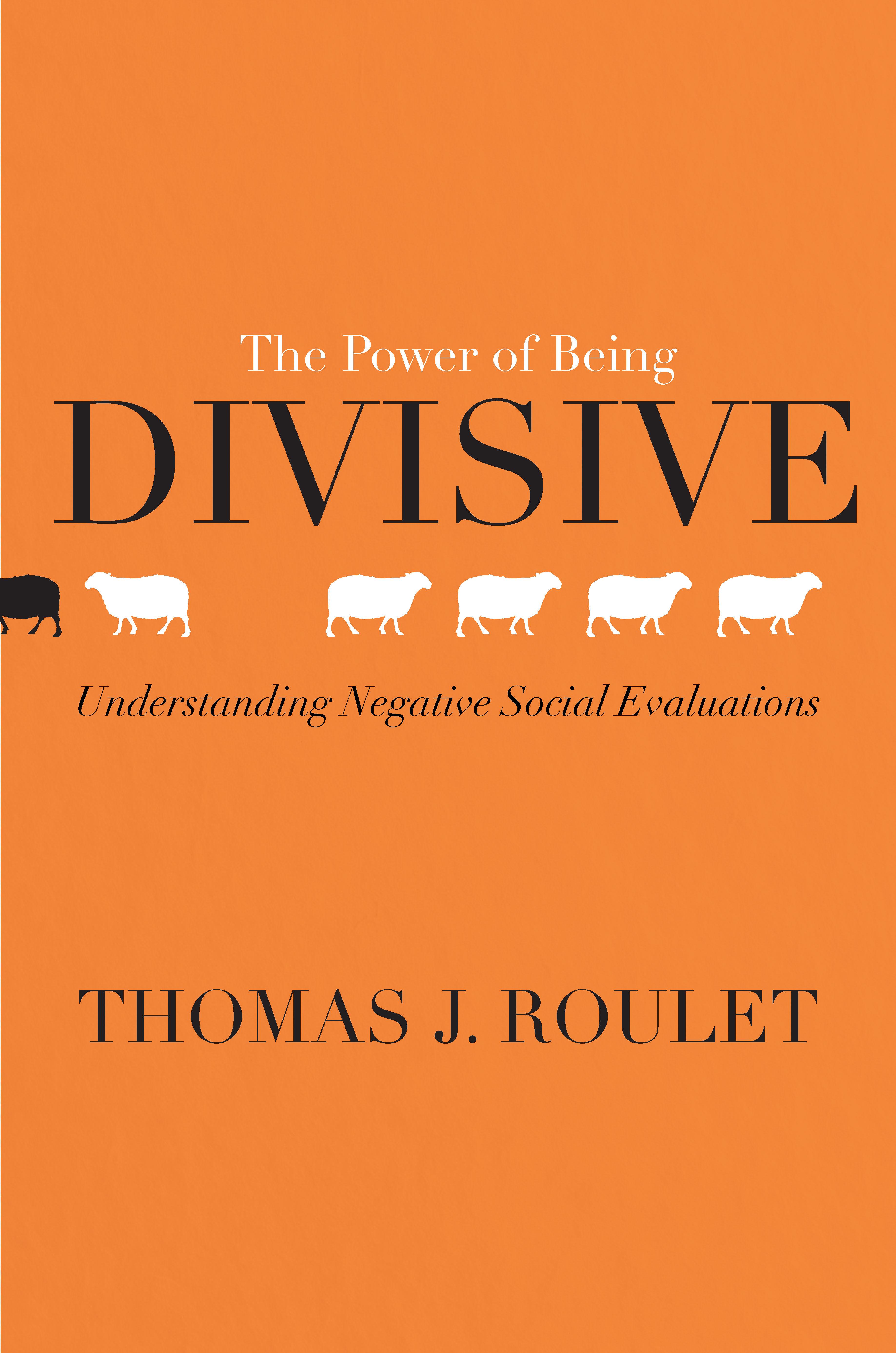
In the last decade, research on negative social evaluations, from adverse reputation to extreme stigmatization, has burgeoned both at the individual and organizational level. Thus far, this research has largely focused on major corporate risks. Corporate public relations and business executives intuitively know that a negative image deters important relationships—from customers and partners, to applicants, stakeholders, and potential funding. At the same time, business is conducted in an age of heightened connection, including digital platforms for criticism and a 24-hour news cycle. Executives know that some degree of public disapproval is increasingly unavoidable. Negative social evaluations can also put social actors on the map. In the era of identity politics, many political leaders express controversial views to appeal to specific audiences and gain in popularity. Through network and signaling effects, being controversial can potentially pay off.
Thomas J. Roulet offers a framework for understanding not only how individuals and organizations can survive in an age of increasing scrutiny, but how negative social evaluations can surprisingly yield positive results. A growing body of work has begun to show that being "up against the rest" is an active driver of corporate identity, and that firms that face strong public hostility can benefit from internal bonding. Synthesizing this work with his original research, and drawing comparisons to work on misconduct and scandals, Roulet addresses an important gap by providing a broader perspective to link the antecedents and consequences of negative social evaluations. Moreover, he reveals the key role that audiences play in assessing these consequences, whether positive or negative, and the crucial function of media in establishing conditions in which public disapproval can bring positive results. Examples and cases cover Uber and Google, Monsanto, Electronic Arts, and the investment banking industry during the financial crisis.
Pay easily by card, Klarna, Apple Pay or Google Pay. Not happy? You always have a 14-day money-back guarantee. Read more in our terms. If you have any questions, email us at hello@memmo.org.
Memmo makes studying easier – wherever you are in the world. We bring your course books and smart study tools together in one place: summaries, quizzes, podcasts and flashcards. Plus Ted, your study buddy who answers anything you wonder. Over 50,000 students already study here – built to help you learn faster and stress less.