
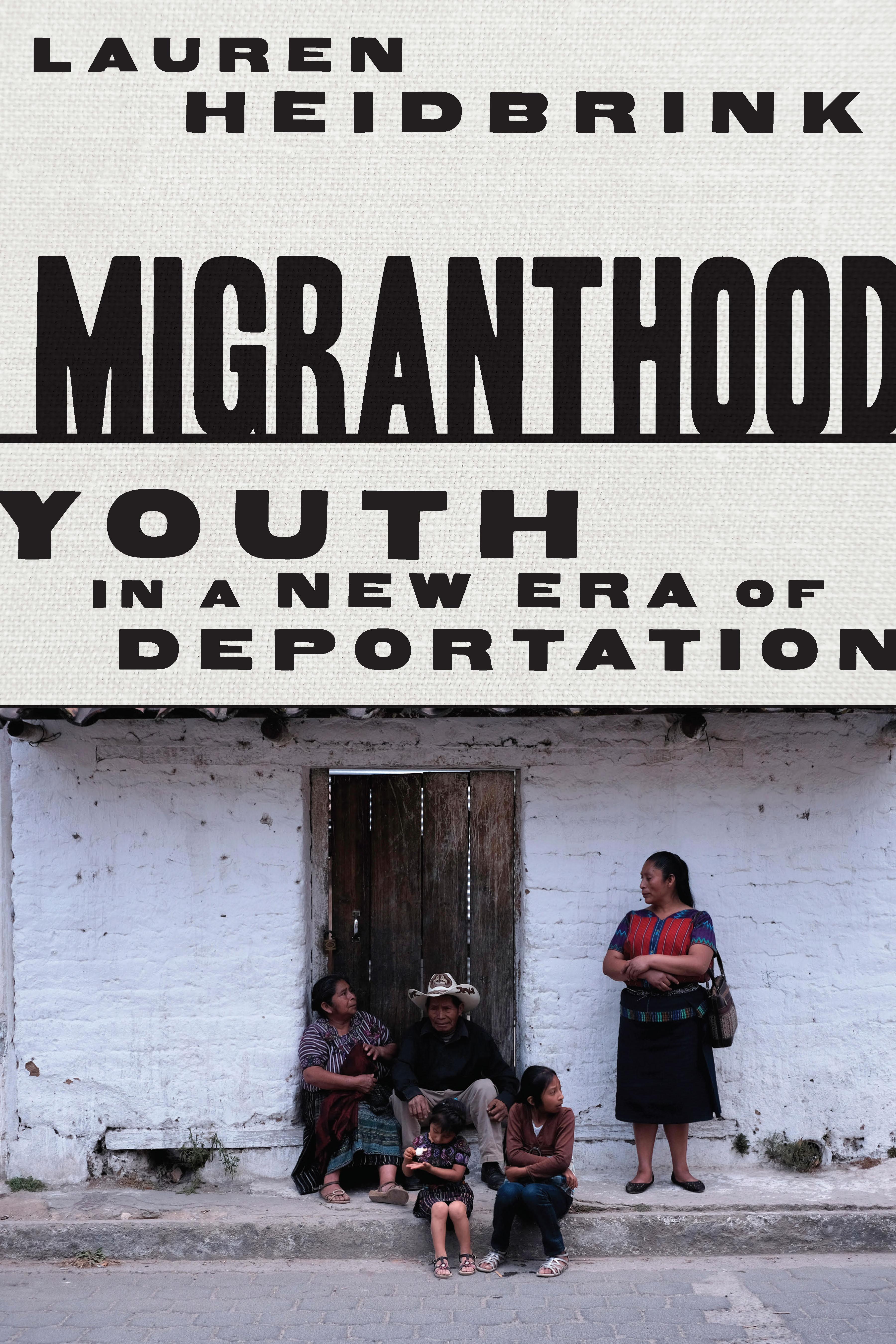
Migranthood chronicles deportation from the perspectives of Indigenous youth who migrate unaccompanied from Guatemala to Mexico and the United States. In communities of origin in Guatemala, zones of transit in Mexico, detention centers for children in the U.S., government facilities receiving returned children in Guatemala, and communities of return, young people share how they negotiate everyday violence and discrimination, how they and their families prioritize limited resources and make difficult decisions, and how they develop and sustain relationships over time and space.
Anthropologist Lauren Heidbrink shows that Indigenous youth cast as objects of policy, not participants, are not passive recipients of securitization policies and development interventions. Instead, Indigenous youth draw from a rich social, cultural, and political repertoire of assets and tactics to navigate precarity and marginality in Guatemala, including transnational kin, social networks, and financial institutions. By attending to young people's perspectives, we learn the critical roles they play as contributors to household economies, local social practices, and global processes. The insights and experiences of young people uncover the transnational effects of securitized responses to migration management and development on individuals and families, across space, citizenship status, and generation. They likewise provide evidence to inform child protection and human rights locally and internationally.
Pay easily by card, Klarna, Apple Pay or Google Pay. Not happy? You always have a 14-day money-back guarantee. Read more in our terms. If you have any questions, email us at hello@memmo.org.
Memmo makes studying easier – wherever you are in the world. We bring your course books and smart study tools together in one place: summaries, quizzes, podcasts and flashcards. Plus Ted, your study buddy who answers anything you wonder. Over 50,000 students already study here – built to help you learn faster and stress less.