
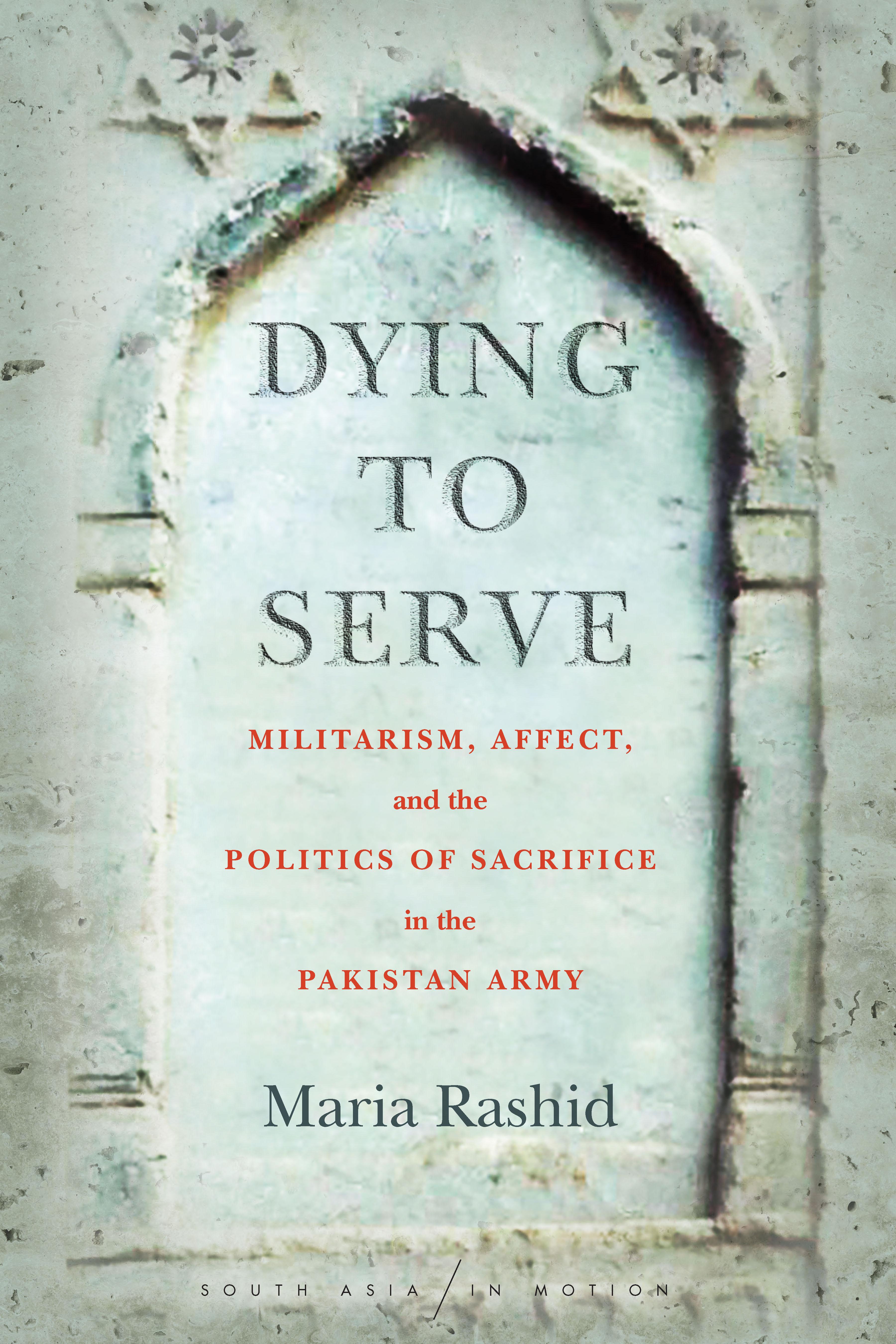
The Pakistan Army is a uniquely powerful and influential institution, with vast landholdings and resources. It has deep roots in the colonial armed forces and relies heavily on certain regions to supply its soldiers, especially parts of rural Punjab, where men have served in the army for generations. These men, their wives and mothers, and the military culture surrounding them are the focus of Maria Rashid's Dying to Serve, which innovatively and sensitively addresses the question: how does the military thrive when so much of its work results in injury, debility, and death? Taking ritual commemorations of fallen soldiers as one critical site of study, Rashid argues that these "spectacles of mourning" are careful manipulations of affect, gendered and structured by the military to reinforce its omnipotence in the lives of its subjects. Grounding her study in the famed martial district of Chakwal, Rashid finds affect similarly deployed in recruitment and training practices, as well as management of death and compensation to families. She contends that understanding these affective technologies is crucial to challenging the appeal of the military institution globally.
Pay easily by card, Klarna, Apple Pay or Google Pay. Not happy? You always have a 14-day money-back guarantee. Read more in our terms. If you have any questions, email us at hello@memmo.org.
Memmo makes studying easier – wherever you are in the world. We bring your course books and smart study tools together in one place: summaries, quizzes, podcasts and flashcards. Plus Ted, your study buddy who answers anything you wonder. Over 50,000 students already study here – built to help you learn faster and stress less.