
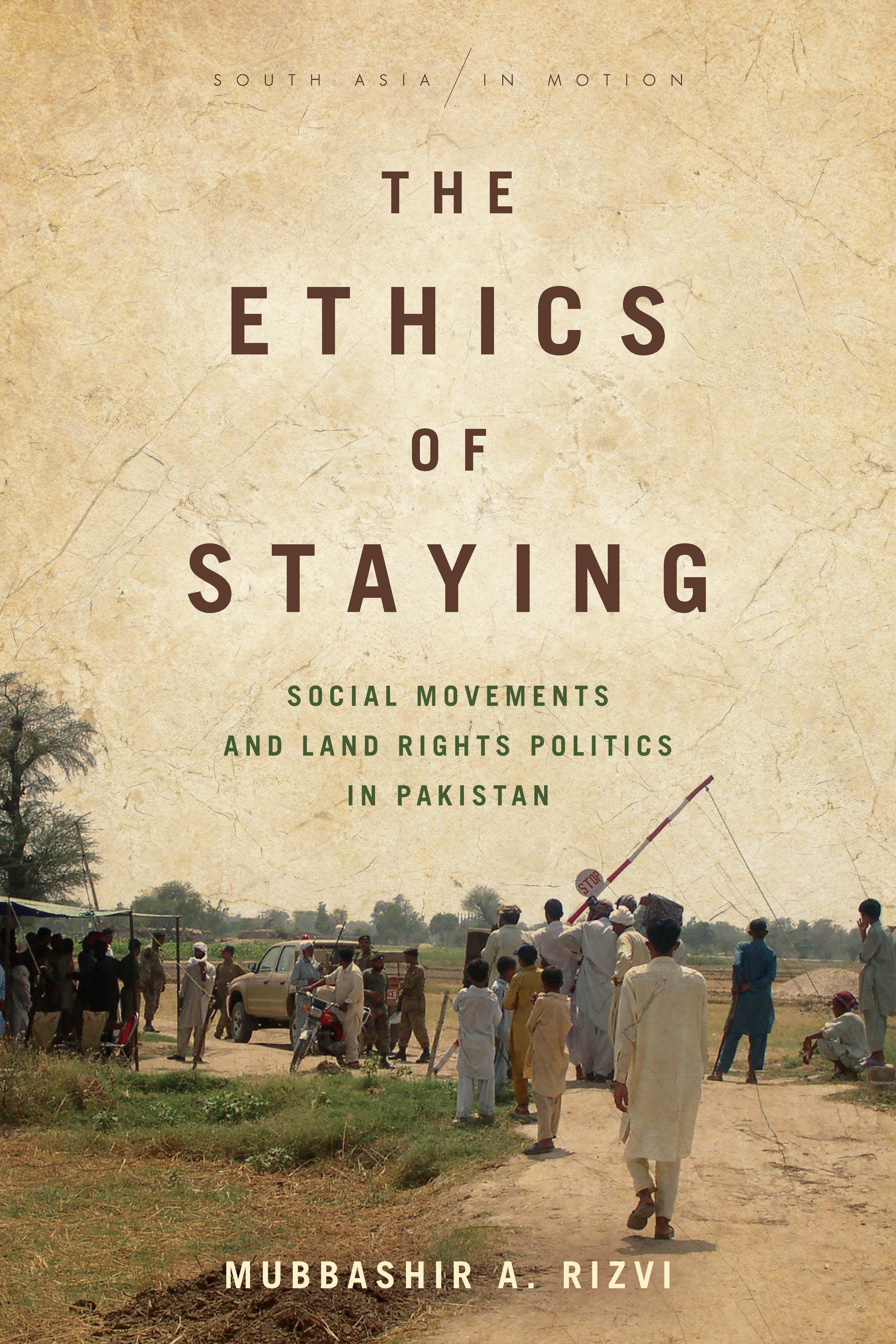
The military coup that brought General Pervez Musharraf to power as Pakistan's tenth president resulted in the abolition of a century-old sharecropping system that was rife with corruption. In its place the military regime implemented a market reform policy of cash contract farming. Ostensibly meant to improve living conditions for tenant farmers, the new system, instead, mobilized one of the largest, most successful land rights movements in South Asia—still active today.
In The Ethics of Staying, Mubbashir A. Rizvi presents an original framework for understanding this major social movement, called the Anjuman Mazarin Punjab (AMP). This group of Christian and Muslim tenant sharecroppers, against all odds, successfully resisted Pakistan military's bid to monetize state-owned land, making a powerful moral case for land rights by invoking local claims to land and a broader vision for subsistence rights. The case of AMP provides a unique lens through which to examine state and society relations in Pakistan, one that bridges literatures from subaltern studies, military and colonial power, and the language of claim-making. Rizvi also offers a glimpse of Pakistan that challenges its standard framing as a hub of radical militancy, by opening a window into to the everyday struggles that are often obscured in the West's terror discourse.
Pay easily by card, Klarna, Apple Pay or Google Pay. Not happy? You always have a 14-day money-back guarantee. Read more in our terms. If you have any questions, email us at hello@memmo.org.
Memmo makes studying easier – wherever you are in the world. We bring your course books and smart study tools together in one place: summaries, quizzes, podcasts and flashcards. Plus Ted, your study buddy who answers anything you wonder. Over 50,000 students already study here – built to help you learn faster and stress less.