
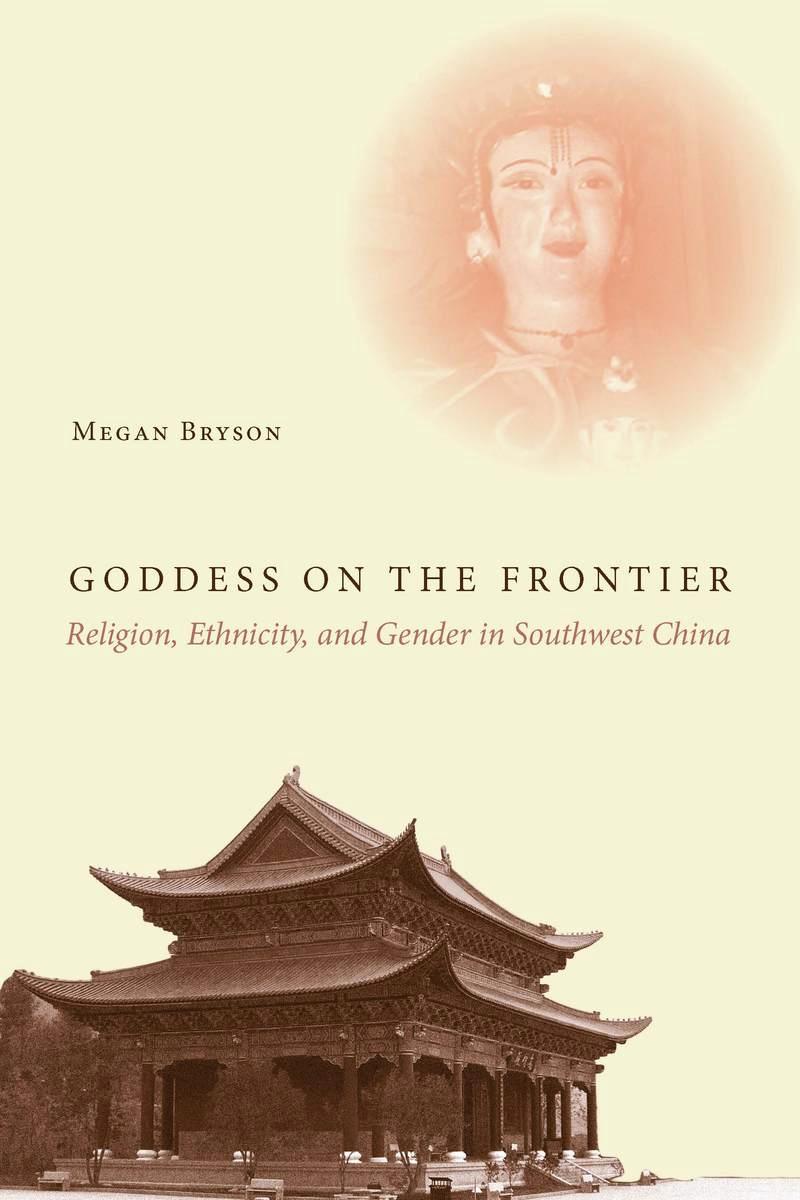
Dali is a small region on a high plateau in Southeast Asia. Its main deity, Baijie, has assumed several gendered forms throughout the area's history: Buddhist goddess, the mother of Dali's founder, a widowed martyr, and a village divinity. What accounts for so many different incarnations of a local deity?
Goddess on the Frontier argues that Dali's encounters with forces beyond region and nation have influenced the goddess's transformations. Dali sits at the cultural crossroads of Southeast Asia, India, and Tibet; it has been claimed by different countries but is currently part of Yunnan Province in Southwest China. Megan Bryson incorporates historical-textual studies, art history, and ethnography in her book to argue that Baijie provided a regional identity that enabled Dali to position itself geopolitically and historically. In doing so, Bryson provides a case study of how people craft local identities out of disparate cultural elements and how these local identities transform over time in relation to larger historical changes—including the increasing presence of the Chinese state.
Pay easily by card, Klarna, Apple Pay or Google Pay. Not happy? You always have a 14-day money-back guarantee. Read more in our terms. If you have any questions, email us at hello@memmo.org.
Memmo makes studying easier – wherever you are in the world. We bring your course books and smart study tools together in one place: summaries, quizzes, podcasts and flashcards. Plus Ted, your study buddy who answers anything you wonder. Over 50,000 students already study here – built to help you learn faster and stress less.