
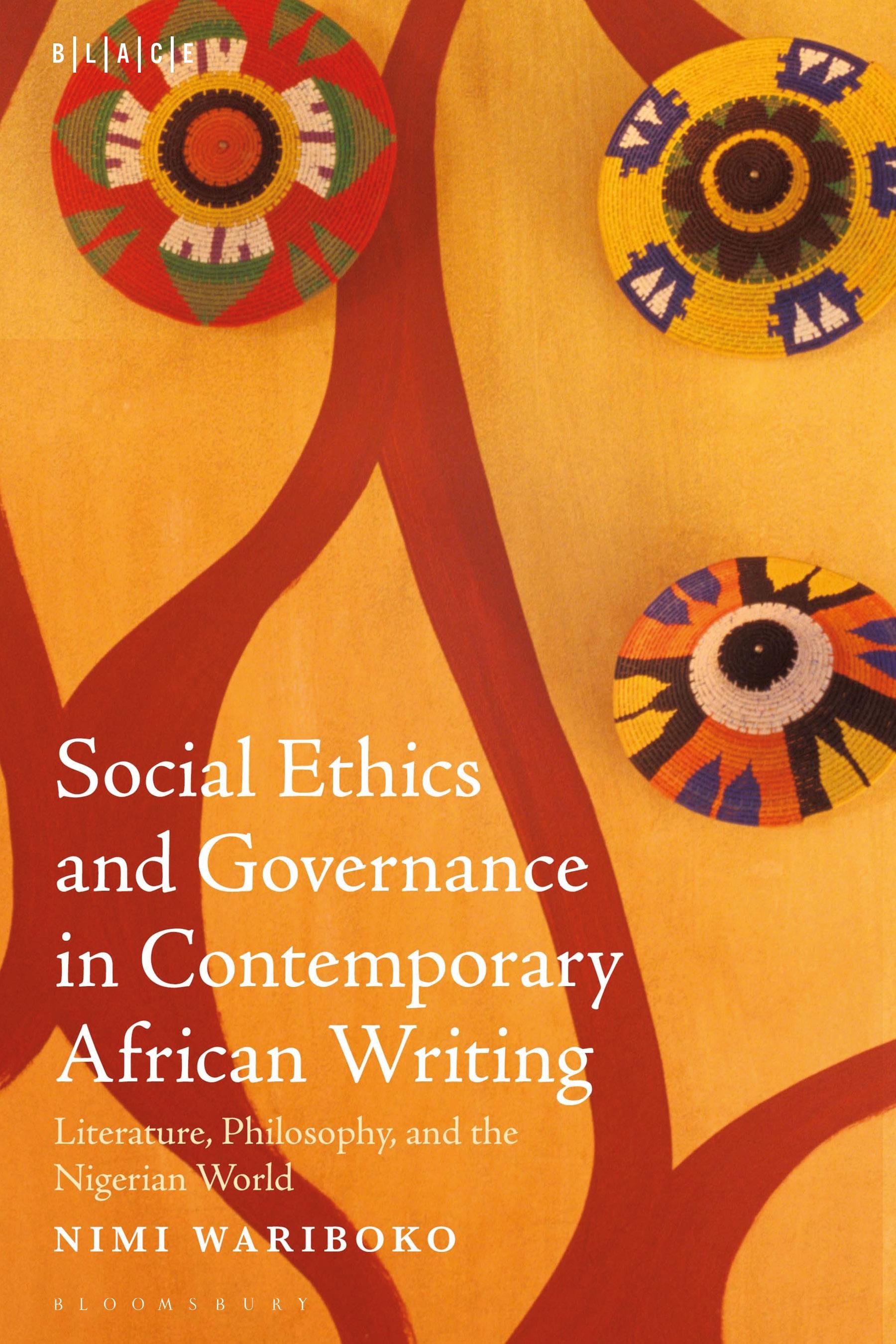
Social Ethics and Governance in Contemporary African Writing is the first book to bring rigorous literary, philosophical, and artistic discourse together to interrogate the ethics of governance and development in postcolonial Africa. It takes literature seriously as a context for philosophical reflection, vividly engaging the human agency, creativity, and resourcefulness of local Nigerians as political and social actors and shedding new light on the dynamics of human flourishing.
Drawing on important secondary scholarship across several humanities disciplines, especially literature, philosophy, and the performing arts, Nimi Wariboko provides compelling and innovative analysis of the challenges and opportunities on governance and development in postcolonial Nigerian state and society. With a detailed introductory chapter and an authoritative analysis contained in six cohesive chapters, all anchored in political and social ethics and close readings of fascinating literary and artistic works-such as A. Igoni Barrett's Blackass and the comedy skits of MC Edo Pikin-this is a landmark contribution to Nigerian cultural studies. Wariboko's practical engagement between literature and philosophy also opens up new ways of seeing literary analysis as ethical methodology, beyond the specific contexts of Nigeria or Africa.
Drawing on important secondary scholarship across several humanities disciplines, especially literature, philosophy, and the performing arts, Nimi Wariboko provides compelling and innovative analysis of the challenges and opportunities on governance and development in postcolonial Nigerian state and society. With a detailed introductory chapter and an authoritative analysis contained in six cohesive chapters, all anchored in political and social ethics and close readings of fascinating literary and artistic works-such as A. Igoni Barrett's Blackass and the comedy skits of MC Edo Pikin-this is a landmark contribution to Nigerian cultural studies. Wariboko's practical engagement between literature and philosophy also opens up new ways of seeing literary analysis as ethical methodology, beyond the specific contexts of Nigeria or Africa.
Pages: 208
Category: Litteraturvetenskap & Teori
e-ISBN: 9781501398094
Shipping weight: 1.2 kg
Ships in: 1-2 days
Pay easily by card, Klarna, Apple Pay or Google Pay. Not happy? You always have a 14-day money-back guarantee. Read more in our terms. If you have any questions, email us at hello@memmo.org.
Memmo makes studying easier – wherever you are in the world. We bring your course books and smart study tools together in one place: summaries, quizzes, podcasts and flashcards. Plus Ted, your study buddy who answers anything you wonder. Over 50,000 students already study here – built to help you learn faster and stress less.